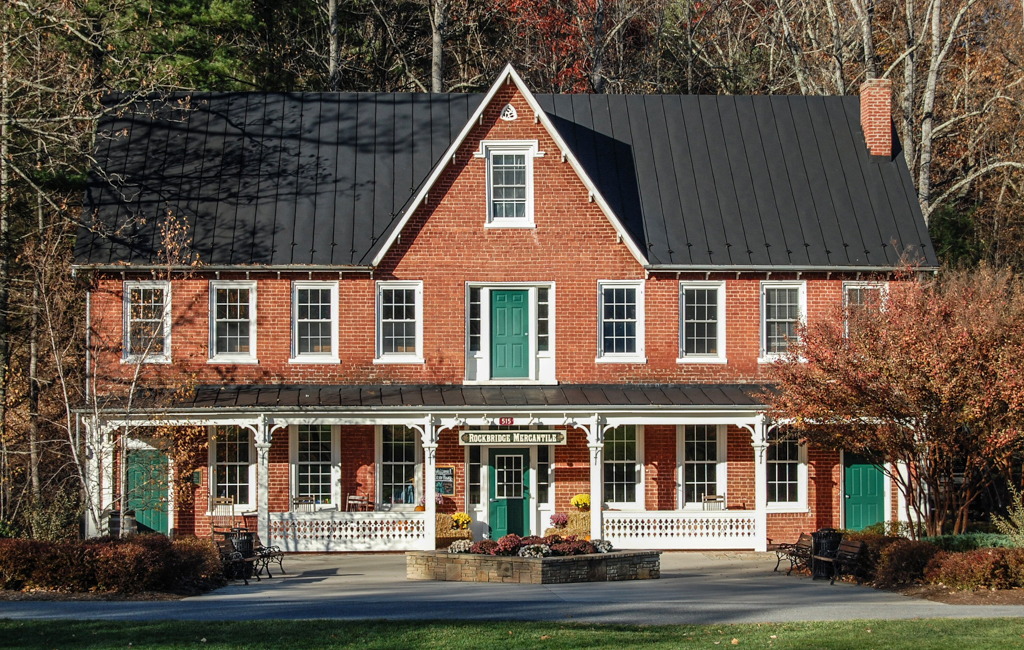
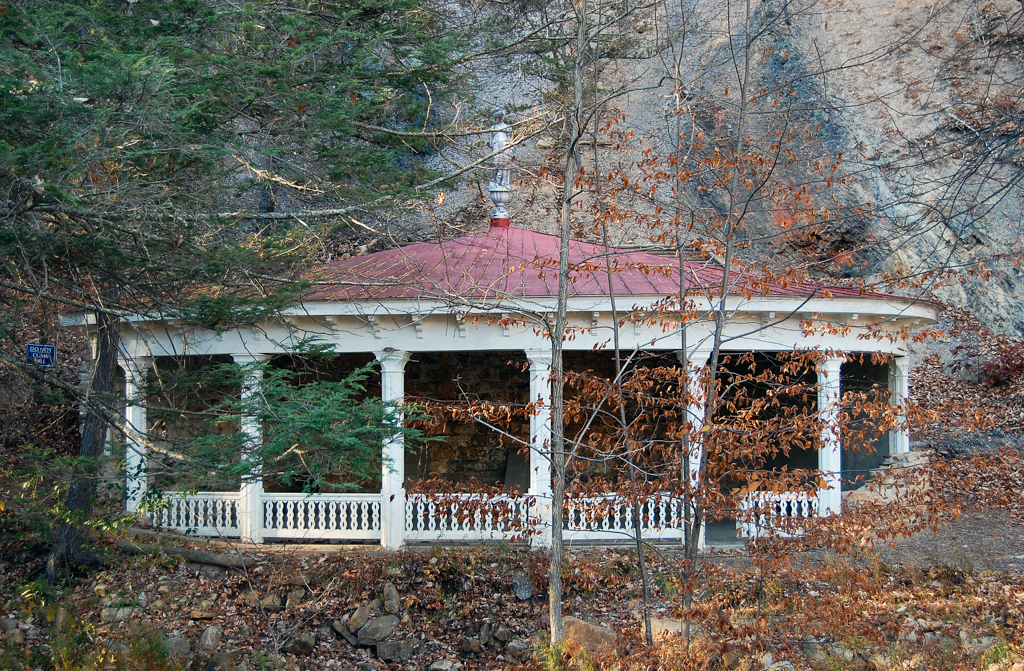
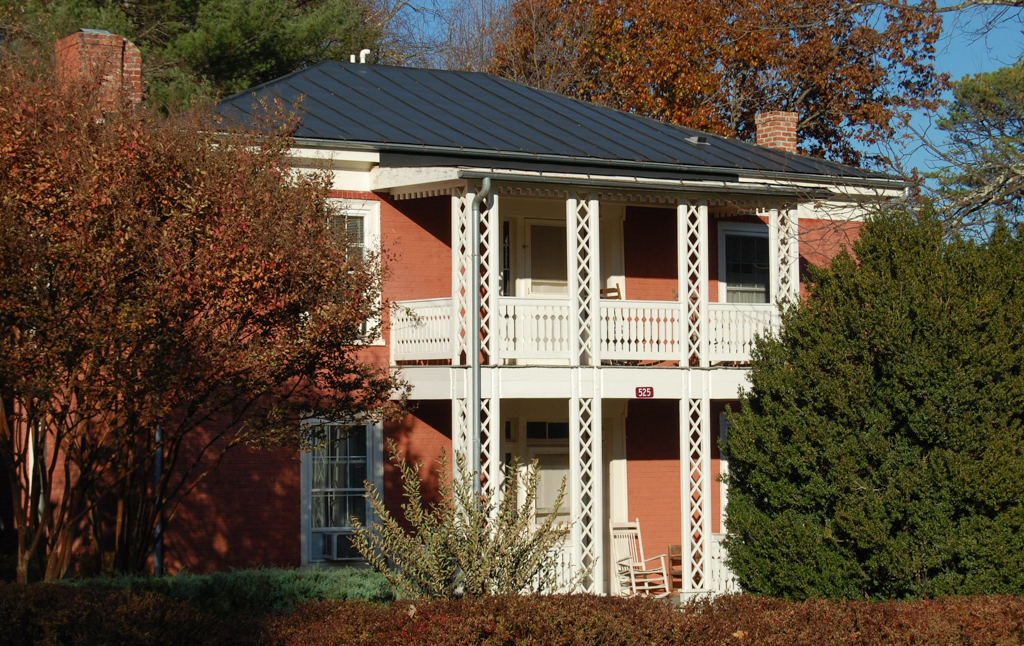
The natural springs of Virginia have drawn visitors since the eighteenth century with their promise of restorative waters and cool mountain weather. In the 1840s and 1850s, when improved transportation made travel easier, many of the springs developed resort hotels and entertainment features to attract visitors for extended summer stays. A group of investors erected the Gothic Revival Rock-bridge Alum Springs hotel (1848) to accommodate the baths' visitors. A group of brick, four-room guest cottages lined the central knoll. Only two survive (c. 1850), and they have been moved from their original location on the north to line up with the hotel and caretaker's cottage (c. 1860). The most distinctive building is the circular, columned, Greek Revival springhouse. It is crowned with a small statue of Hygeia, goddess of the waters. The resort thrived in the late nineteenth century when its alumlaced waters were thought to have curative powers. But its fortunes declined in the early twentieth century. In 1934, William Bailey bought the property as a research facility for the study of birds and added several brick buildings (c. 1935). At his death, he bequeathed his estate to Virginia Tech, and, after several subsequent owners, the Young Life Organization bought it and developed it as a Christian summer camp. They have restored several buildings and added lodges and facilities.

