

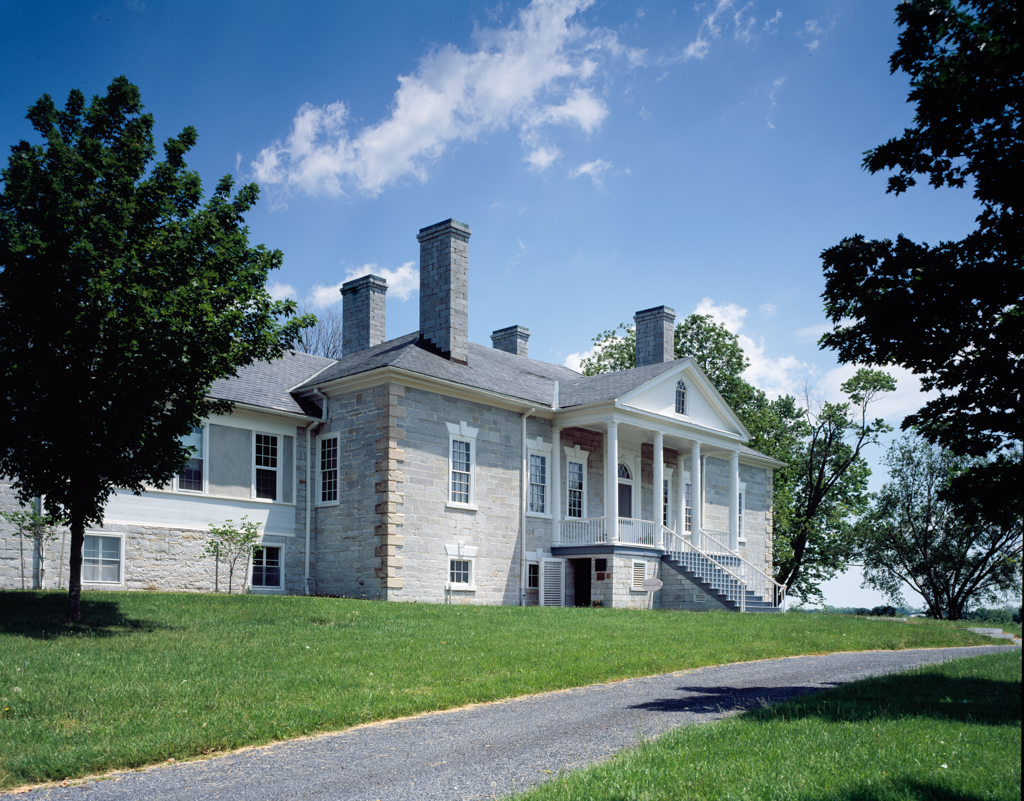
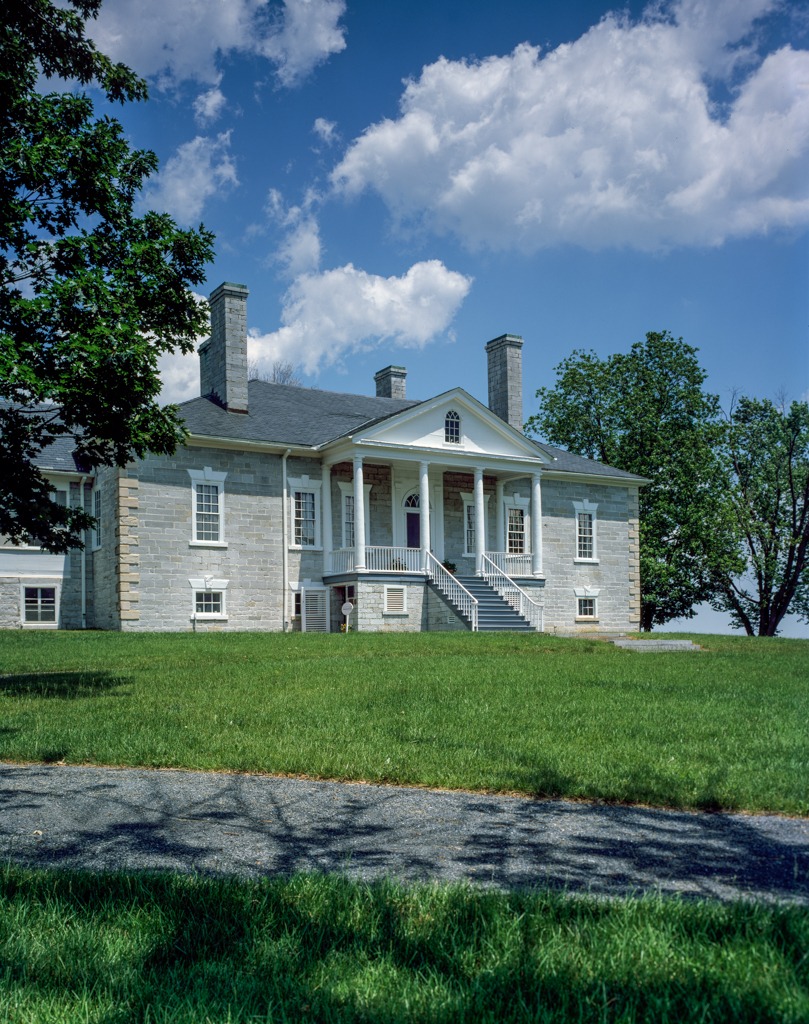
Belle Grove was built for Isaac Hite Jr., grandson of Shenandoah Valley settler Jost Hite, and his wife, Nelly Conway Madison, sister of James Madison. On October 5, 1794, James Madison wrote to Thomas Jefferson to say that “Mr. Bond who is to build a large house for Mr. Hite, my brother in law. On my suggestion he is to visit Monticello not only to profit of examples before his eyes, but to ask the favor of your advice on the plan of the House. Mr. Hite particularly wishes it in what relates to the Bow-room & the Portico . . . any hints which may occur to you for improving the plan will be thankfully accepted.” Madison went on to ask Jefferson to consult with the builder and offer “any hints which may occur to you for improving the place” (the letter is housed in the Library of Congress). Mr. Bond evidently was influenced by what he saw since both houses are one story on raised basements with hipped roofs and interior chimneys. They also have similar floor plans composed of T-shaped halls with radiating rooms and projecting entrance porticoes. Belle Grove is constructed of dressed locally quarried limestone on the entrance facade and rubble limestone on the rear and sides. The interior features delicate Federal woodwork based on Pain's British Palladio (1786). Hite expanded the original 483-acre site to 7,500 acres and his more than 100 slaves worked in his wheat fields and tended his livestock. The property includes an over-seer's house, an icehouse, a smokehouse, and a slave cemetery. Belle Grove was at the center of the Battle of Cedar Creek on October 19, 1864, the last significant battle in the Shenandoah Valley, and served as Union general Philip Sheridan's headquarters. Bequeathed to the National Trust in 1964, it is now a house museum and a National Historic Landmark.
Belle Grove
1794–1797; c. 1816–1820 addition. 336 Belle Grove Rd.