

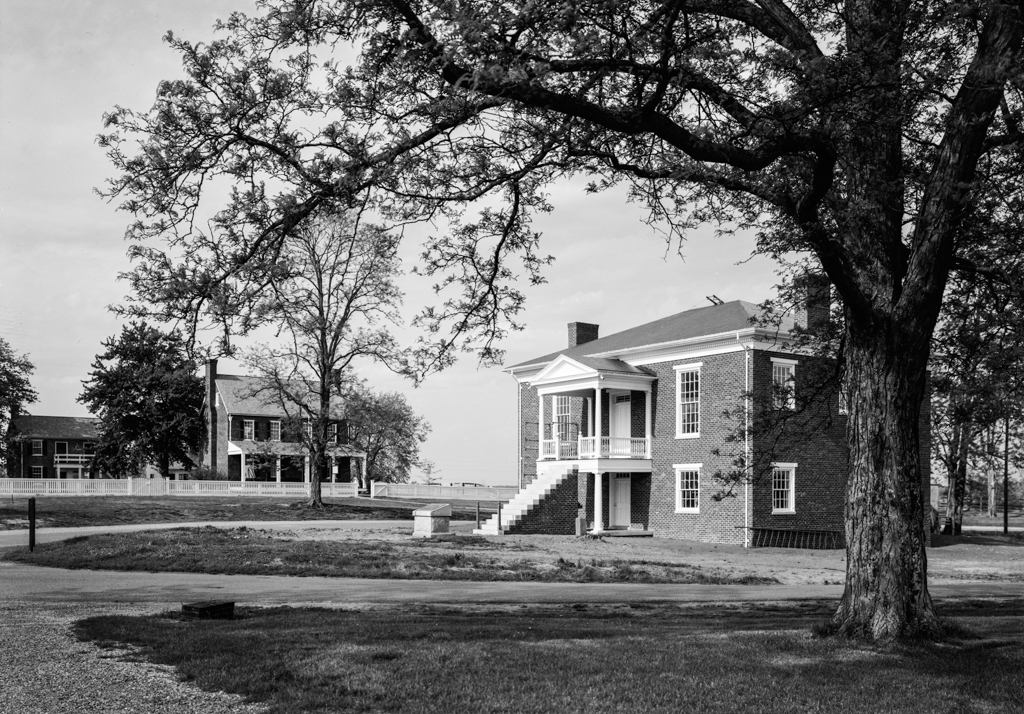
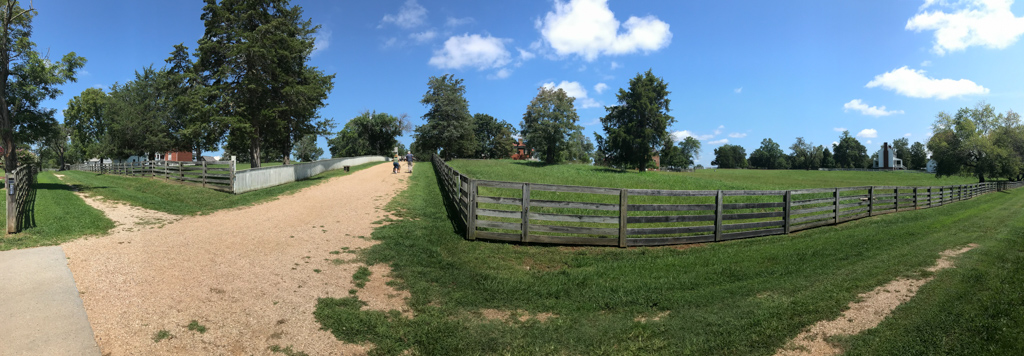
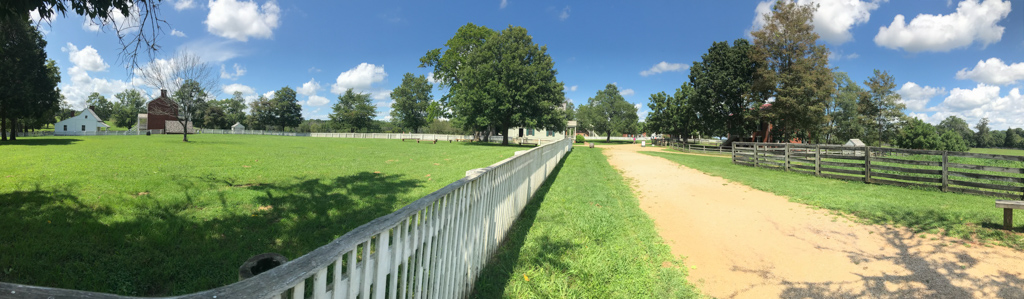
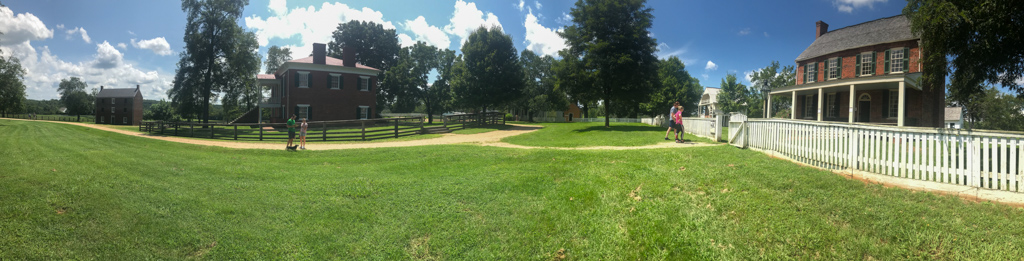
Here on April 9, 1865, General Robert E. Lee surrendered the Army of Northern Virginia to General Ulysses S. Grant, thus effectively ending the Civil War. Appomattox languished as a memorial site until a group of Union veterans formed the Appomattox Land Company in the 1880s with the hope of capitalizing on the site's history, but nothing came of the venture. Finally, in 1935, federal legislation was passed creating the area as a national monument. The National Park Service soon acquired the entire village and, after World War II, began the serious work of restoration. Today the stillness at Appomattox is broken by tourists revisiting the nation's most painful era, a four-year period when more than 1.5 million soldiers died. The park's 1,744 acres include the small town, pastures, fields, and woodlands, all bounded by reconstructions of historic roads, fences, and hedges. Many of the structures within the park are restored and others are reconstructed to represent their appearance in 1865
–
1870. A number of them are open to the public, including the most famous, the McLean House, where the surrender was signed.
Appomattox Court House National Historical Park
1935 established. VA 24, 3 miles north of Appomattox