

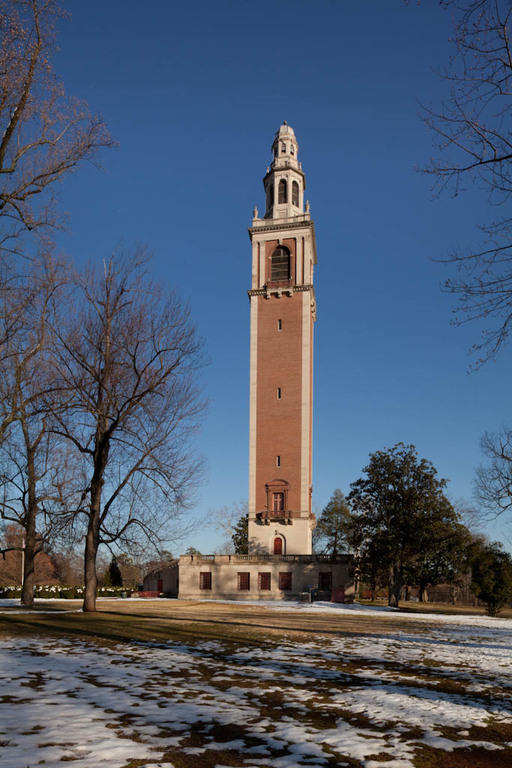
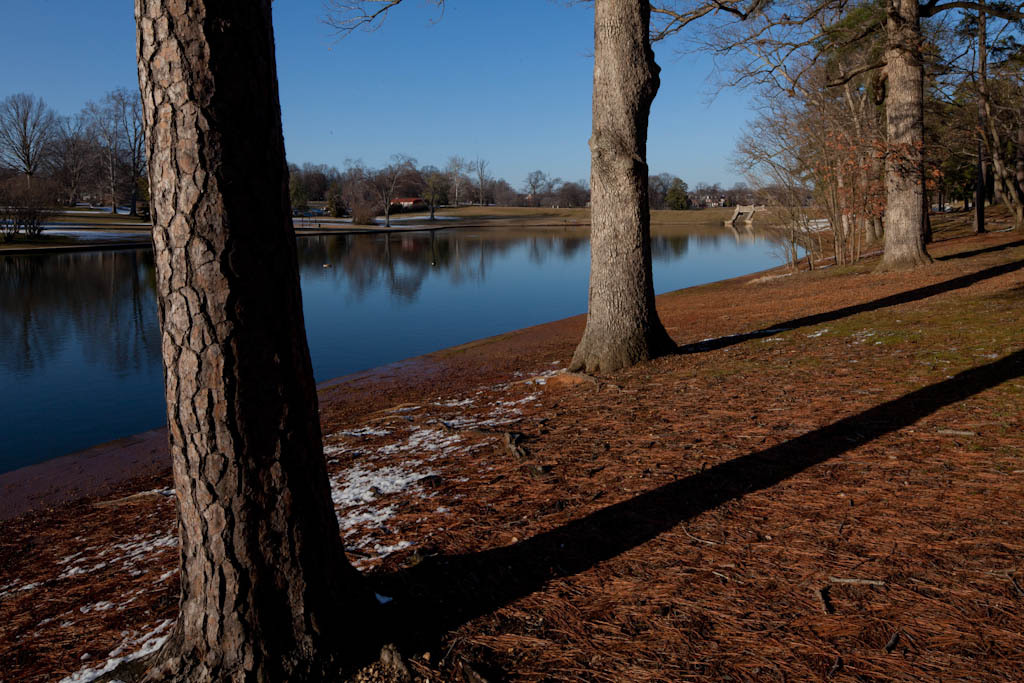
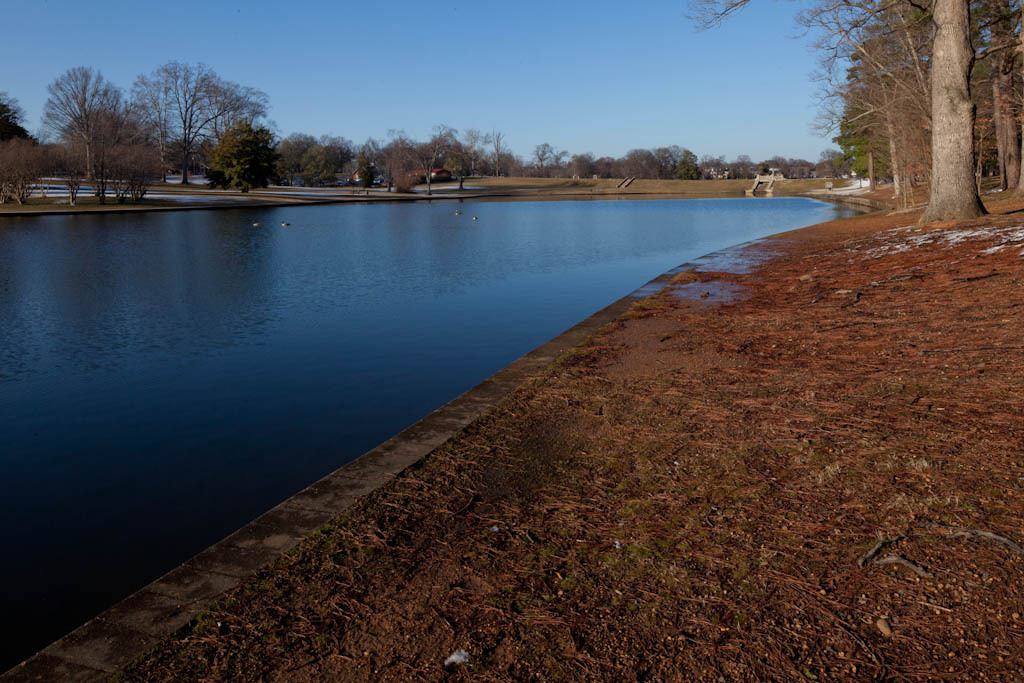
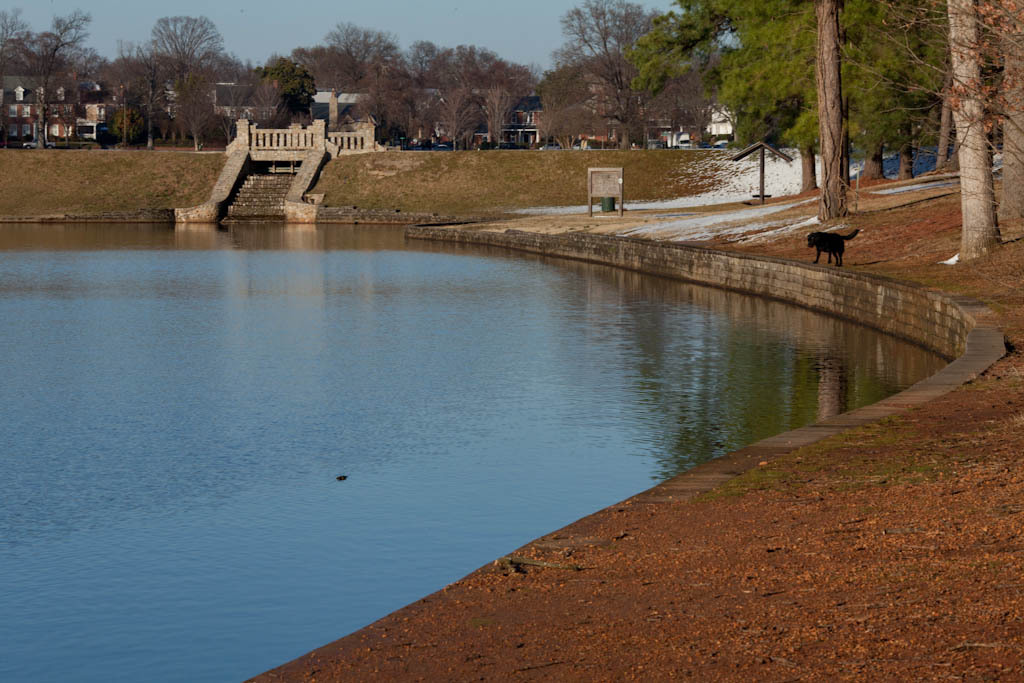
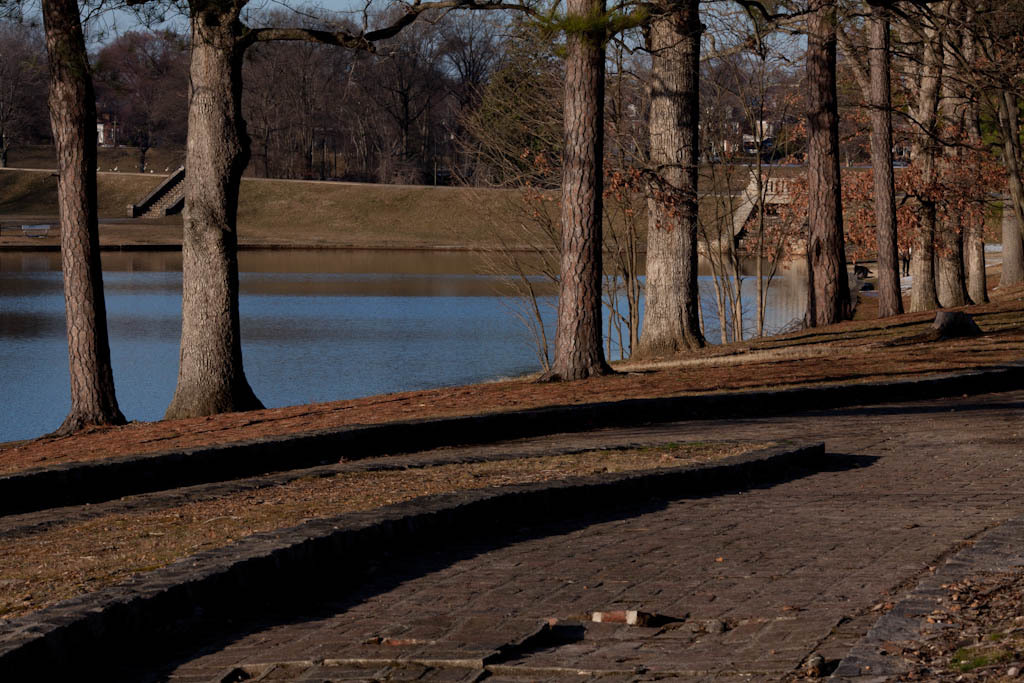
In 1873, city engineer Wilfred Cutshaw urged the city council to approve development of the site and “take such steps toward works of art, as we have means to devote to them.” During his long tenure in his position (1873–1907) Cutshaw acquired eighteen parcels to form the present park. It embodies his talents, combining his technical abilities as an engineer with his aesthetic sensitivity as an architect and landscape designer. The popularity of the park, renamed for the founder of Richmond, William Byrd, attracted builders and developers who constructed fashionable apartment buildings and homes on the perimeter of Cutshaw's “pleasure grounds.”
In 1904, Cutshaw wrote: “Few persons are aware of the importance and purposes of the tree nurseries established … at New Reservoir Park.” From this tree farm, thousands of saplings were transplanted to the streets and parks of Richmond, setting the precedent for the tree-shaded environment that Richmonders enjoy today. The oldest of the trees in the area south of the reservoir are said to be
Cutshaw intended the Boulevard to be the principal approach to the park, in a sequence similar to the linked parks and avenues designed by Frederick Law Olmsted. The effect of a grand entrance to the precincts of Byrd Park was somewhat blurred by the intrusion in the 1970s of the Downtown Expressway, but once past the expressway overpass, the Columbus Memorial and city reservoir form the visual terminus that announces Byrd Park.