Gravers Lane Station

Gravers Lane Station

Gravers Lane Station Richard Guy Wilson

Gravers Lane Station

Gravers Lane Station Gravers Lane Station Photo 4 of Gravers Lane Station
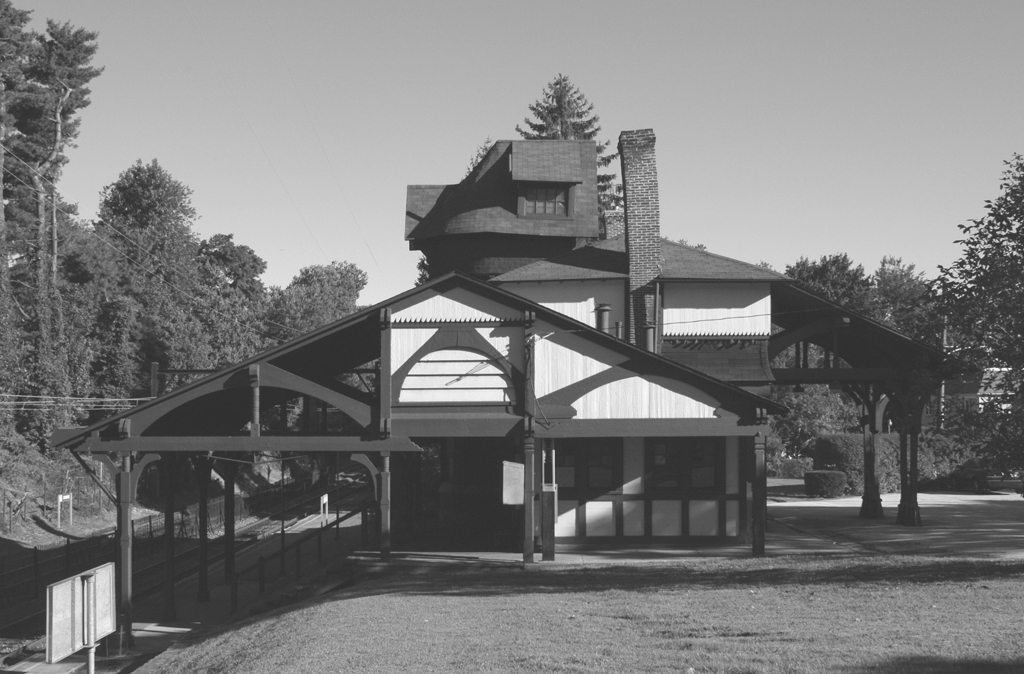
1881, Frank Furness. E. Gravers Ln. and SEPTA R-7 (Chestnut Hill East lines)

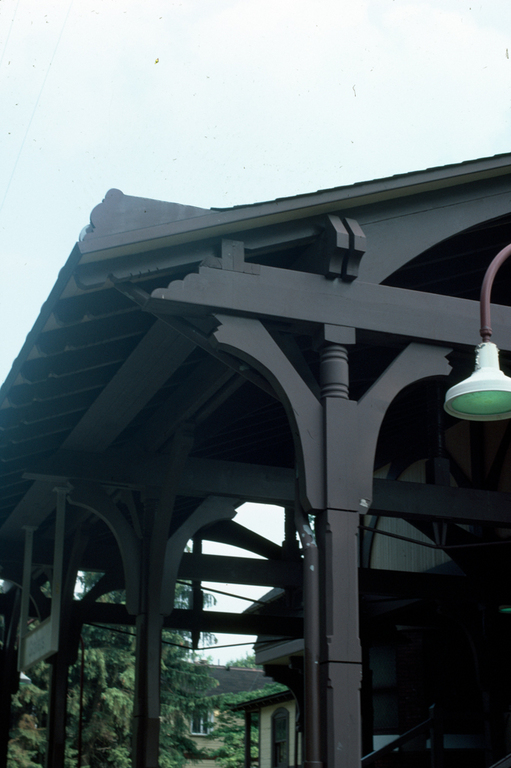
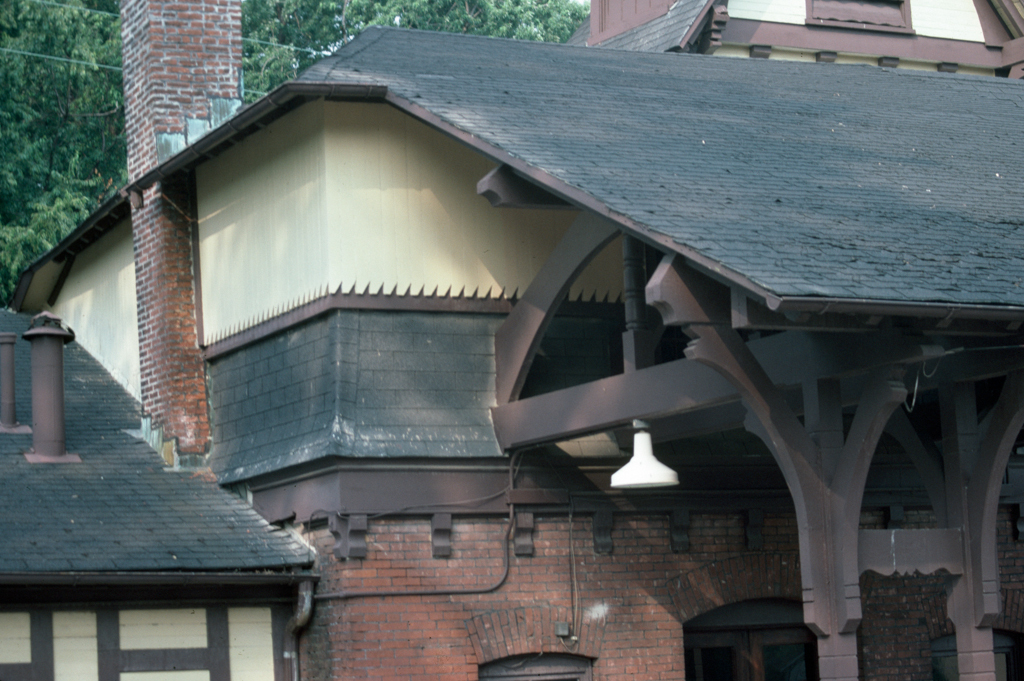
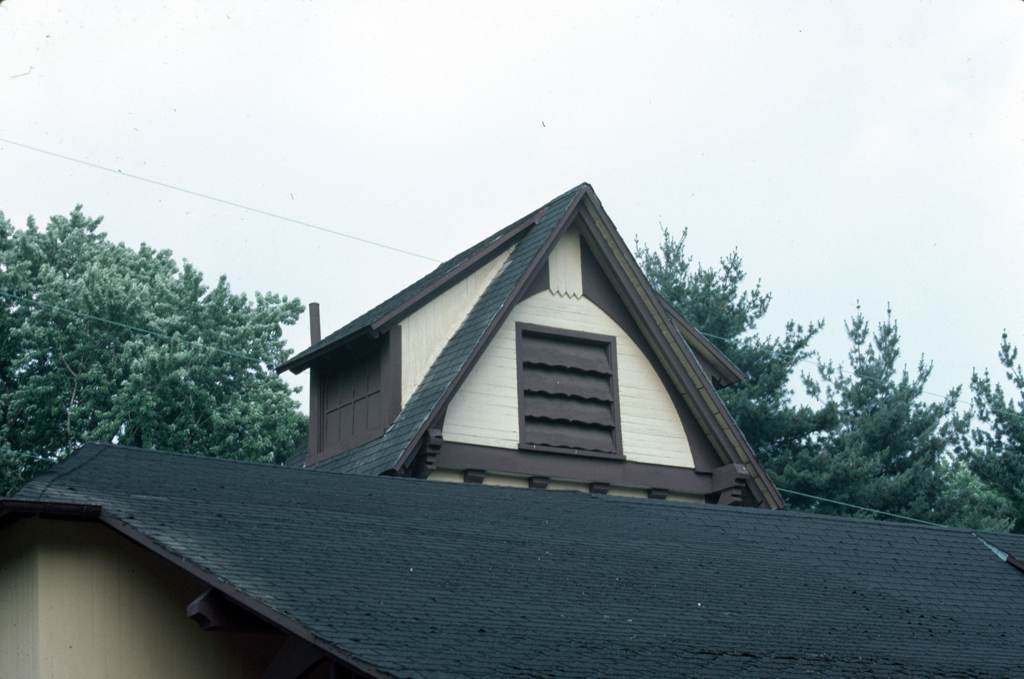
The northeast side of Chestnut Hill developed early because of the presence of the Philadelphia, Germantown and Norristown Railroad (acquired by the Philadelphia and Reading Railroad in 1870). From 1878 to 1885, Furness served as in-house architect for the Reading Railroad, for which he built some 125 stations, including this one. Here he appears to deconstruct a steam locomotive. The cylinder that forms the projecting bay of the station master's office, permitting views up and down the track, might be derived from the locomotive's steam chamber. It is crowned by something like a headlamp while its chimney originally looked like a train whistle. The plan was in fact logical, with a waiting room connected to the drive by a porte-cochere and to the track by a flamboyantly trussed porch that stops just short of a collision with a passing locomotive. Beyond the station master's office is his residence, with a parlor and kitchen on the ground level and bedrooms carried on massive brackets above. Of the other Furness stations on the line, only Mount Airy at Gowen Avenue survives. Farther east on Gravers Lane are several important houses including the stone and shingled George Dunn House (1888) by Theophilus P. Chandler at the corner of Crittenden Street. At 493 and 495 Stenton Avenue is a pair of handsome Queen Anne houses (c. 1881) with half-timber framing and flaring chimneys, designed for Christopher Patterson by James P. Sims.

Writing Credits