

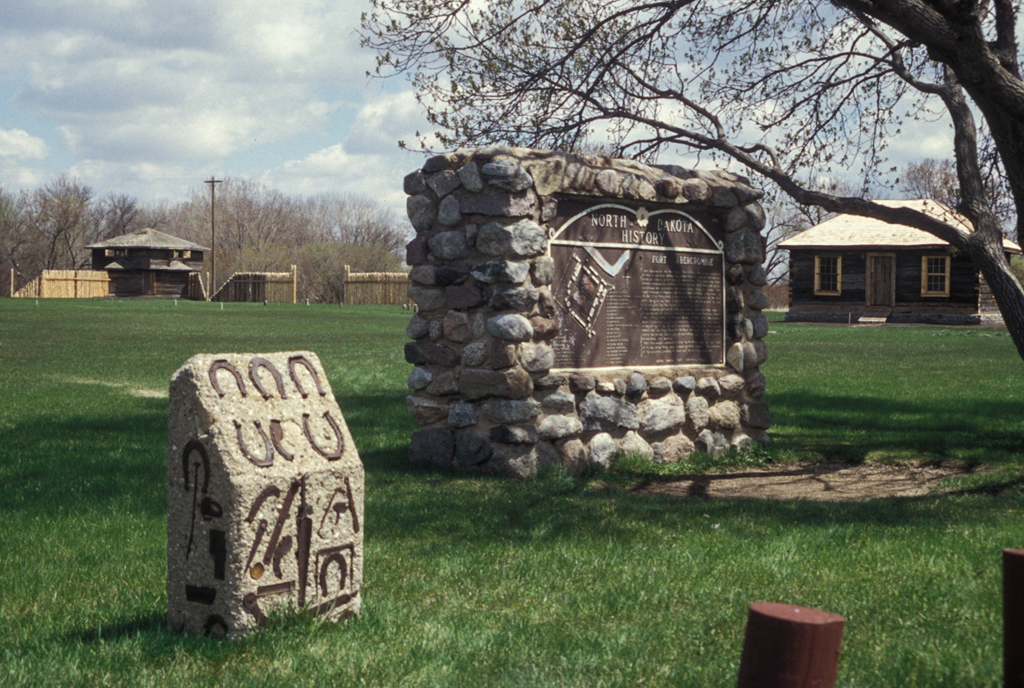
Fort Abercrombie was the first permanent U.S. military fort established in the northern part of Dakota Territory. It guarded the oxcart trails of the later fur trade era, military supply wagon trains, stagecoach routes, and steamboat traffic on the Red River. As a hub for several major transportation routes through the northern Great Plains, this “Gateway to the Dakotas” was also a supply base for two major gold-seeking expeditions across Dakota into Montana. It was the only post in the area to be besieged by Dakota (Sioux) warriors for more than six weeks during the U.S.-Dakota War of 1862, when Minnesota Volunteer Infantry soldiers stationed here offered shelter to settlers. The fort was not protected by blockhouses or a palisade during the siege, but these defensive structures were constructed soon after. Once the fort was abandoned in 1877, most buildings were removed from the site. A WPA project in 1939–1940 reconstructed three blockhouses and the stockade, and returned the original military guardhouse to the site. The WPA also constructed a wayside park just west of the historic site at the edge of the town of Abercrombie. Some of the reconstruction work at the fort from the 1930s has been challenged for its historical accuracy. In 2001, a major reconstruction was commenced and the site is more faithfully interpreted today, with a new visitors’ center just to the west.
Fort Abercrombie State Historic Site
1858–1877; 1936 Wayside Park; 2001 reconstruction; 2001 Visitors’ Center, LJA Architects. County Rd. 22, 0.5 miles southeast of Abercrombie