

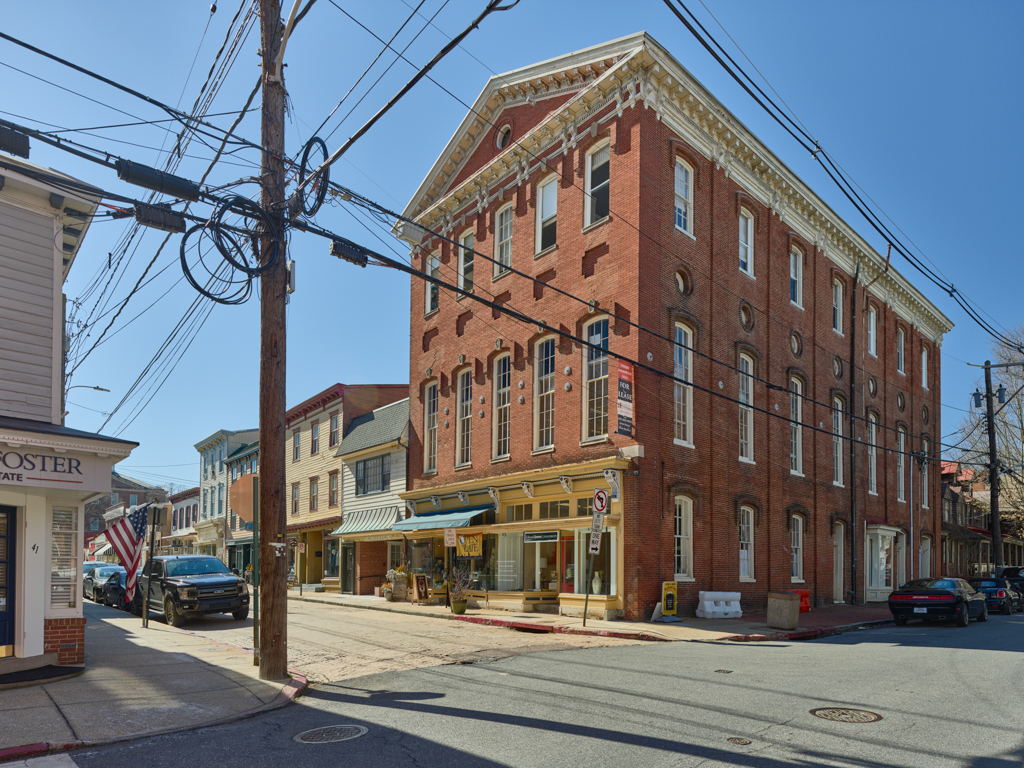
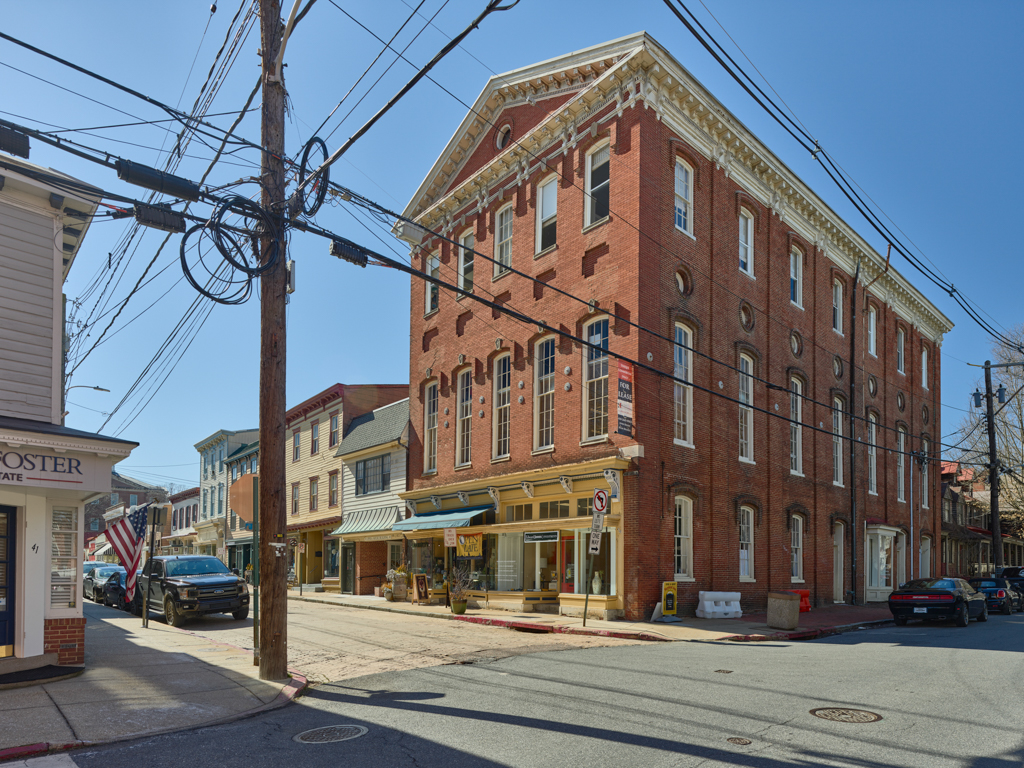
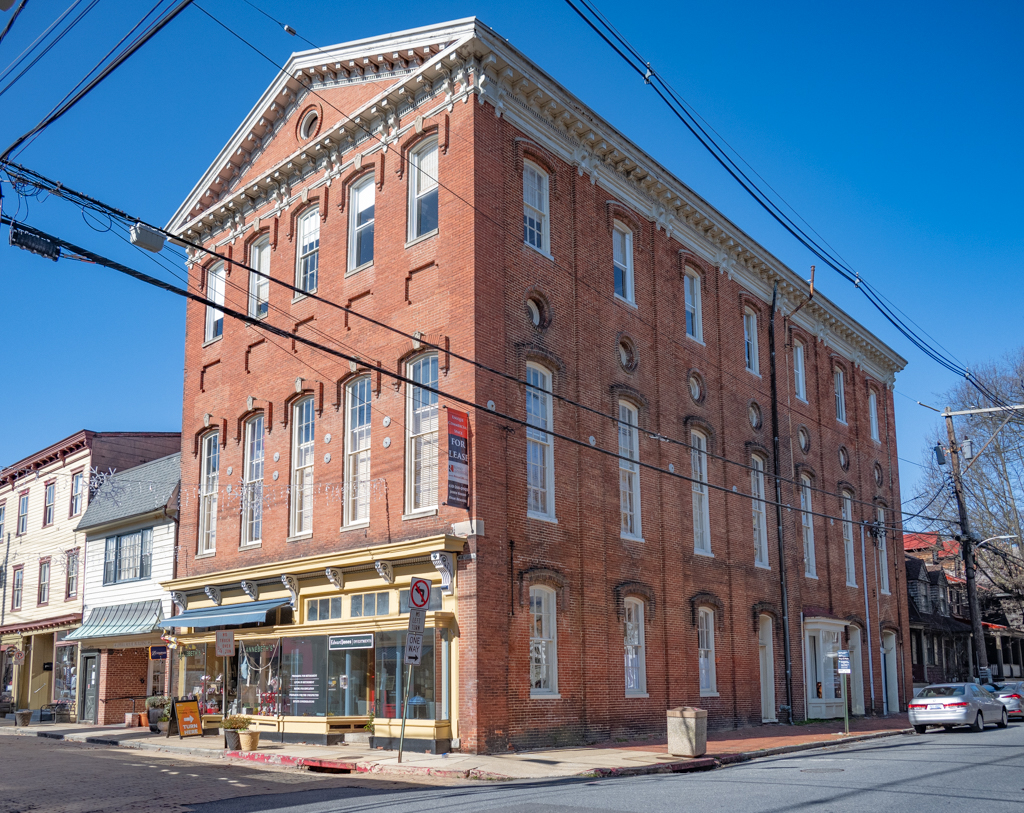
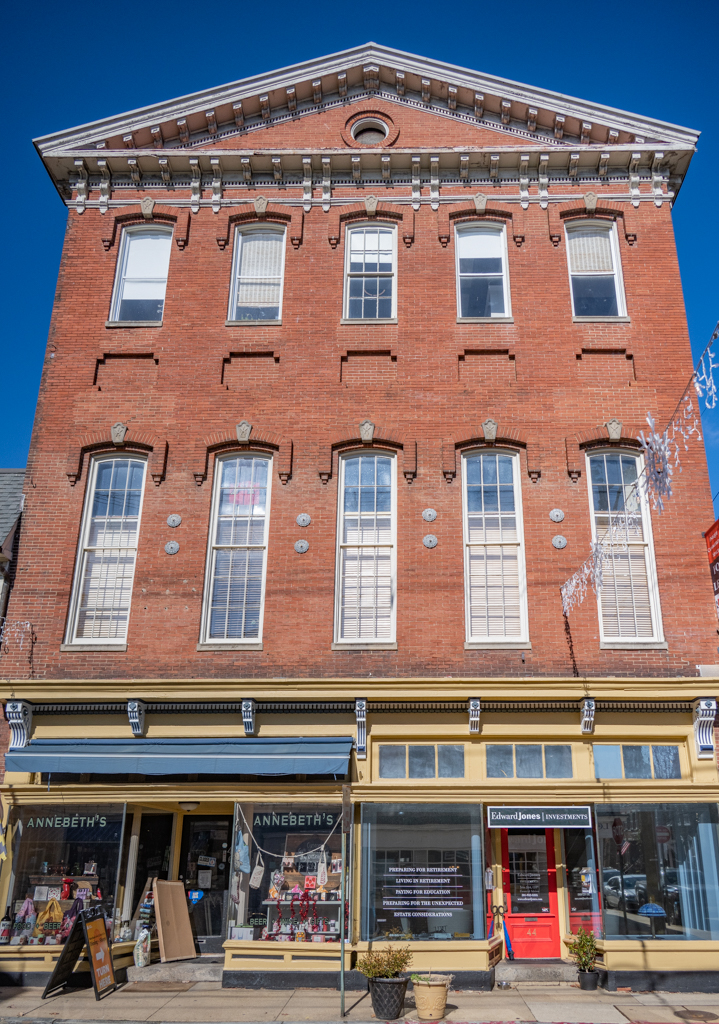
This distinctive Italianate structure was erected for the masons by a local contractor as a combination lodge hall, opera house, and retail space. In the early years of Freemasonry, meetings were held in homes or private tavern rooms. During the late nineteenth century, laws made it possible for fraternal and benevolent societies to erect buildings and rent space that generated income to pay for their meeting rooms without being taxed as commercial landlords. The six-hundred-person, second-floor opera house provided the city’s only performing arts venue, operating from 1873 to 1907. The grand opening featured a production starring Miss Laura Keene and her New York Company of Performing Artists. Rising three stories, this imposing gable-front building with dentiled pediment and heavily bracketed overhanging cornice commands a striking presence. The intact extended-bay street-front display windows date from c. 1900. The tall second-story windows denote the location of the former opera house and include elaborate drip-mold lintels with contrasting keystones incised with the Masonic symbol. The side elevation along Prince George Street is ornamented by brick pilasters and oculus windows.
MASONIC HALL AND OPERA HOUSE
1872, Joseph M. Marshall, builder; c. 1900 renovated. 44–46 Maryland Ave.