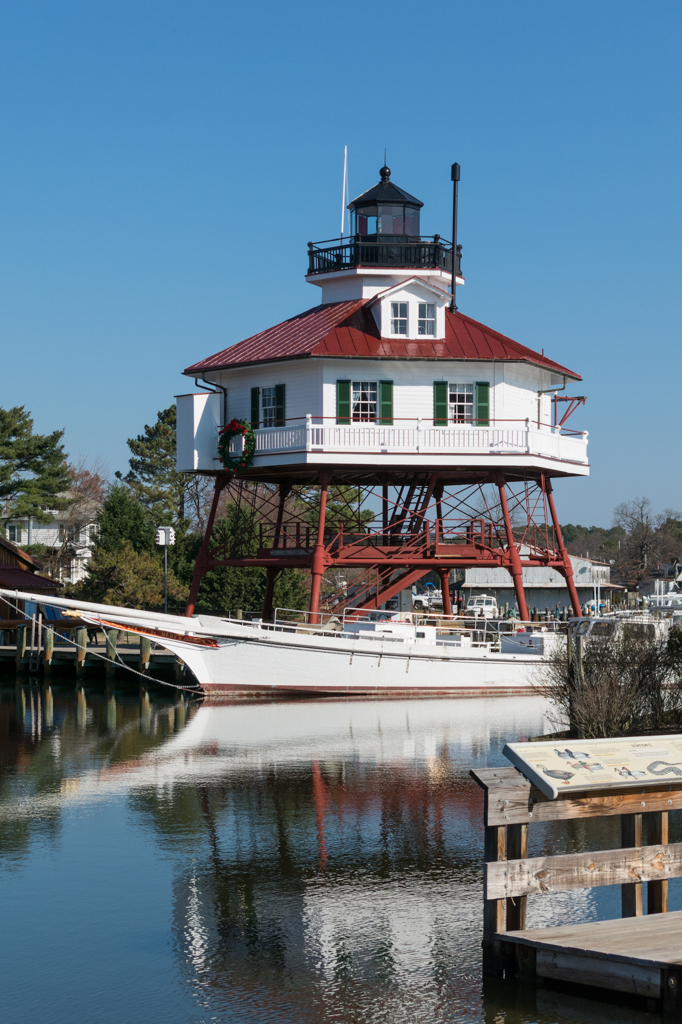
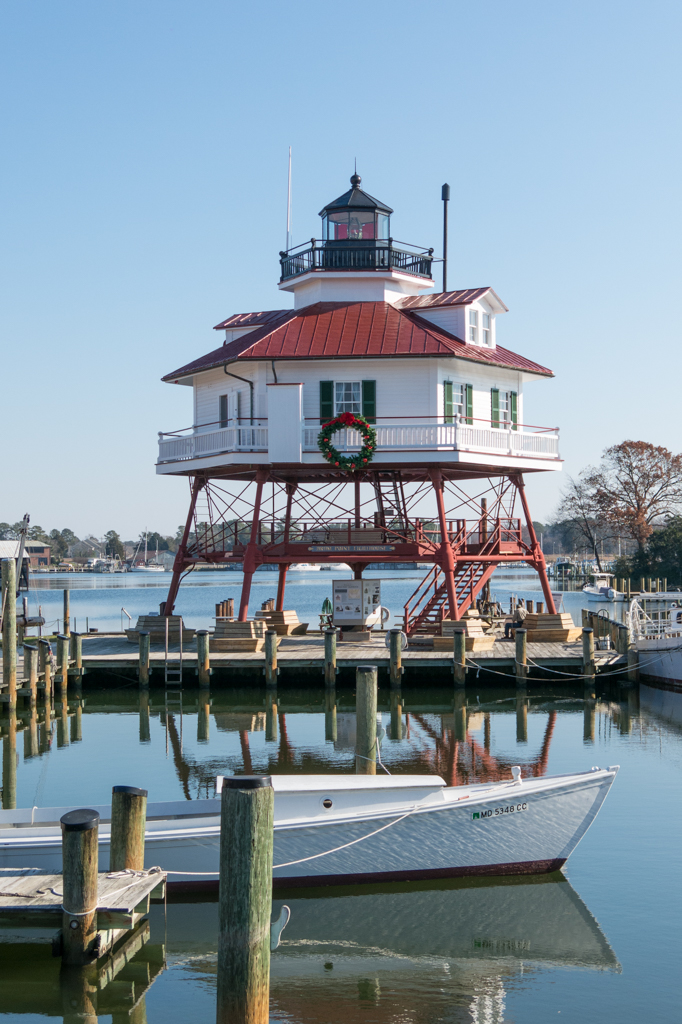
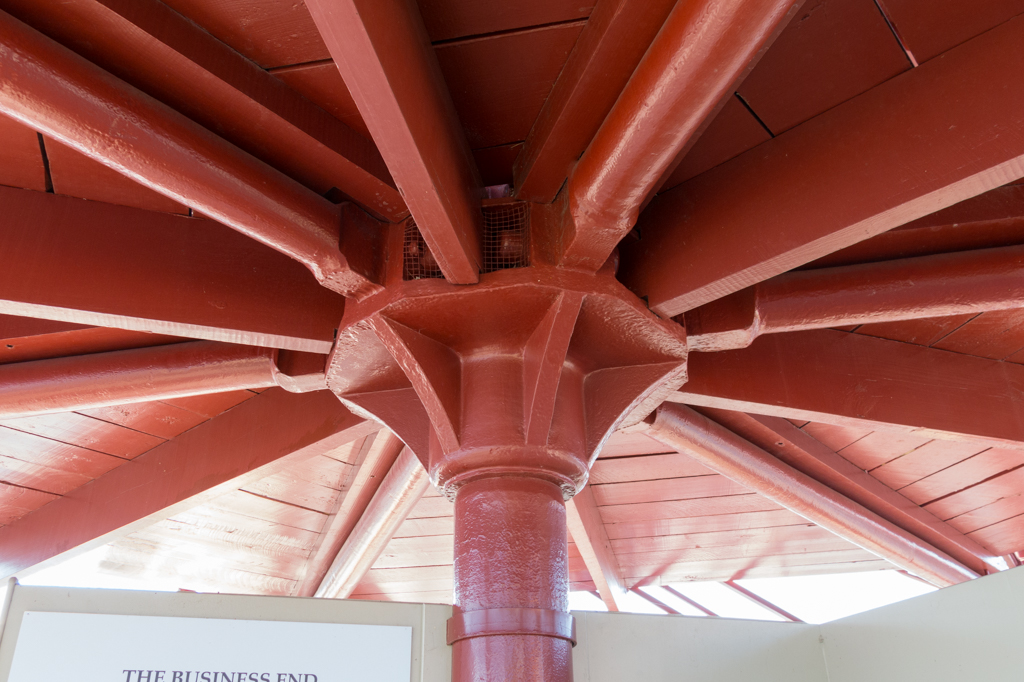
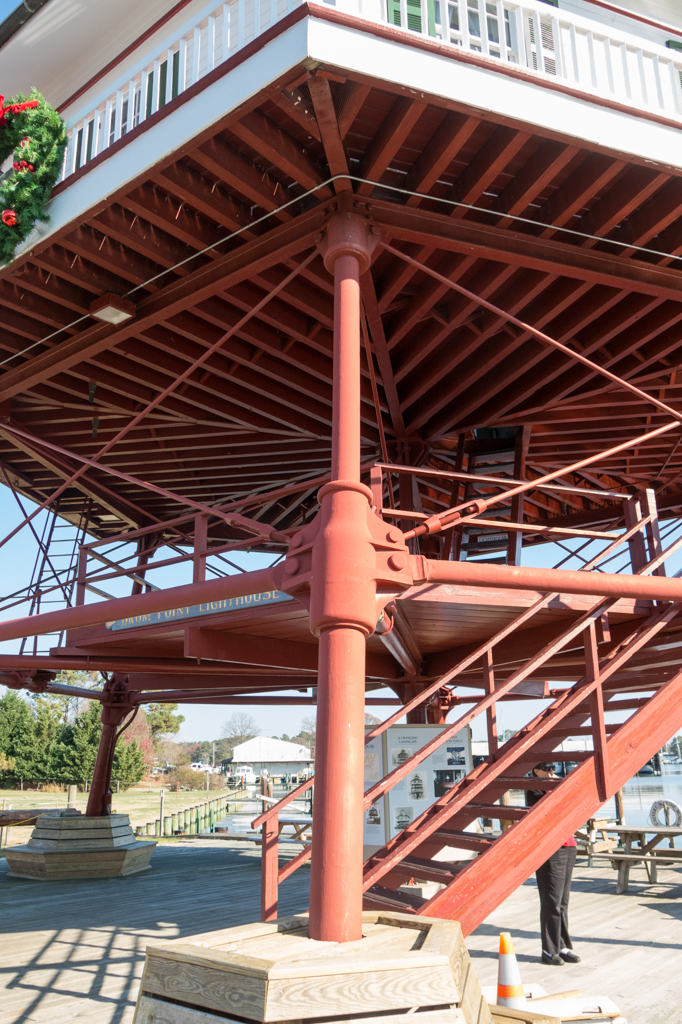
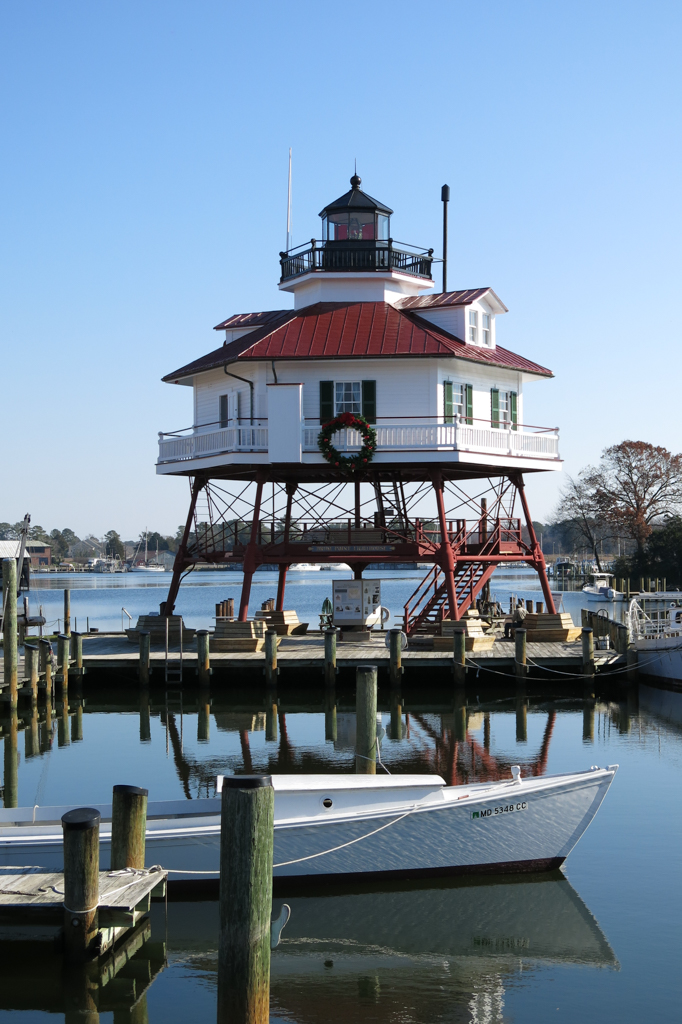
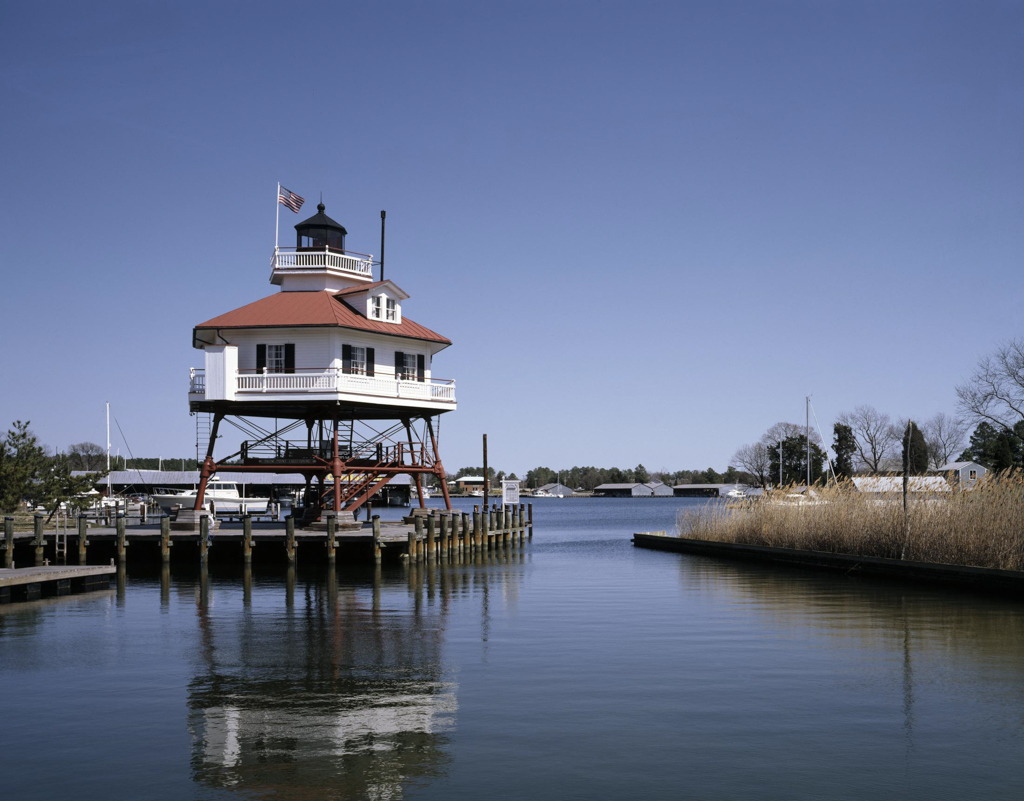
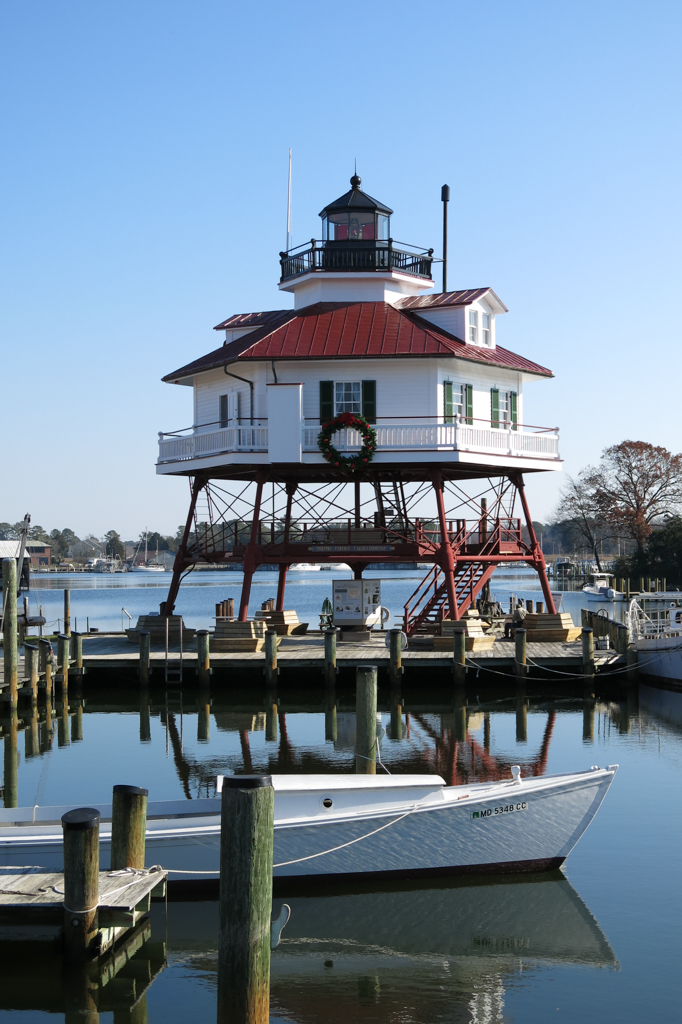
The Drum Point Lighthouse was built in five acres of open water at the mouth of the Patuxent River by the U.S. Lighthouse Board in 1883. Receding water levels left it stranded on the beach at low tide, and it was decommissioned in 1962. In 1975 this hexagonal screw-pile lighthouse was moved to Back Creek at the Calvert Marine Museum and restored for interpretation and tours. Screw-pile lighthouses feature buildings standing on an iron frame with angled piles screwed into the seabed. The auger-like flange at the bottom of the iron piles was well-suited for anchoring the lighthouse structure into the often soft and shallow bottom of the Chesapeake Bay. The Lighthouse Board built over forty screw-pile lighthouses in the Chesapeake starting in the third quarter of the nineteenth century. There are now just four surviving screw-pile lighthouses in Maryland—Drum Point; Thomas Point Shoal Light Station, the only one at its original site; Hooper Strait Lighthouse, now located at Chesapeake Bay Maritime Museum; and Seven Foot Knoll Lighthouse now located at Baltimore’s Inner Harbor. Drum Point incorporates the keeper’s quarters into its structure, with four rooms on the first level surrounded by an open gallery. The second floor has two rooms located under the hexagonal roof and lit by dormer windows. The cupola is surrounded by a small open gallery and contains the light, originally a fourth-order Fresnel lens.

