

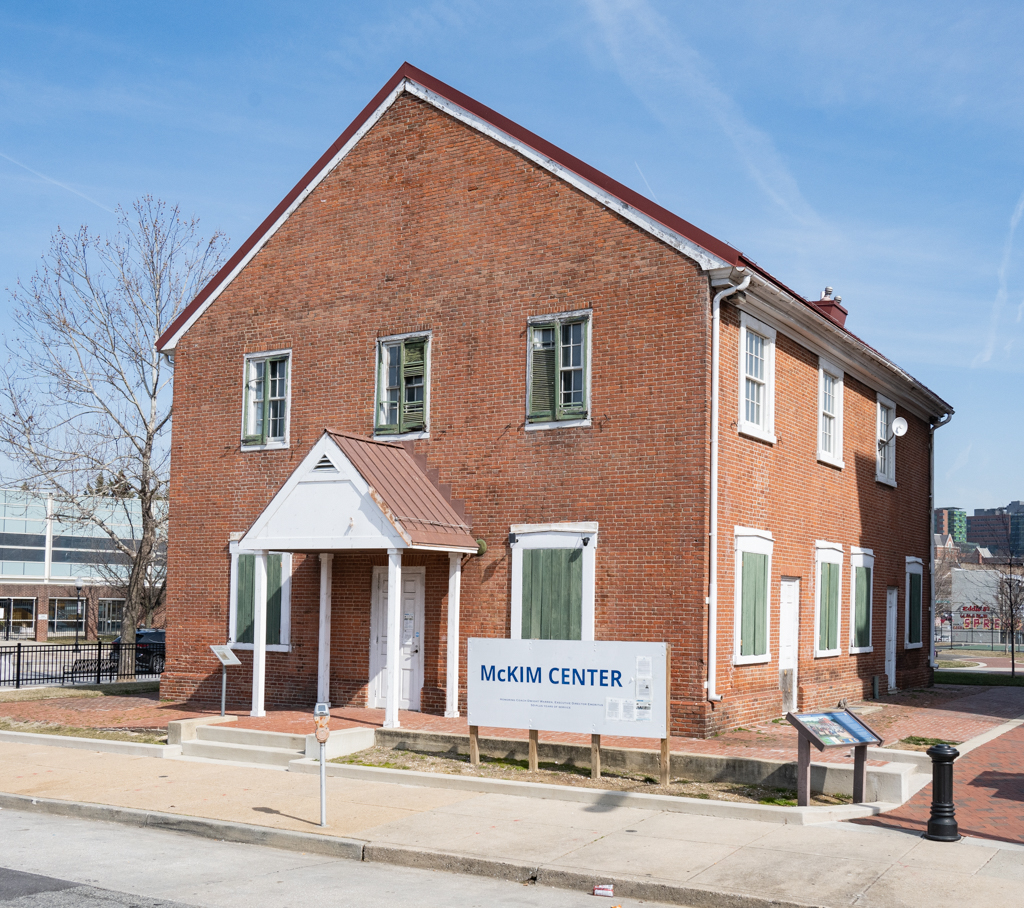
Among the oldest religious buildings in the city, the meetinghouse reflects both the diversity of religious groups represented in Maryland and Friends’ influential role in Baltimore’s early development. Although Maryland was established as a Catholic colony, there were more Quakers in the state by the turn of the nineteenth century. The meetinghouse was attended by some of Baltimore’s most prominent businessmen and philanthropists including hospital founders Johns Hopkins and Moses Sheppard; first president of the B&O Railroad Philip Thomas; John McKim, industrialist and founder of the McKim Free School; members of the Ellicott family, founders of Ellicott’s Mills; and industrialists and abolitionists Elisha Tyson and son Isaac. Altered from an English plan to conform to the prototype developed by American Friends with separate but equally sized rooms for men and women during the late eighteenth century, Old Town highlights an important period of transition. Vacated in the 1920s, it was restored in 1967 and reopened as part of the Peale Museum system, leased to the McKim Center to provide programing for the underprivileged youth of the community.
OLD TOWN FRIENDS MEETING HOUSE (AISQUITH STREET MEETING HOUSE)
1781, George Matthews; 1967 restored, Francis H. Jencks. 1201 E. Fayette St. at Aisquith St.