

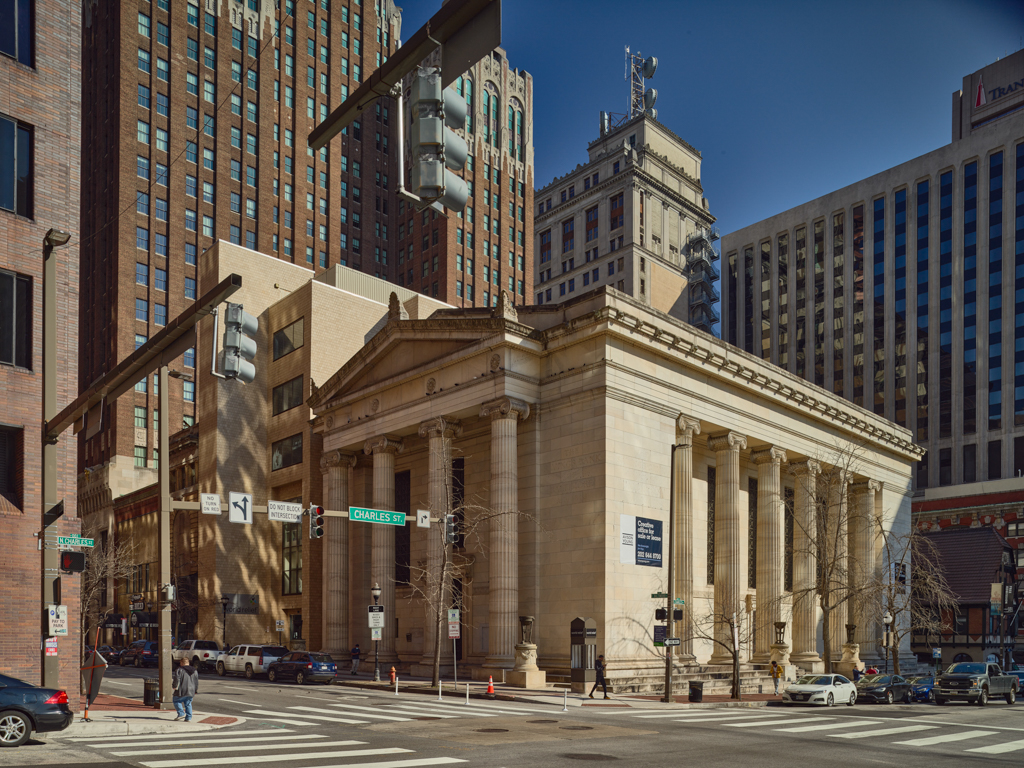
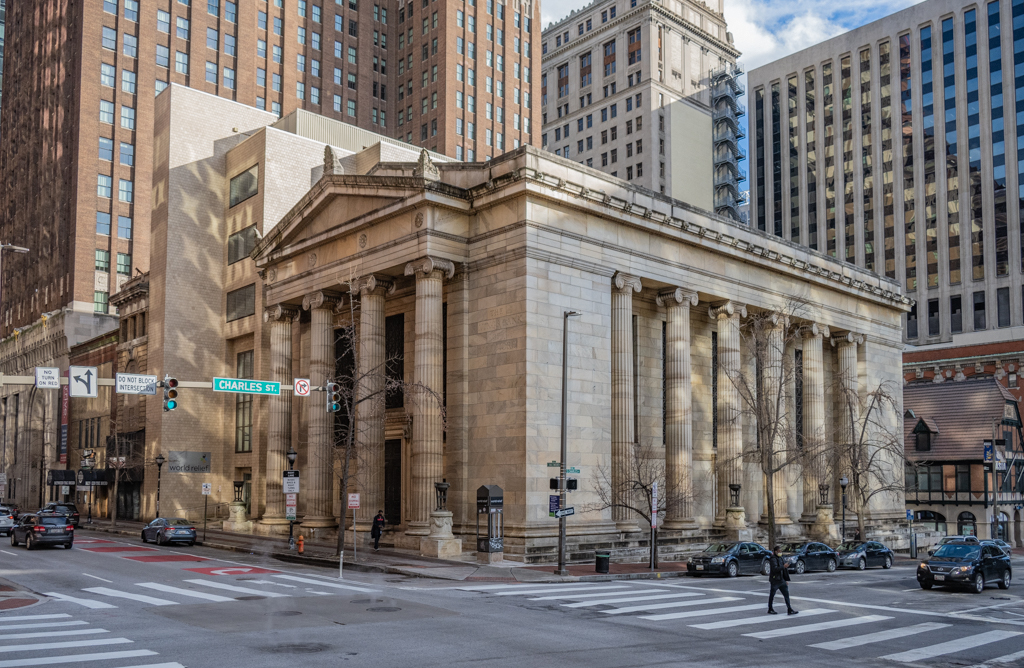
This so-called Temple of Thrift built of ashlar Beaver Dam marble was modeled after Greek temples. Taking advantage of its corner location and to impress potential customers, the bank includes two facades, with a classical portico to the front and an inset colonnade on the side, both with full-height fluted Ionic columns. Contrasting with its imposing classical details, decorative cast-iron window grilles provide a notable modern touch. The Savings Bank of Baltimore was established in 1818 by a group of the city’s wealthiest citizens to provide a safe repository for the savings of the less affluent yet “worthy poor” as a means of encouraging thrift. This building was the bank’s second home, erected after the first was destroyed in the 1904 fire. The classical design was selected by the bank’s directors to express security, strength, and dignity.
SAVINGS BANK OF BALTIMORE
1905–1907, Parker and Thomas. 1 E. Baltimore St.