

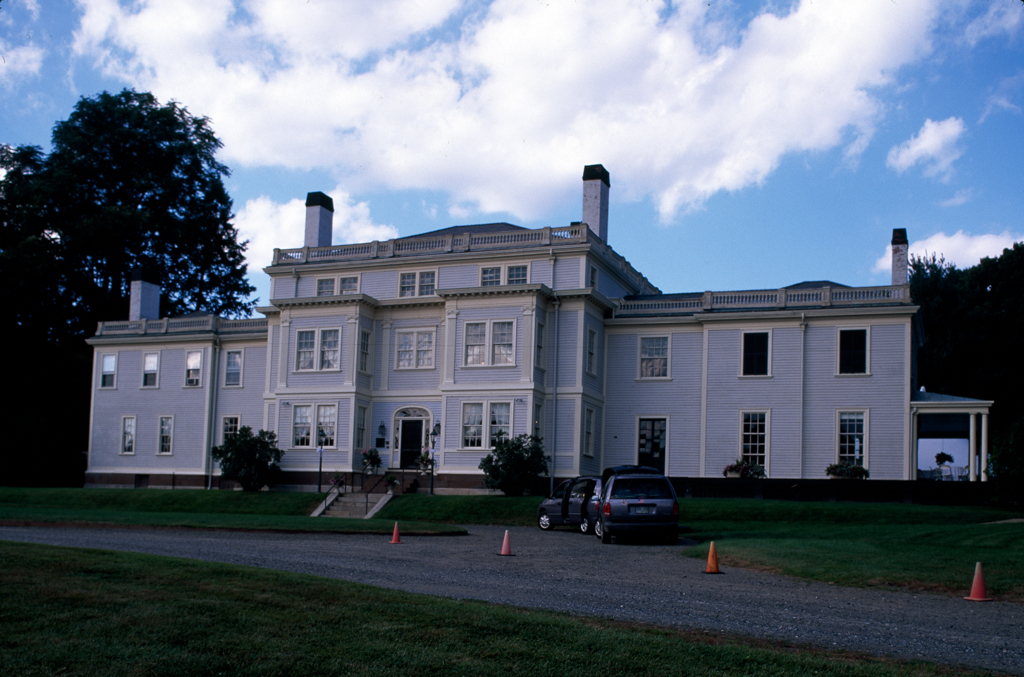
The Lyman Estate, a distinguished example of a gentleman's country seat of the late eighteenth century, is significant for its architect, Samuel McIntire, and for its early landscape gardening laid out by English-trained gardener William Bell in the picturesque style. The property also contains the earliest surviving greenhouses in the region (1800, 1804). Theodore Lyman, successful merchant in the China trade, commissioned the clap-boarded five-part Federal-style design in 1793, though the right-hand wing was not completed immediately. In his 1822 Encyclopedia of Landscape Gardening, J. C. Loudon described the Vale as “one of the most beautiful and artistically arranged estates in the country,” notable for its specimen plantings such as the giant copper beech. In 1882 the Lymans added an upper story and remodeled the interior in keeping with Victorian taste, though they kept the two most significant McIntire spaces, the oval parlor and the ballroom, intact. In 1917, architect Nina Tupper “recolonialized” the other major rooms.
The Vale, Lyman Estate
 Peter Vanderwarker or Antonina Smith
The Vale, Lyman Estate
1793, Samuel McIntire; 1882, Hartwell, Richardson and Driver; 1917, Nina Tupper. 185 Lyman St.