

In the opening decades of the nineteenth century, the African American community of Boston began to concentrate in this area of Beacon Hill. Here white housewrights built wooden residences that became the earliest black-owned houses in Boston. On Smith Court, the demolition of a ropewalk in 1799 allowed for new buildings rented or sold to shoemakers, clothing dealers, chimney sweeps, and bootblacks. In 1839, James Scott, an active opponent of the Fugitive Slave Law in 1850, purchased 3 Smith Court (NHL), a three-story clapboard house built in 1800. In 1851 he rented part of the structure to William C. Nell, an integration activist and the country's first published black historian. At the end of the street, eight-foot-wide Holmes Alley provided neighborhood residents a back passage to nearby jobs. Not surprisingly,
BH34
) and Abiel Smith School (
BH35
).
Smith Court
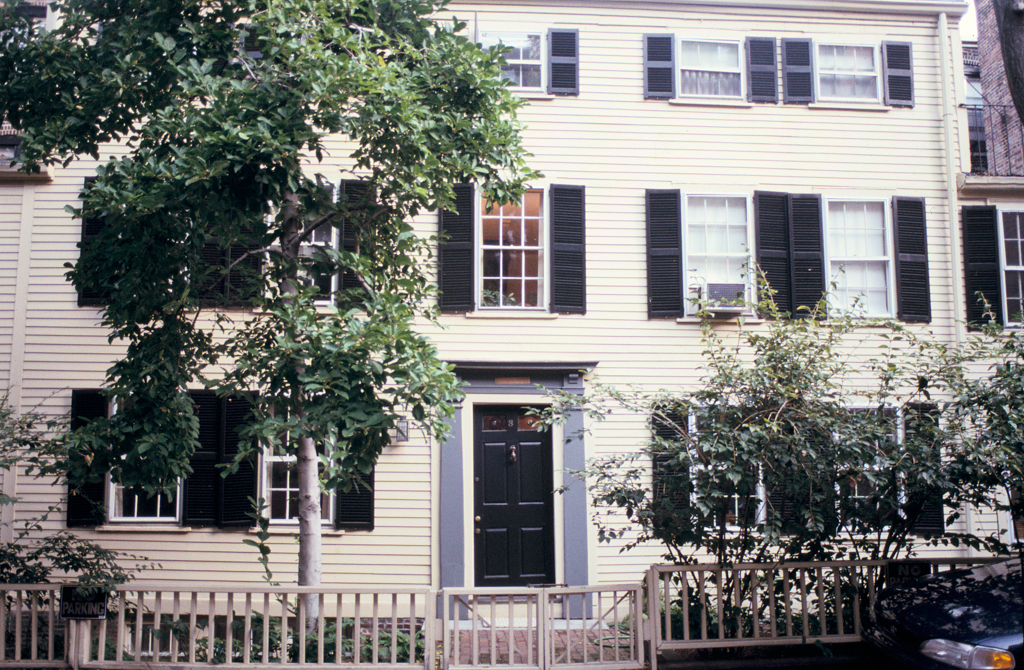 Keith Morgan
Smith Court
1799–1851. 3 Smith Ct.