

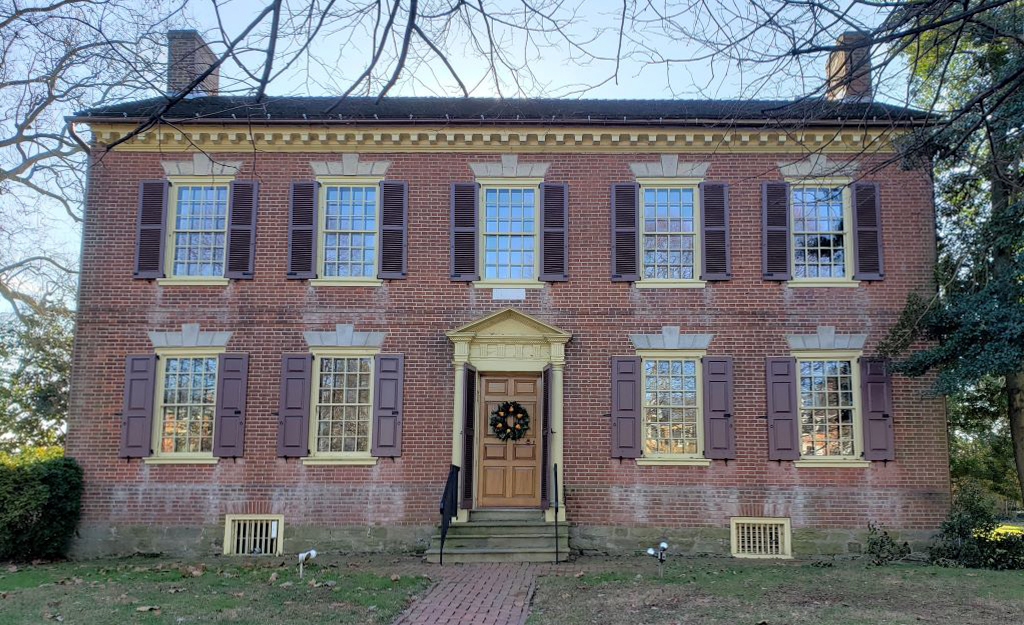
This somewhat more modest, but exquisitely proportioned, brick predecessor to the Corbit-Sharp House (LN6) was built for Corbit's brother-in-law, a local dry-goods merchant who sold imported goods bought from Philadelphia dealers. Iron numerals give the date. No evidence links Robert May, carpenter for the Corbit-Sharp House, with this building, but it seems plausible that he was involved, given the similarly high level of finish and interior paneling (see also John Lewden House,
MC13
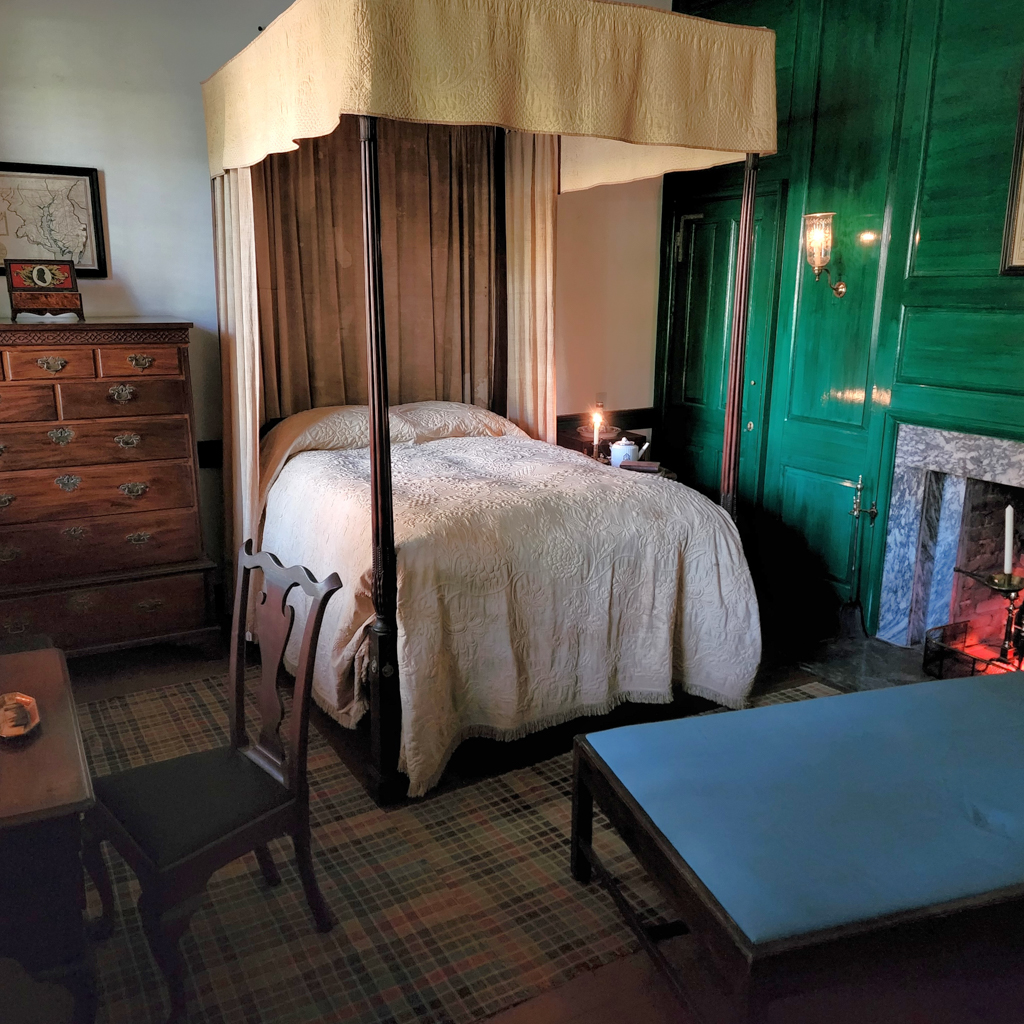
). Four rooms occupy the main block of the Georgian dwelling, with nine more in a tall wing. As Sweeney recognized, the narrow format (five bays wide but just one-pile in depth) was frequent in upper Delaware. Stone for foundations, lintels, and steps was imported from outside the state. The builder's son, David Wilson Jr., went bankrupt, sold the house in 1829, and moved to Richmond, Indiana, as a brush peddler. Documents relating to his legal woes give invaluable information about the contents of the house. Mary Tatnall Warner, daughter of Mary Wilson and Daniel Corbit, bought the place in 1901 to preserve it as a family shrine. In 1924, it became the first historic house in Delaware to be opened to the public, under David Wilson Mansion, Inc., which ultimately donated the property to Winterthur in 1969 after restoration. Refurnishing in 1984 followed the documents of 1829. A nineteenth-century muskrat-skinning shack was moved to a location behind the house as a museum exhibit, recalling the once-lucrative pelt trade. The nearby stable is of stone, brought here from outside of Delaware; its datestone reads, “Built 1812, Rebuilt 1877.”
Wilson-Warner House
1769. 1960s restoration, Robert Raley. 202 Main St.