

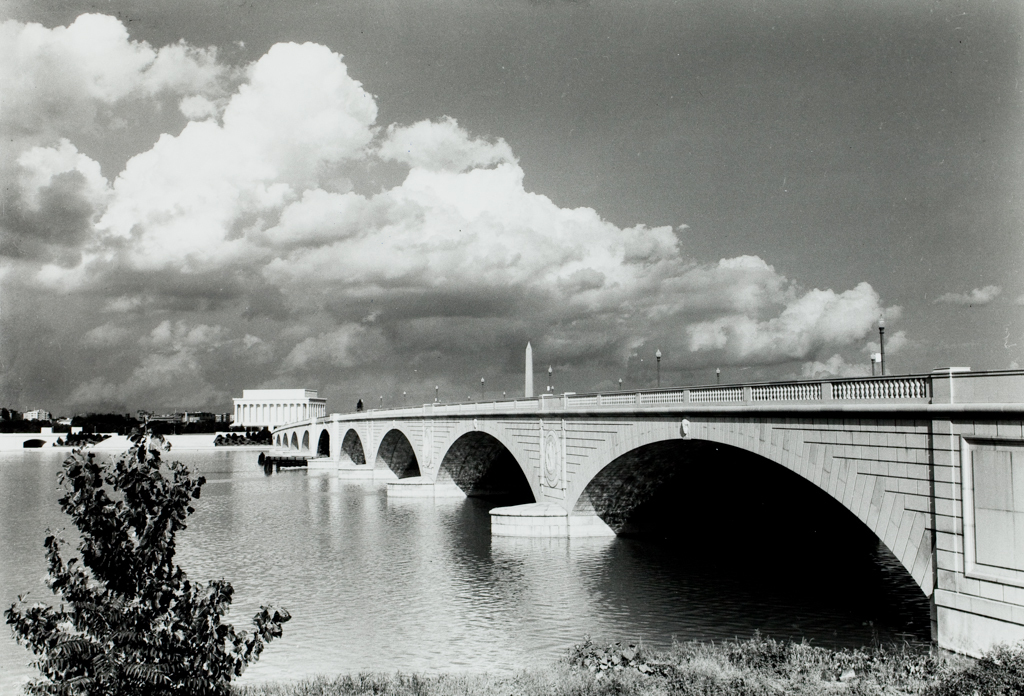
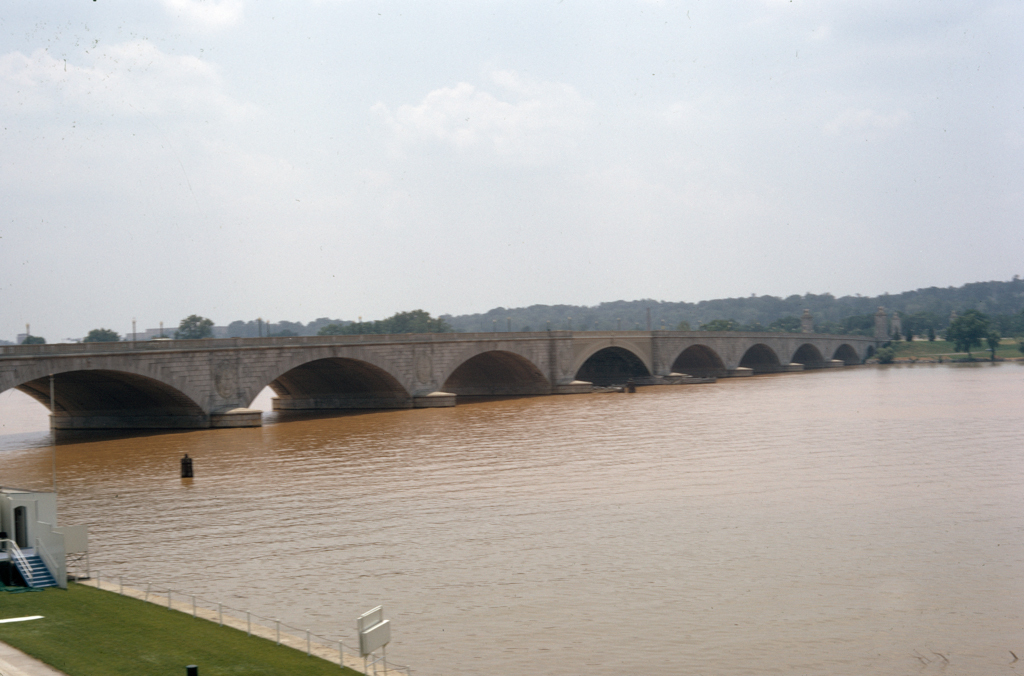
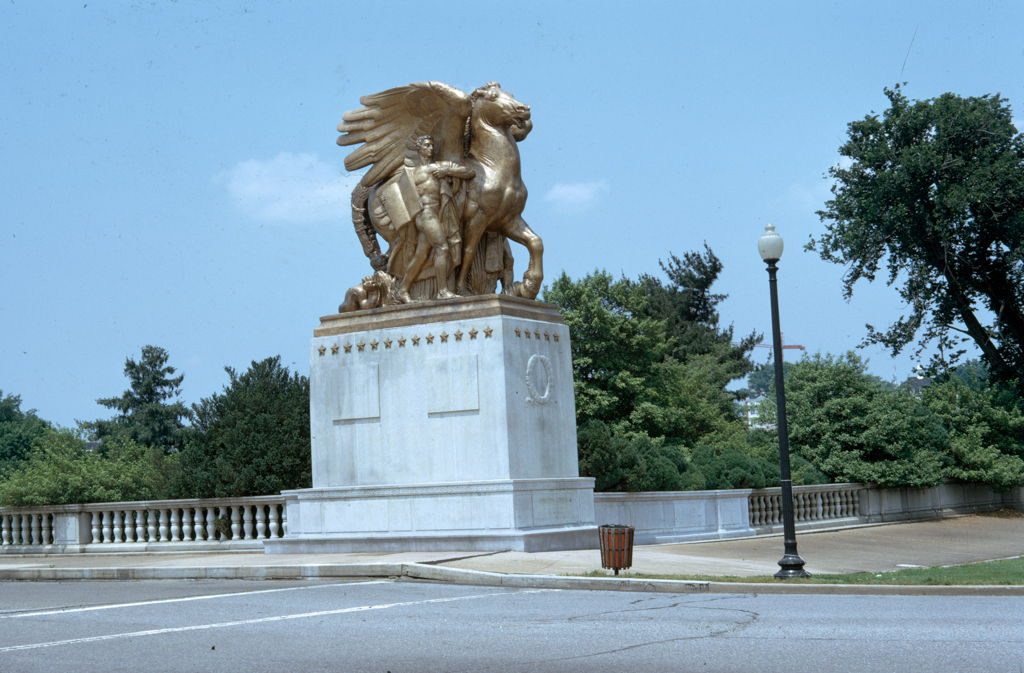
A bridge between Washington and Arlington, Virginia, was frequently proposed during the nineteenth century, but its site and orientation were not fixed until the Senate Park Commission included it as a formal and symbolic element in its 1901–1902 plan. Visually connecting the Lincoln Memorial to the CustisLee Mansion (Robert E. Lee's home) in Arlington National Cemetery, it is a metaphorical as well as an actual bridge. In 1922 the Arlington Memorial Bridge Commission began developing the bridge's dual role as a
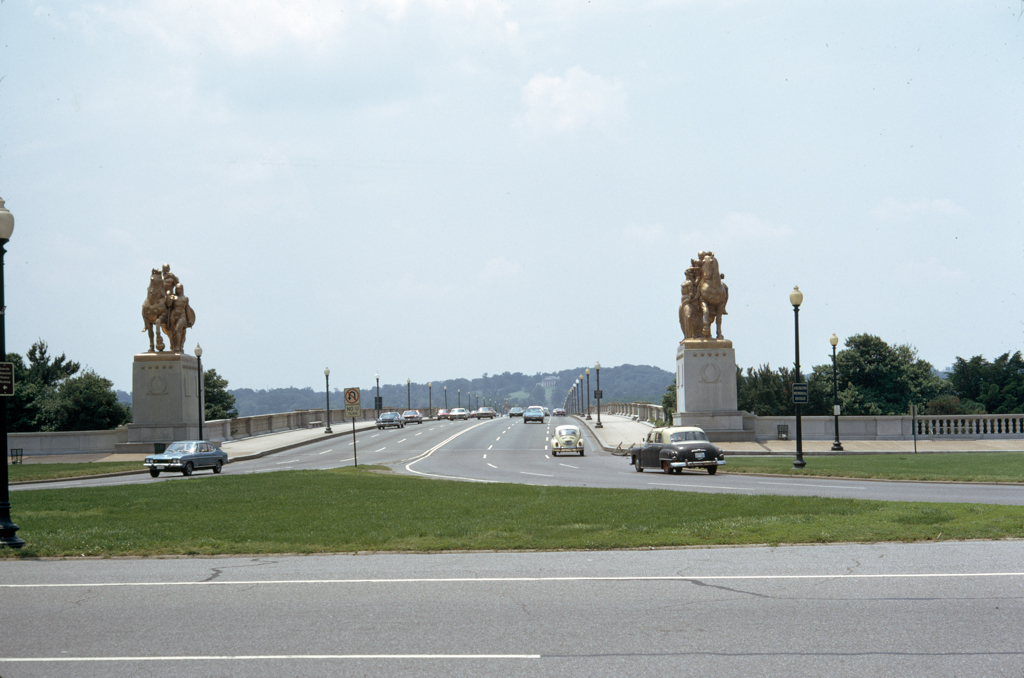
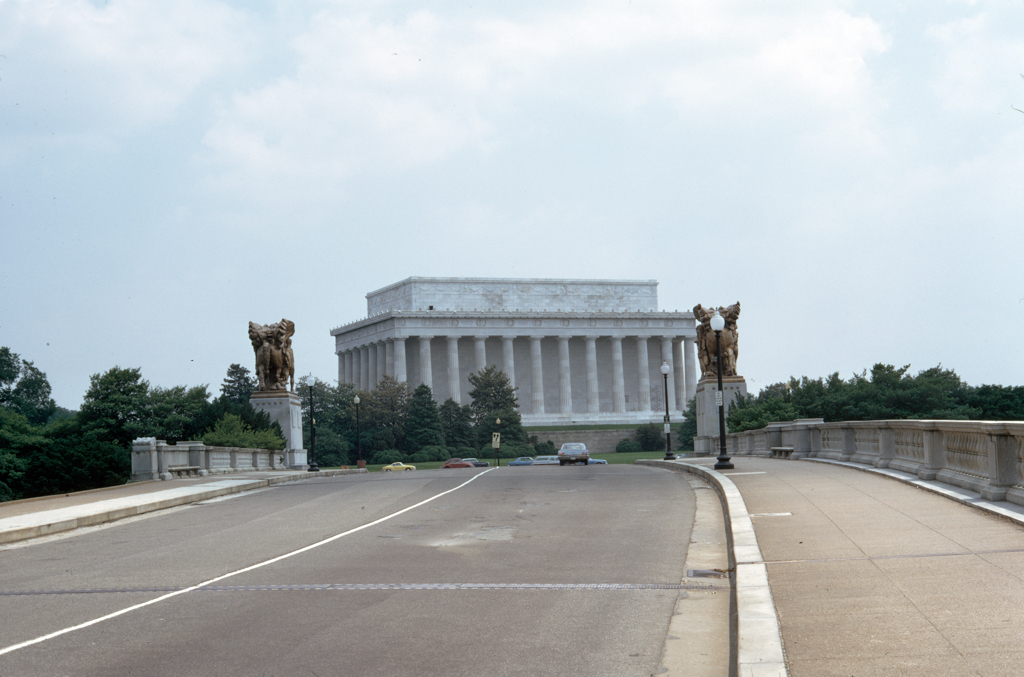
The reinforced concrete bridge (2, 138 feet long; 90 feet wide) consists of nine low arches and an electrically operated draw. Its formal inspiration was Roman aqueducts. The arch voussoirs and rusticated spandrels are faced with dressed North Carolina granite. Six-foot-tall heads of bison in the keystones were sculpted by Alexander Proctor; eagles in relief roundels set between fasces on the piers are the work of C. Paul Jennewein as are the eagles atop the pylons at the Arlington end of the bridge. Two monumental groups of equestrian sculpture at the Lincoln Memorial circle were part of McKim, Mead and White's design. Leo Friedlander's The Arts of War flanks the entrance to the bridge, and James Earle Fraser's The Arts of Peace leads to Rock Creek Park. Commissioned in 1925, these gilded bronze statues were not cast and put in place until 1951. Both sets recall the European use of similar equestrian sculptures in an urban context, particularly the four groups on the Place de la Concorde in Paris. This intense historicism in conjunction with thoroughly contemporary engineering, so typical of the period, resulted in a work that contributes considerably to Washington's monumental core.