

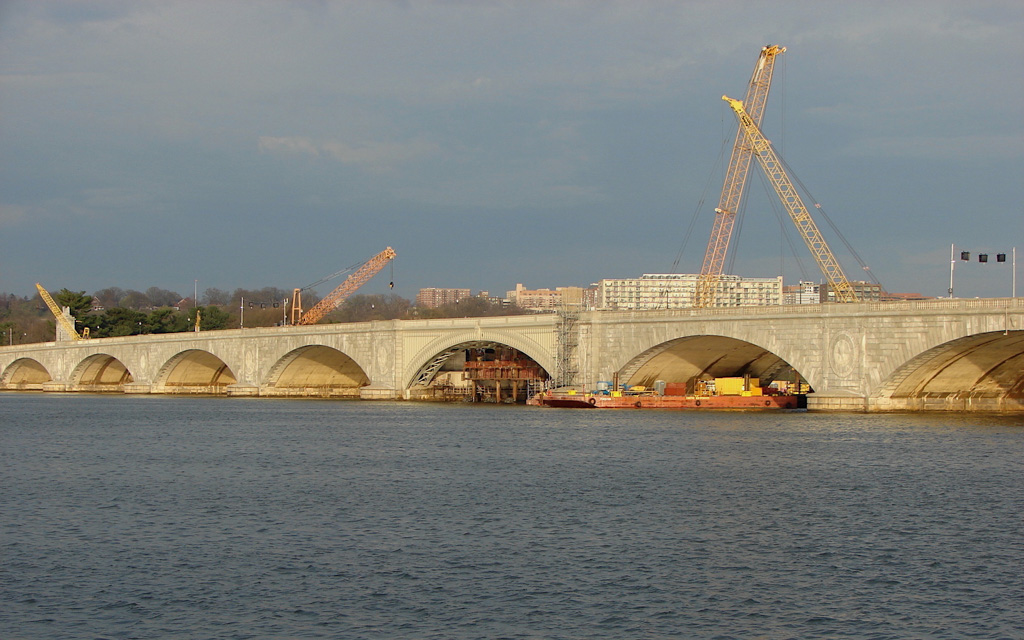
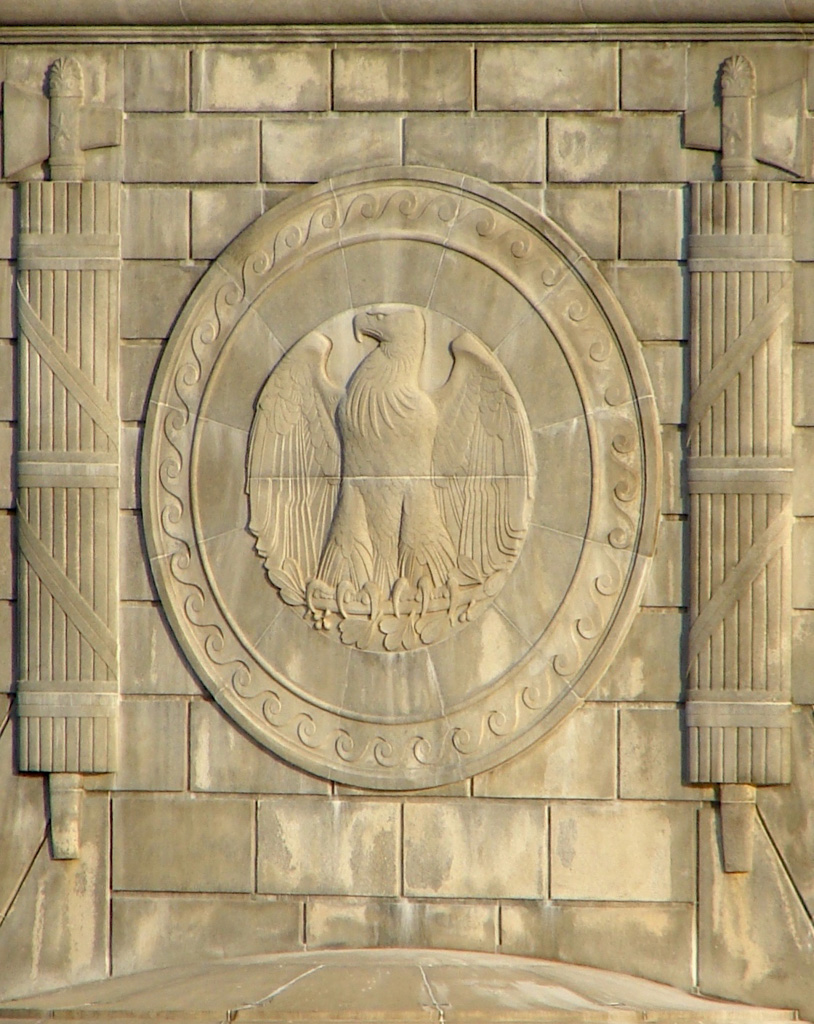
The idea of a bridge symbolically linking the North and the South and providing a grand entranceway into Washington and Arlington National Cemetery came forward several times in the latter nineteenth century. Under the McMillan Commission of 1901–1902 (Daniel F. Burnham, Charles Follen McKim, Frederick Law Olmsted, Jr., and Augustus Saint-Gaudens) a low, Roman-arched bridge linking the projected Lincoln Memorial and Arlington House was proposed as part of the embellishments for parks. The proposal languished for many years, until the dedication of the Tomb of the Unknown Soldier at Arlington Cemetery on Armistice Day, November 11, 1921. A monstrous traffic jam caused the presidential party to be an hour and a half late for the ceremony, and shortly thereafter the bridge received approval. The firm of McKim, Mead and White was selected. The designer was William Mitchell Kendall, a senior partner who had worked with McKim on the McMillan Commission and was a member of the National Commission of Fine Arts. Part of the proposal was to extend the bridge's forecourts and create monumental entrances to the Lincoln Memorial and Arlington National Cemetery. The bridge is a reinforced concrete structure of nine low arches, the central arch operating as a drawbridge. It is faced with North Carolina granite. The keystones are carved with bison heads, by Alexander Proctor, and eagles, the work of C. Paul Jennewein, decorate the piers.
Arlington Memorial Bridge
1923–1932, McKim, Mead and White. Potomac River between Lincoln Memorial, Washington, D.C., and entrance to Arlington National Cemetery, VA 400