

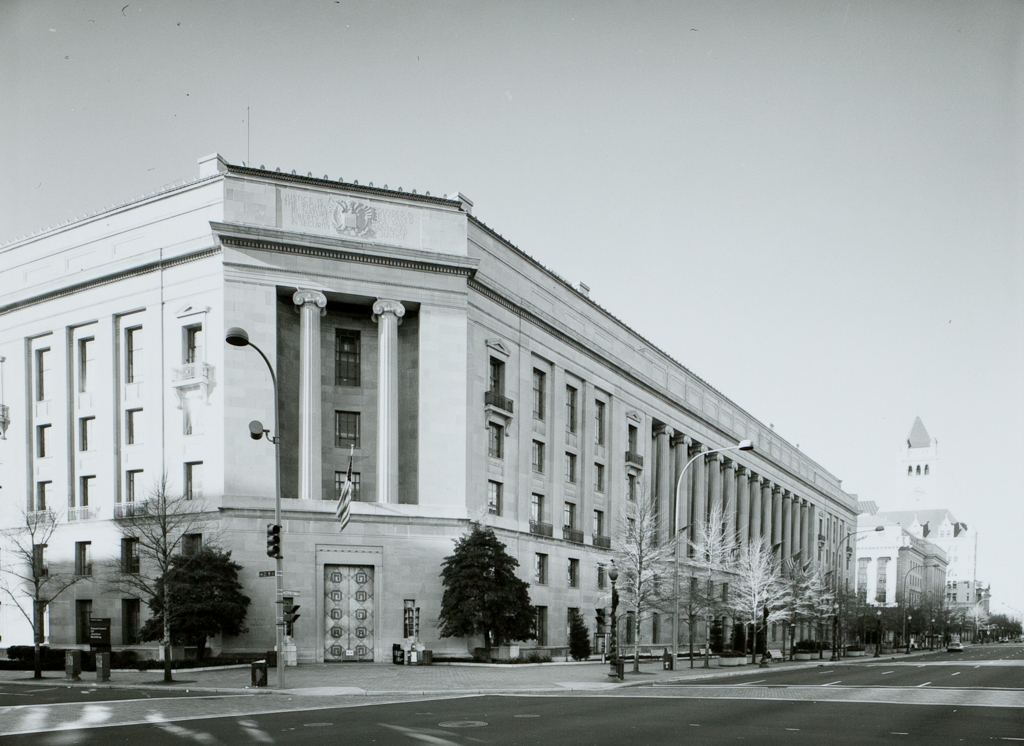
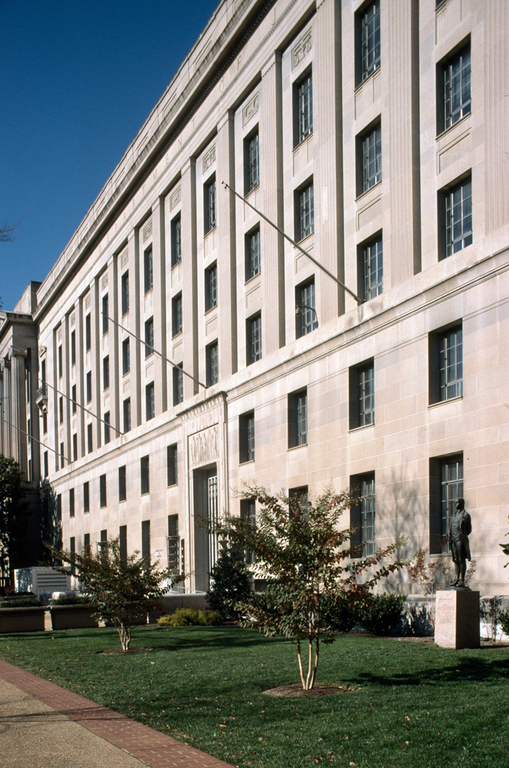
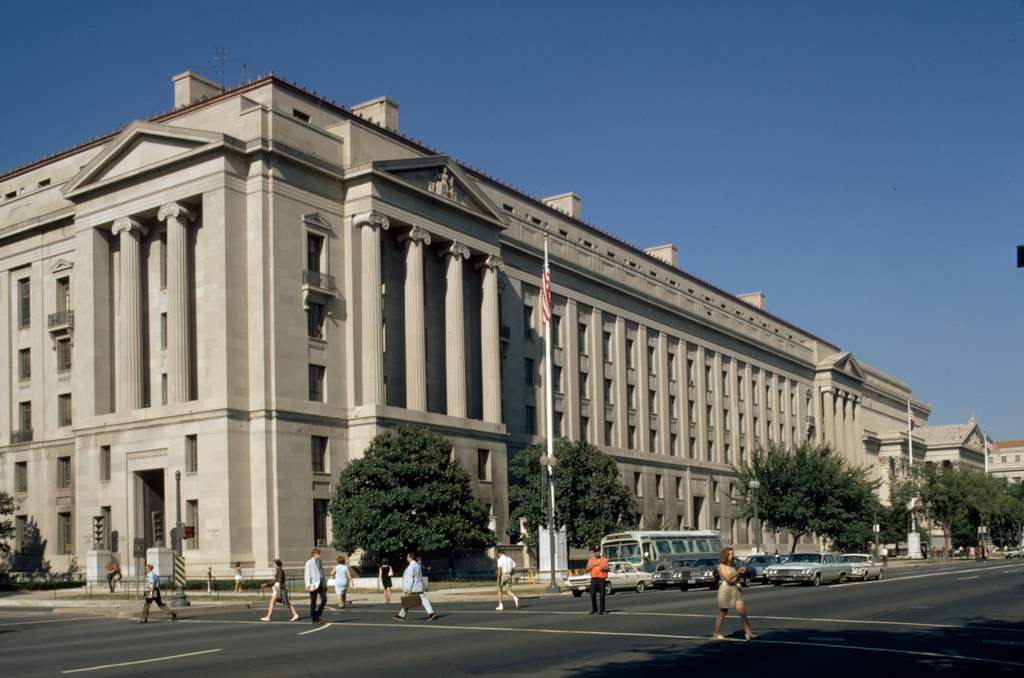
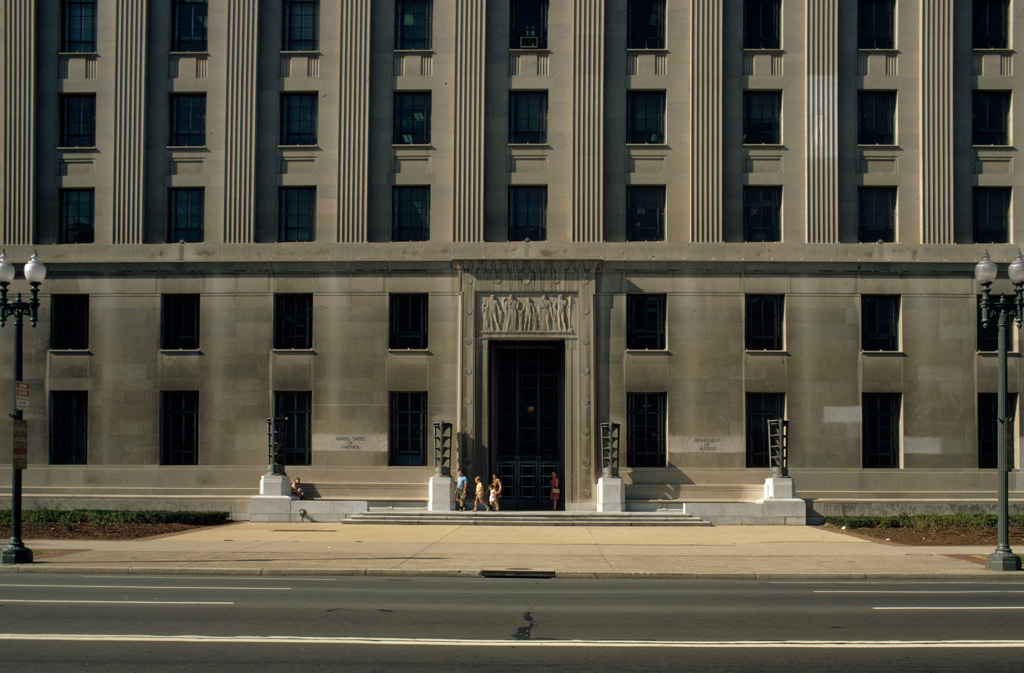
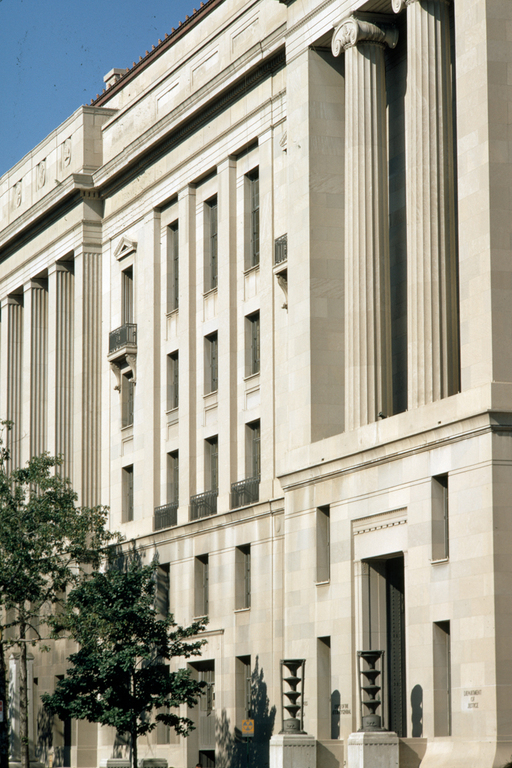
Of all the Federal Triangle buildings, the Justice Department is the one that best
The successful Philadelphia firm of Zantzinger, Borie and Medary undertook the design of the Justice Department. Charles C. Zantzinger and Charles L. Borie, Jr., collaborated with Horace Trumbauer on the Philadelphia Museum of Art, among the firm's most prominent commissions. The firm was experienced in designing large institutional and public buildings, which, while classical in proportion and massing, absorbed elements of modernism and individuality. In the Justice Department, the firm achieved a building that was in harmony with the Federal Triangle group but was also unique in the use of machine-age design influences.
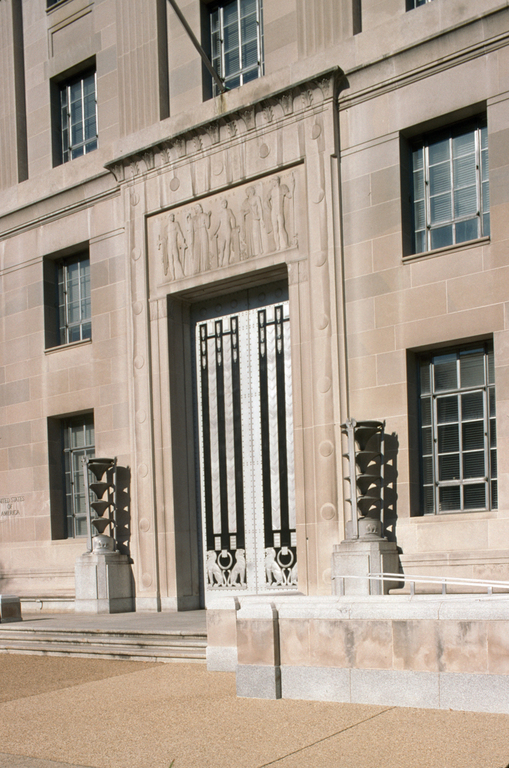
New York City sculptor C. Paul Jennewein, who had collaborated with Zantzinger and Borie on the Philadelphia Museum, was commissioned to coordinate a comprehensive decorative arts plan for the building. He provided not only the sculptural forms but consulted with the firm on all architectural details. Exterior sculptural work and the abundant New Deal murals in the interior relate to the themes inherent in the role of law and justice in American society. Polychromatic tile embellished with gold-glazed snow cleats in the shape of anthemions cover the roof. Aluminum decoration was lavished on the building, in grilles, door leaves and surrounds, railings, window frames, and torchères. In the interior, aluminum was employed in stair railings, light fixtures, door trim, ceiling and wall panels, window frames, elevator doors, and selected sculptural work.
Elaborate mosaic work, executed by John Joseph Earley, adorns the entrance and lobby ceilings. The Justice Department's artistic program made it one of the most admired of the Federal Triangle buildings.