

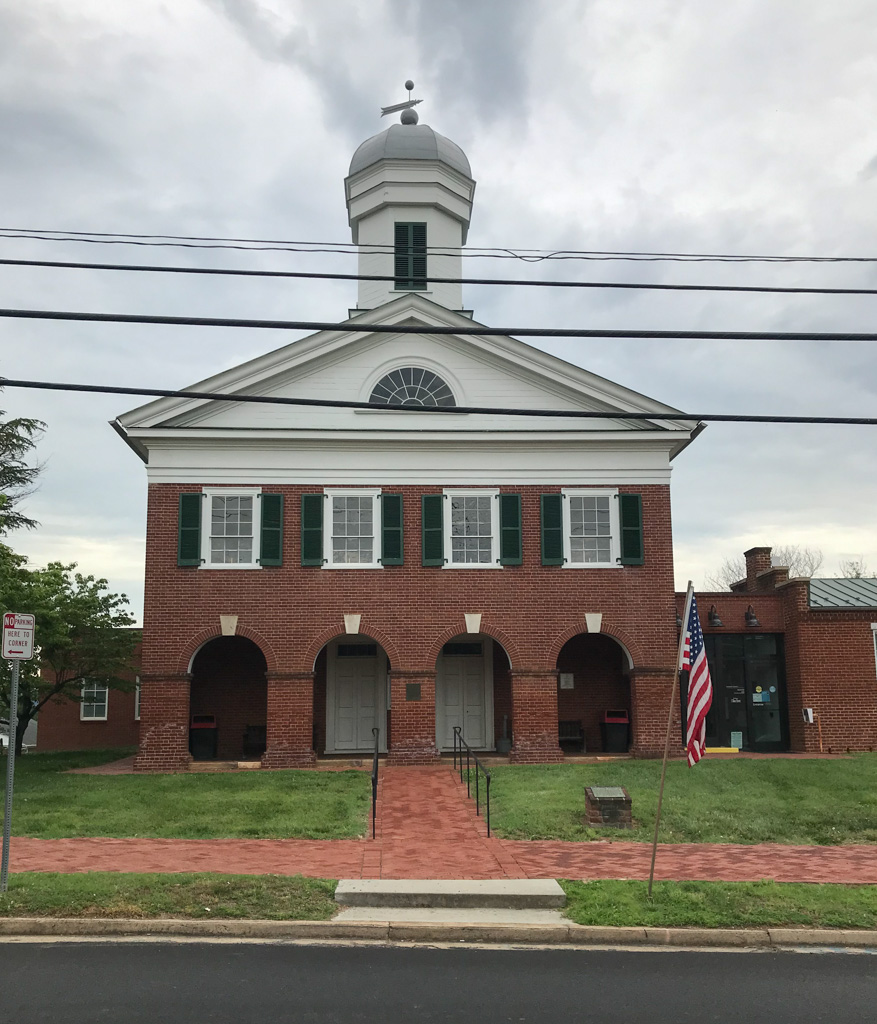
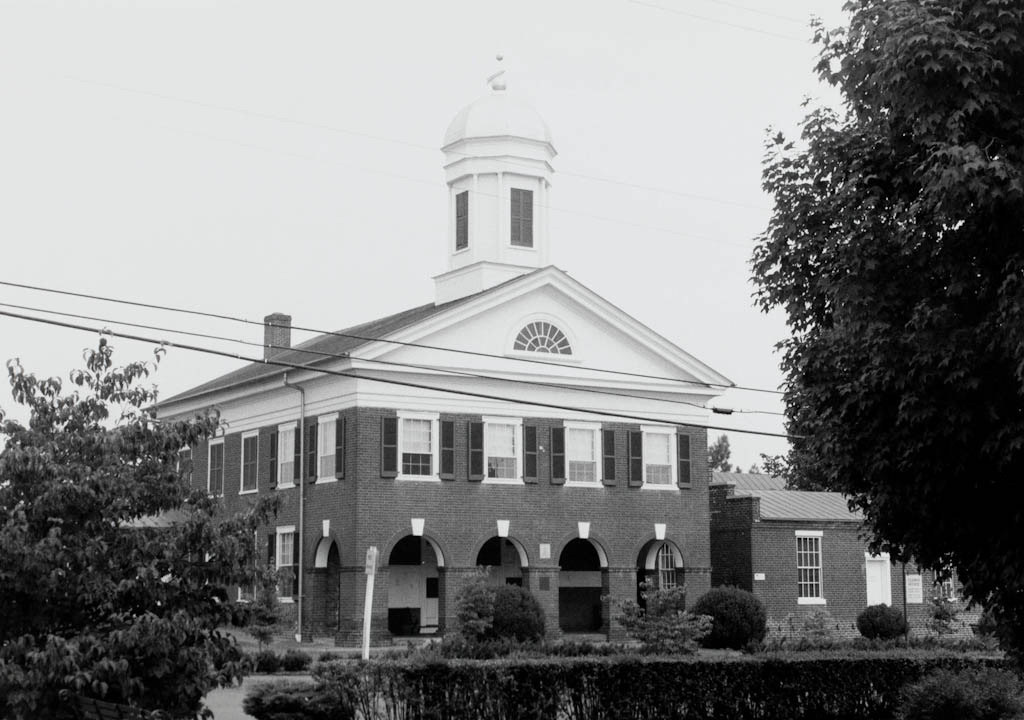
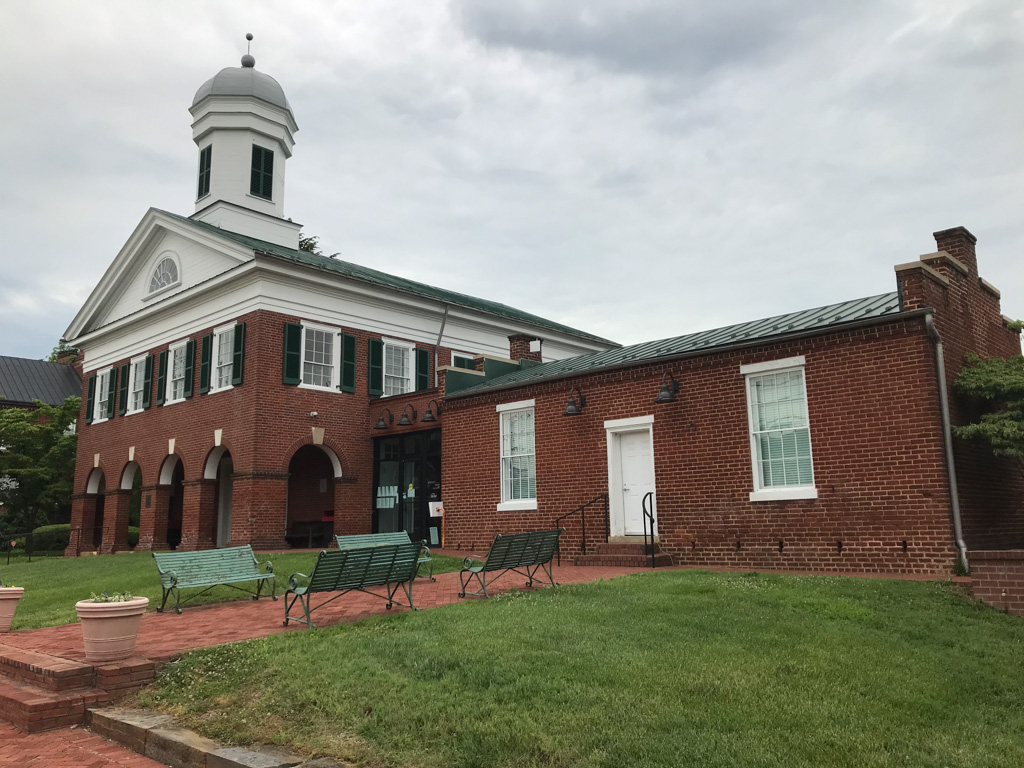
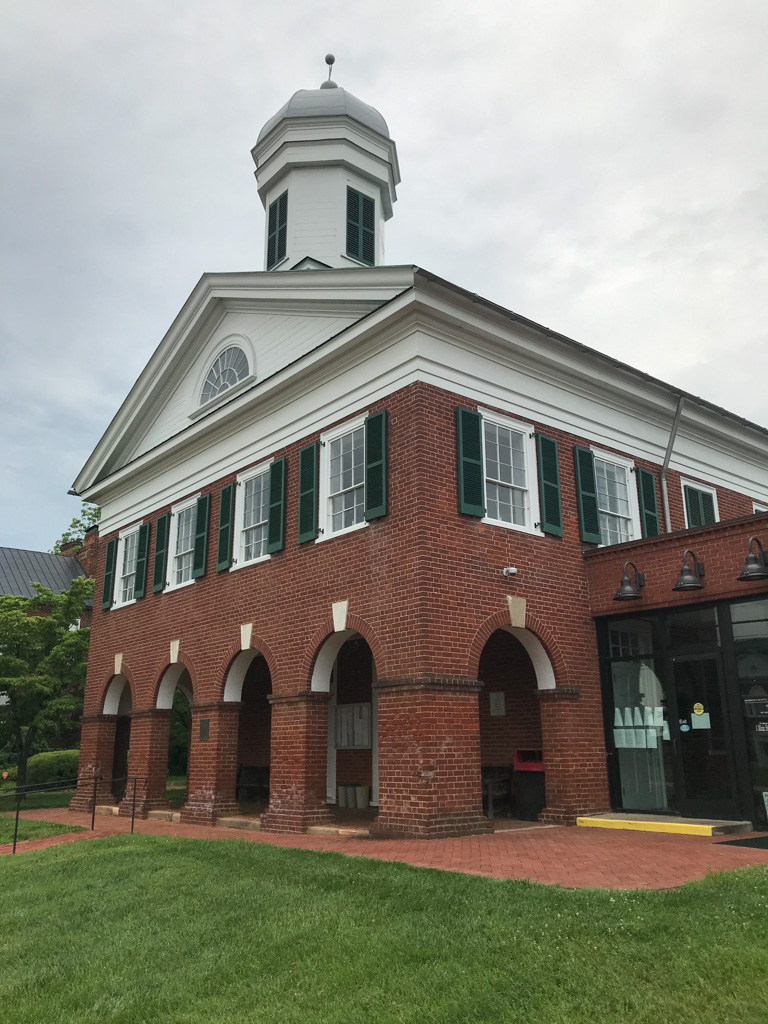
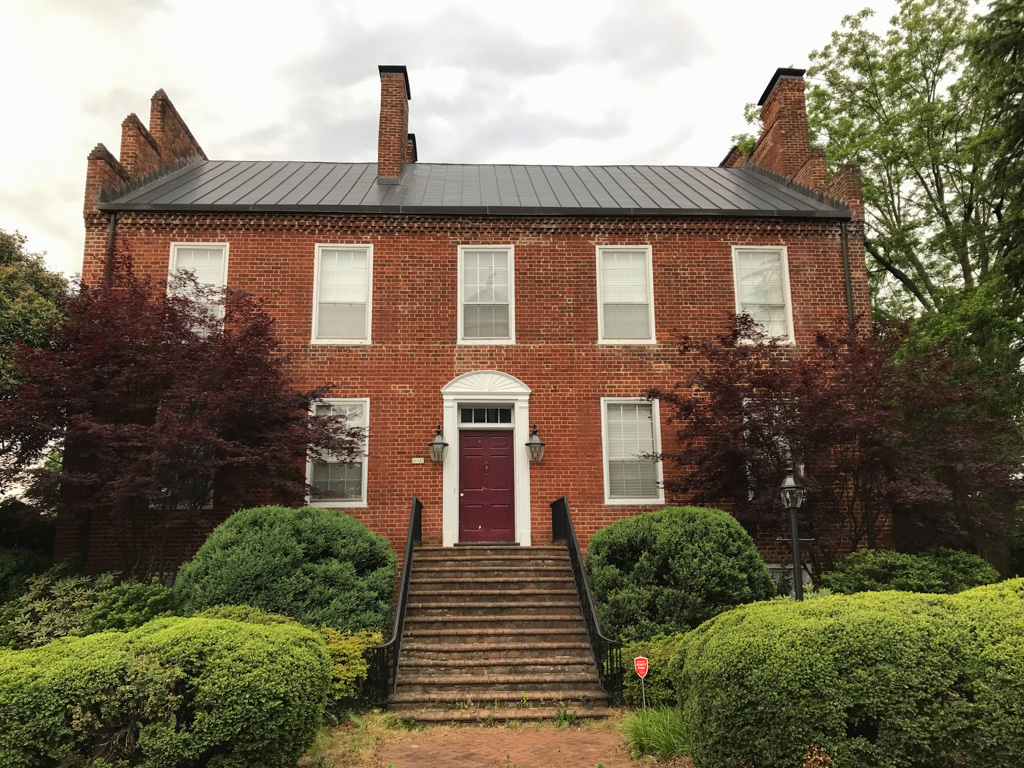
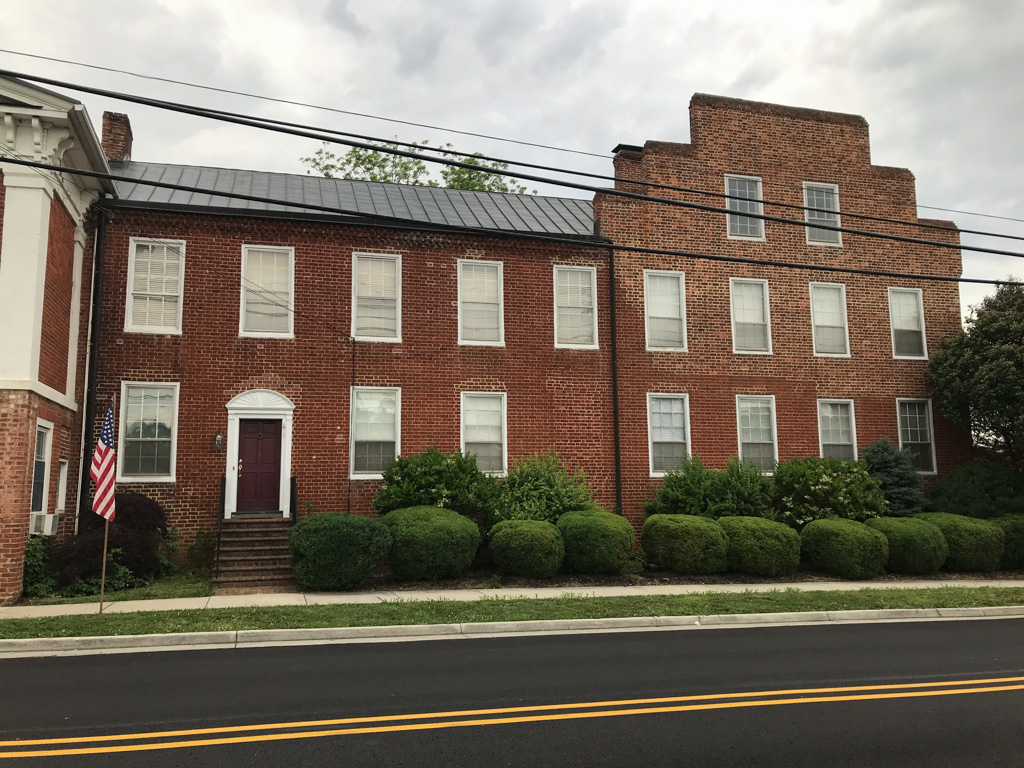
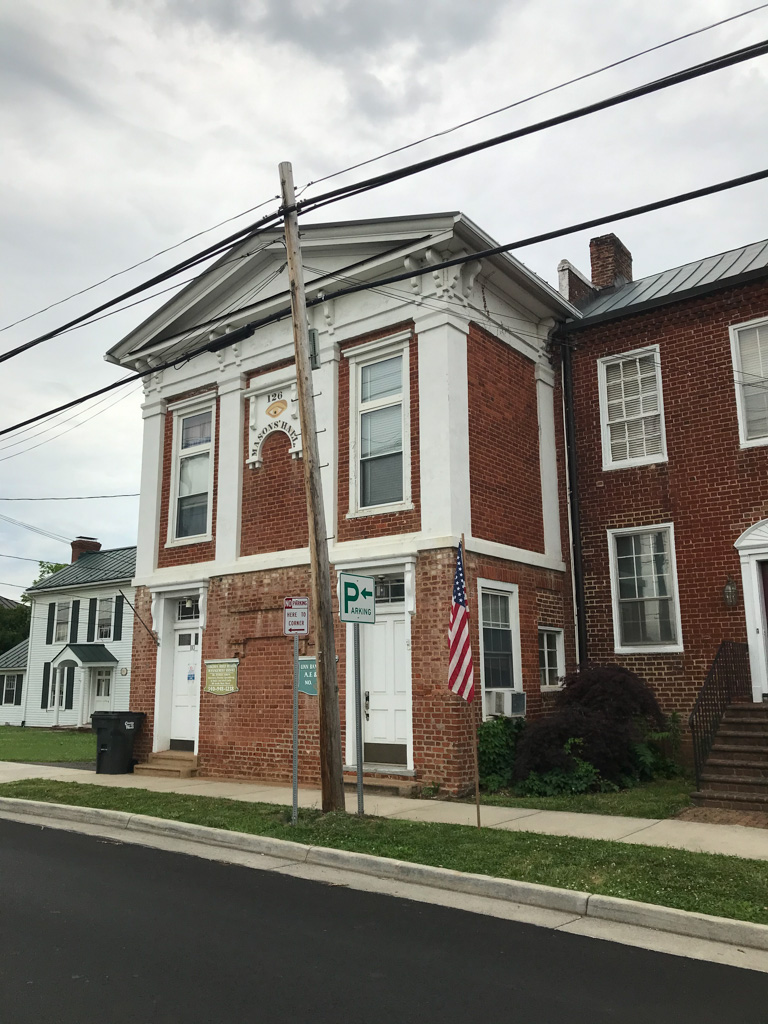
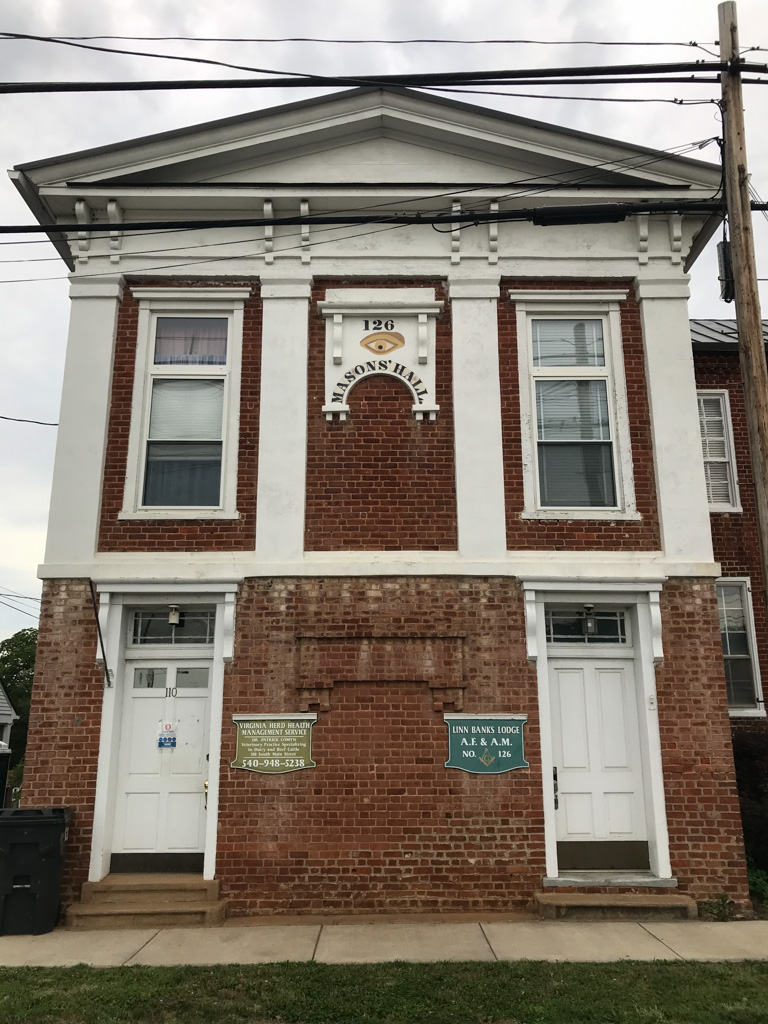
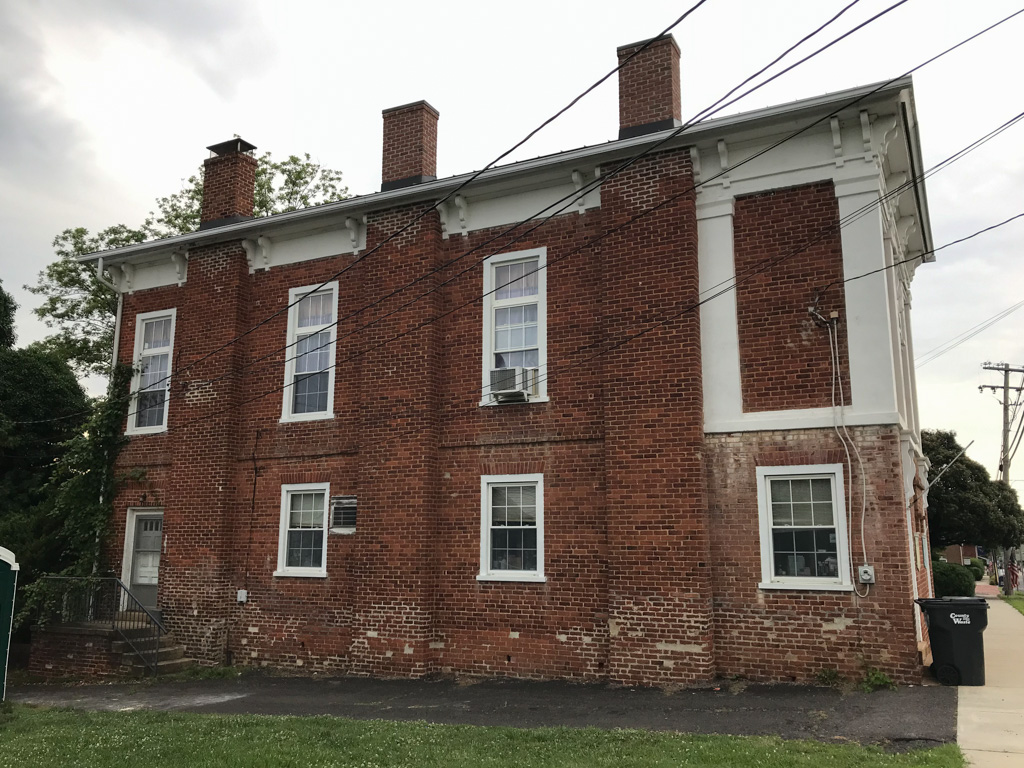
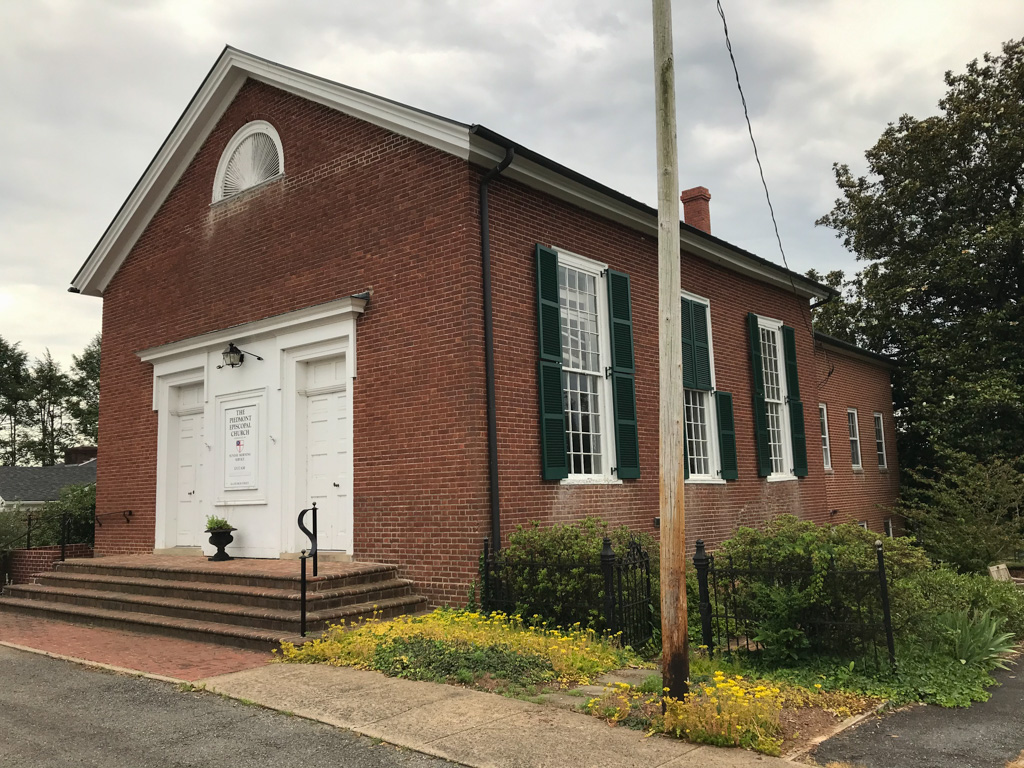
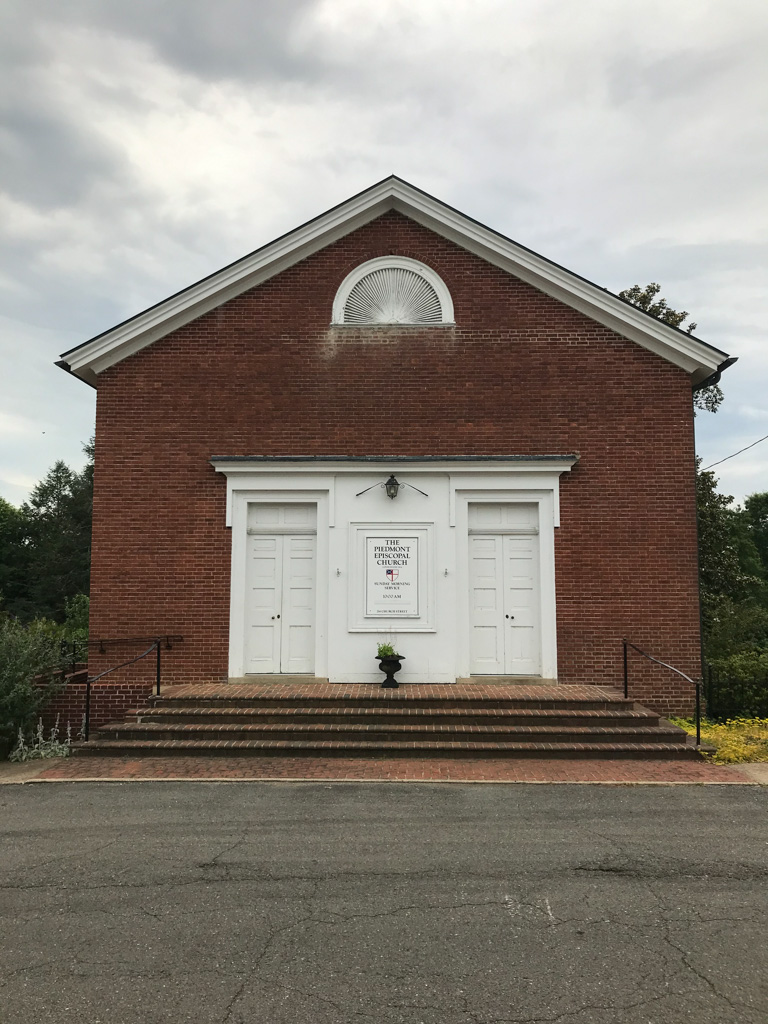
Madison County broke away from Culpeper County in 1792 and is named for Congressman and later President James Madison, who practiced law in the small county seat. The town retains its rural feeling principally because U.S. 29 bypasses it about half a mile to the east. The Madison County Courthouse (1828, William B. Phillips and Malcolm Crawford; 1979, addition, Bailey and Gardner), which replaced a log cabin courthouse, occupies the center of the town. Phillips, a brickmason, and Crawford, a carpenter, had worked for Jefferson at the university. In the contract, the county commissioners agreed to pay a total of $3,600 and stipulated that the roof was “to have a pediment pitch with a Tuscan cornice drawn in proportion to the height of the building.” Although very much in Jefferson's Roman Revival mode and bearing a strong similarity to Pavilion VII at the University of Virginia, it also fits into the tradition of earlier Virginia town halls and arcade-fronted courthouses. The cupola is of a later date. The interior of the courthouse, essentially one large space with the judge's podium terminating the entrance axis, is well preserved and contains original woodwork. The stairs on the entrance side lead up to a gallery level that contains the jury rooms, lighted by the upper windows of the facade. The office annex is to the north. Adjacent are the clerk's office (c. 1829) and the jail (c. 1892). Across from the courthouse to the south is Eagle House (William Carpenter's Tavern) (c. 1832), a substantial, symmetrical five-bay brick structure that indicates how earlier building traditions remained in use well into the nineteenth century. Attached to Eagle House and fronting on Main Street is the Old Masonic Hall (1834), a three-bay Italianate structure with pilasters on the second floor and the Masonic “eye” and name still in place. To the east 200 yards from the intersection of Church Street and Main Street is the Piedmont Episcopal Church (1832–1834; Church Street), a pedimented brick structure that looks more Baptist than Episcopalian. The twin doors are united in an unusual manner by a common architrave.
Madison
Main St., U.S. Business 29, and VA 231