

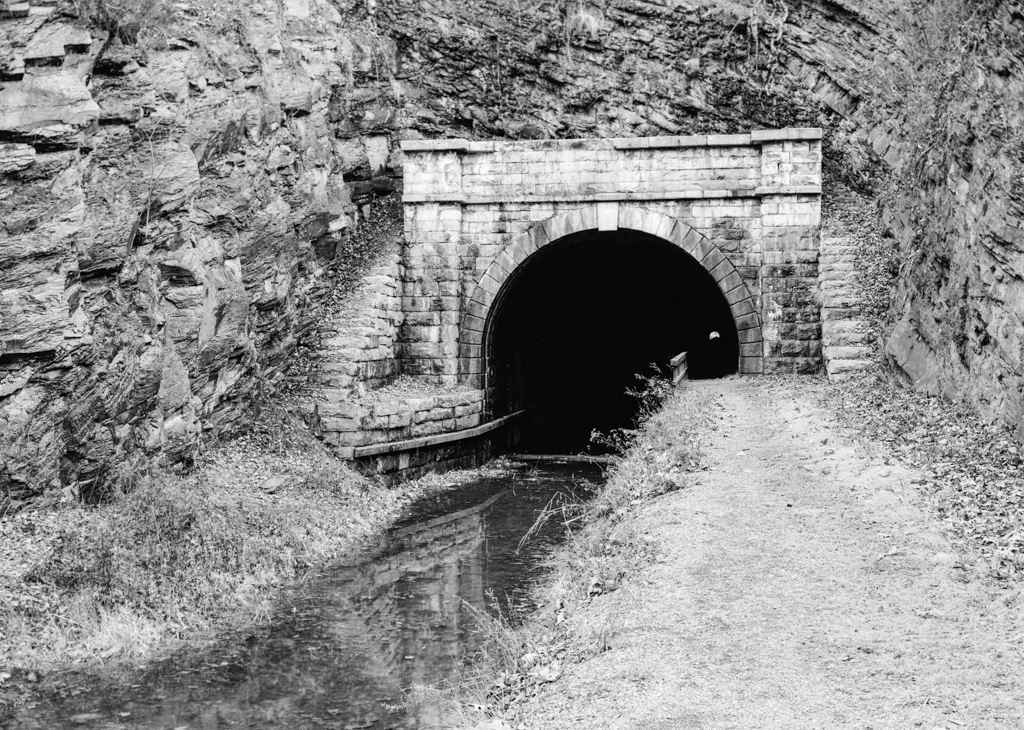
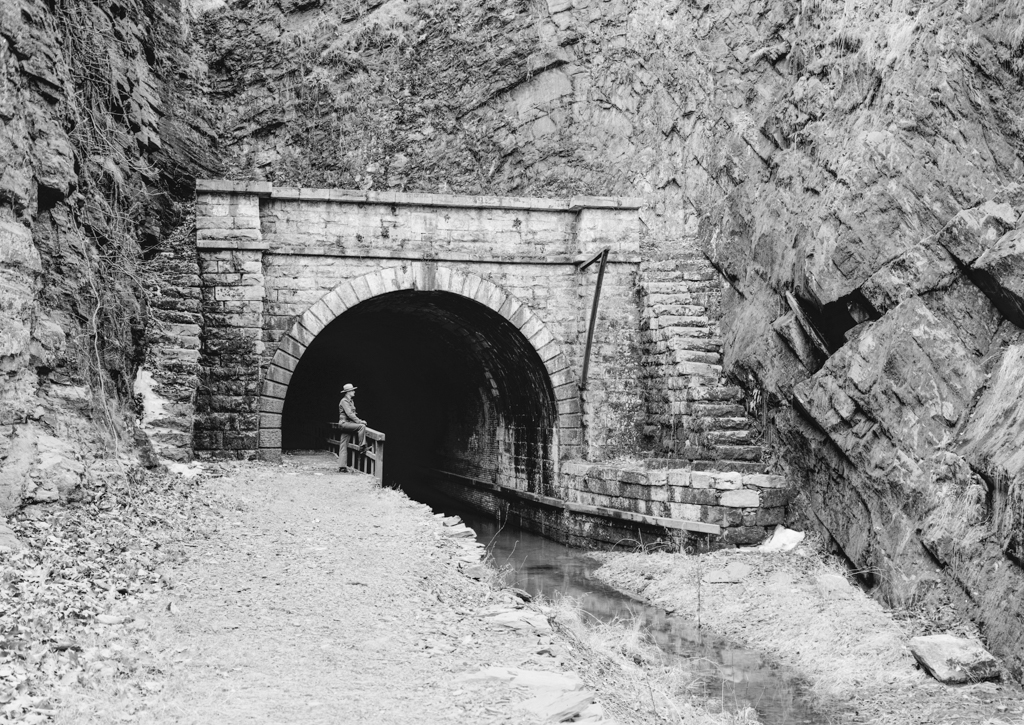
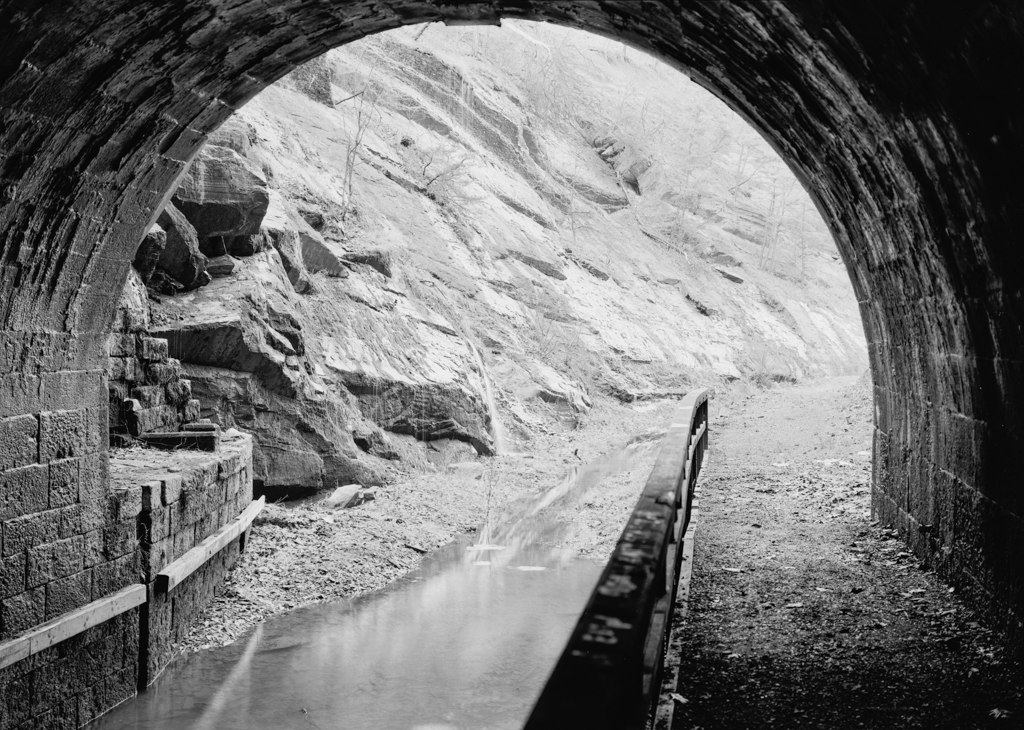
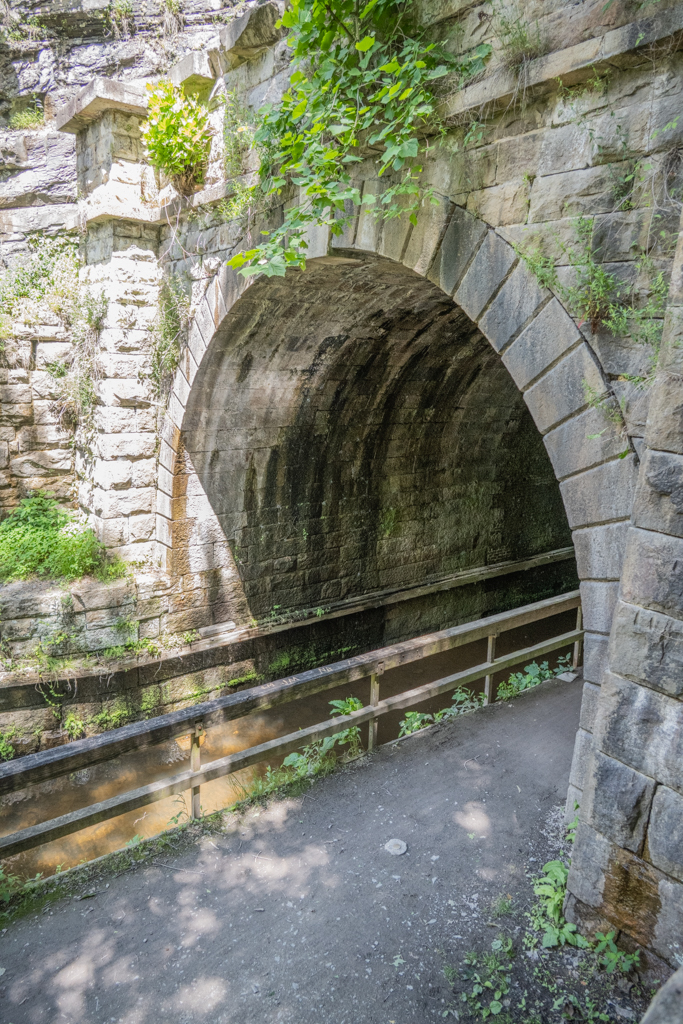
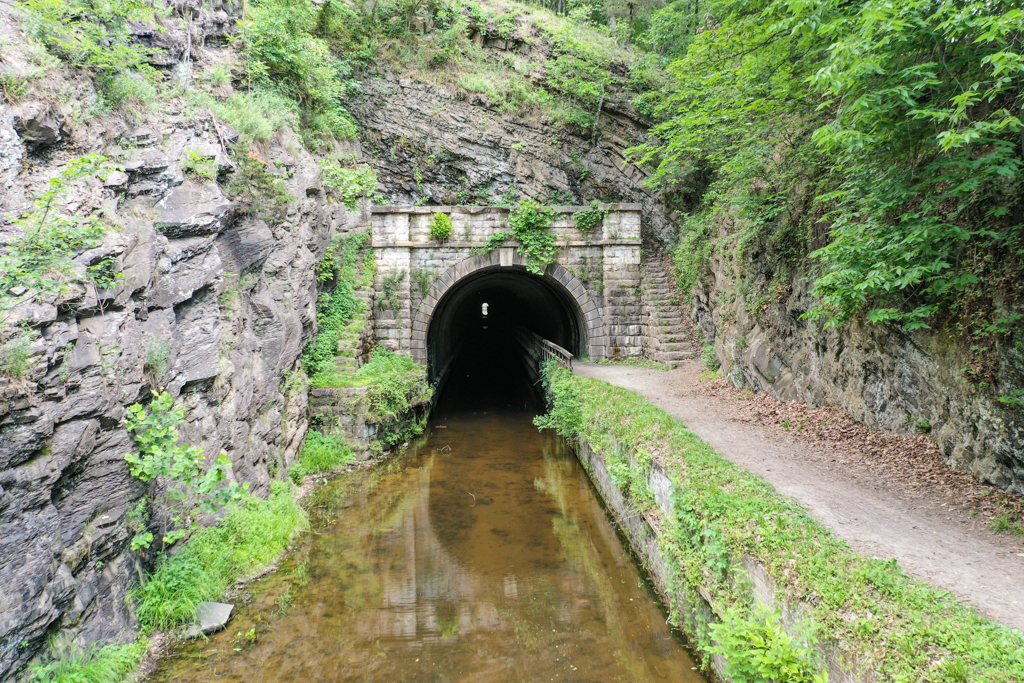
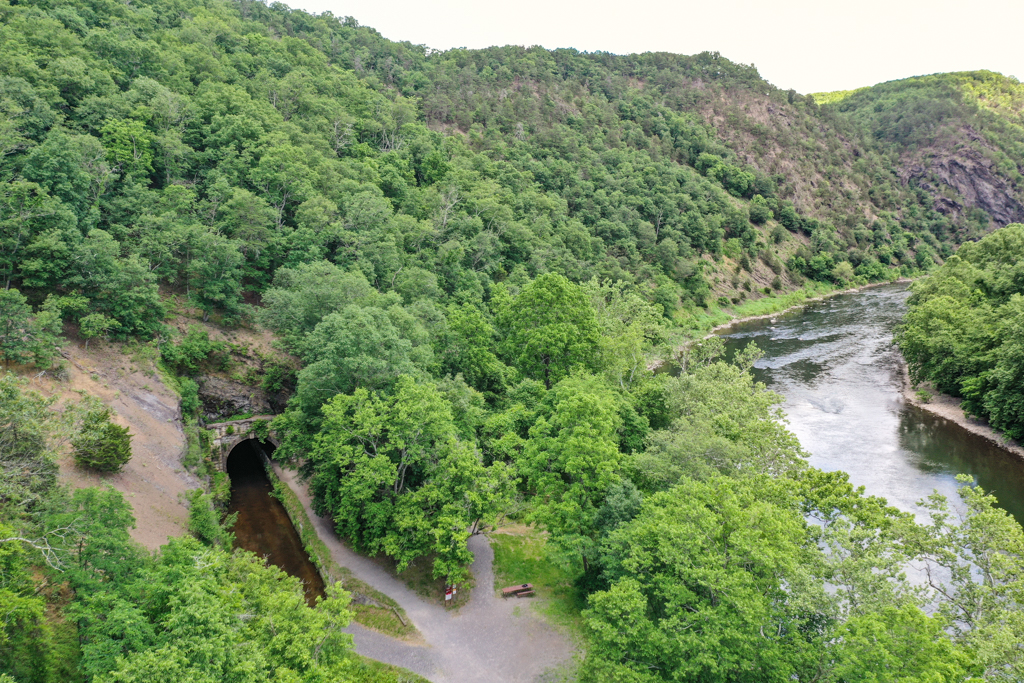
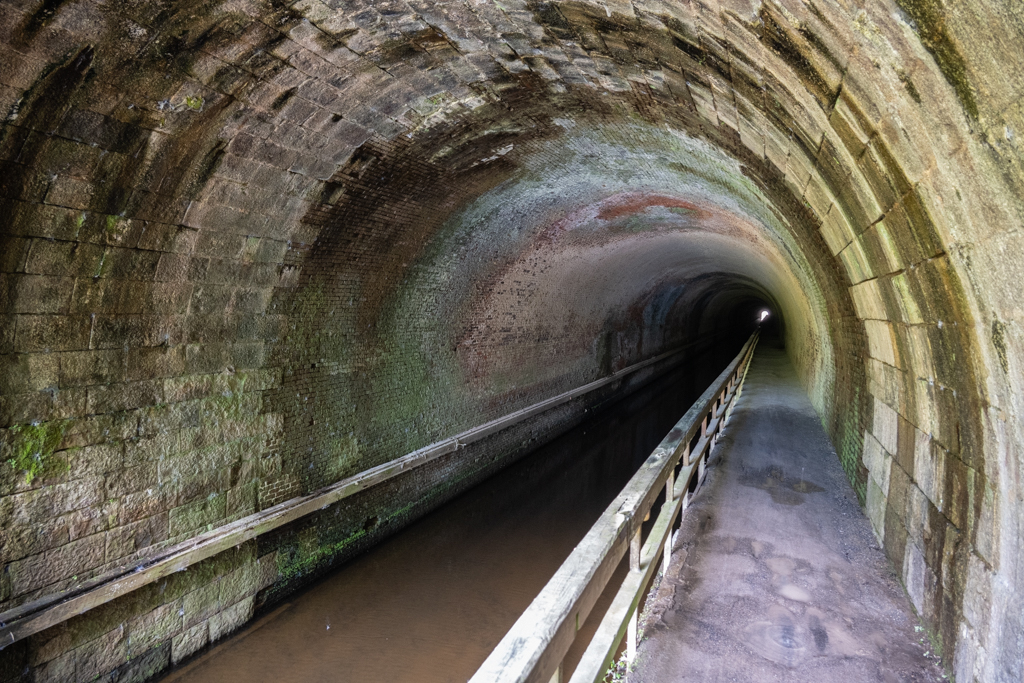
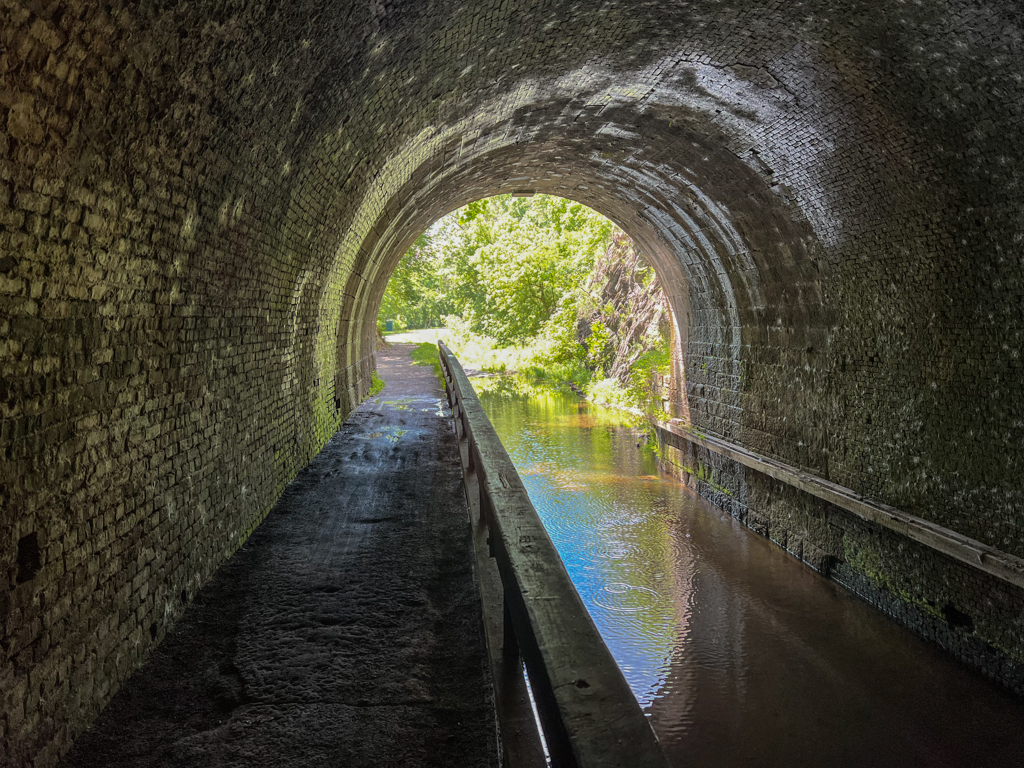
One of the major engineering feats of the Chesapeake and Ohio Canal, and of its time, was the construction of the 3,118-foot-long Paw Paw Tunnel to avoid a 6-mile stretch of arduous terrain. The tunnel’s construction, begun in 1836, involved excavating from the north and south portals, as well as drilling four vertical 8-foot-diameter shafts from above for ventilation and removal of spoils. Work ceased in 1841 and did not resume until November 1848, with new contractors. Paw Paw Tunnel has a 24-foot-wide opening with portals framed by limestone entablatures and is composed of a brick-lined barrel arch with a 12-foot radius. A 4-foot-wide brick tow-path runs along one side of the canal bed. This impressive passageway is still used by bicyclists and hikers on the towpath.
CHESAPEAKE AND OHIO CANAL, PAW PAW TUNNEL
1836–1841, 1848–1850, Ellwood Morris and C. B. Fisk, engineers. Milepost 155
References
References
Historic American Buildings Survey. “Chesapeake & Ohio Canal, Paw-Paw Tunnel.” HABS No. MD-810, Historic American Buildings Survey, 1960. Prints and Photographs Division, Library of Congress, Washington, D.C.