

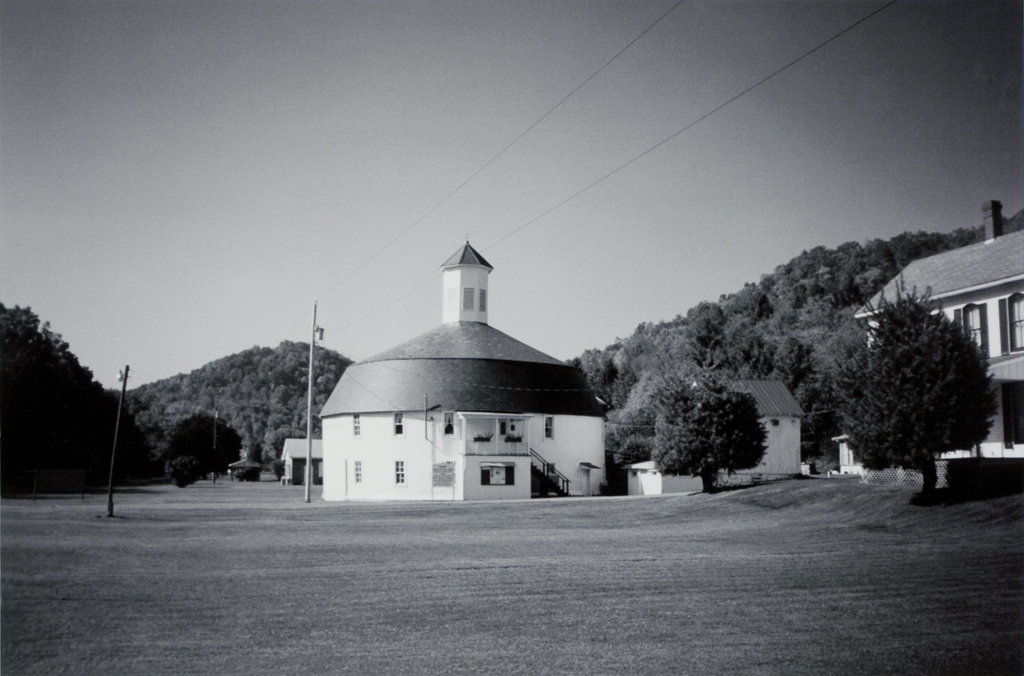
This unusual circular barn, two stories tall, is 66 feet in diameter and rises to a height of 75 feet. Sheathed in clapboard siding, it has a roof of two slopes, forming something akin to a circular gambrel or mansard. A large, hexagonal cupola with louvered vents stands at the apex. The ground floor originally contained a dairy with stalls for more than twenty cows, while the second level held hay and contained a small apartment. The structure is built on the slope of a hill, and an earthen ramp on one “side” provides easy wagon access to the second floor.
A round barn that the farm's owner, Amos Hamilton, had seen in Pennsylvania inspired the form of the building. His son, A. A. Hamilton, built it for his father. Numerous sash windows give the barn an almost domestic appearance, and its rural roadside setting adds to its attractiveness. Since 1982 the barn has served the West Augusta Historical Society as a museum. A number of early farm implements, a carriage, and a horse-drawn sleigh are among the exhibits. A sign attached to the barn, presumably painted by one of the Hamiltons, carries the admonition (from Psalm 53): “The fool hath said in his heart, there is no God.”