

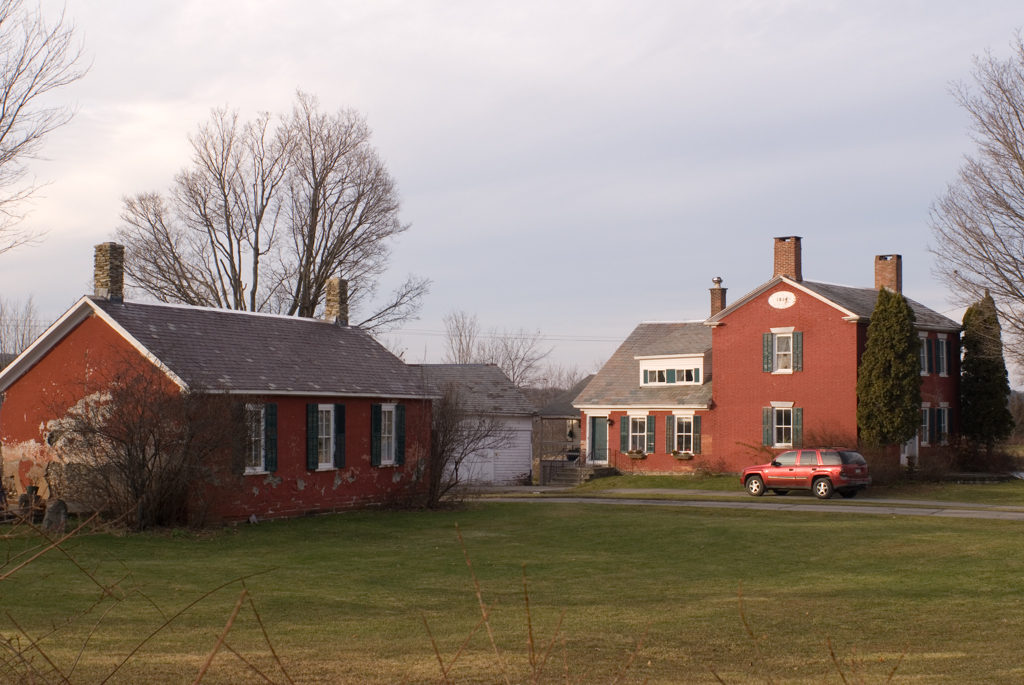
The farm of Consider Bardwell developed between 1834 and 1865 and retains a number of structures that were typical of a small diversified farm in this period but are of exceptional quality and variety. Bardwell purchased an 1814 two-story brick house, an unusual three-quarter I-house, and a c. 1820 barn. Like many farmers he developed a sideline: beginning in 1846 he was manufacturing axes and other edge tools in a stone shop behind the house, a trip-hammer powered by a small pond he created. He built several brick buildings in the 1850s, including a hog house and a granary and, in 1854, like many prosperous farmers, he built a district schoolhouse to educate his children and those in the neighborhood. In 1864 he erected the first cheese factory in Vermont. It was built into a bank to use gravity to ease handling of the heavy milk delivered by farmers into its upper gable end. Bardwell also constructed a small brick cheese house for aging the product. The following year he organized the venture as a cooperative based on the model developed in western New York, and within a decade there was at least one such factory in every farm town in the state. Although dairy farmers within reasonable distance of rail lines switched to creameries for butter in the 1880s and for fluid milk after 1900, cheese factories remained active in more upland districts well into the twentieth century.
Bardwell Farm
1814–c. 1865. 1333 VT 153