

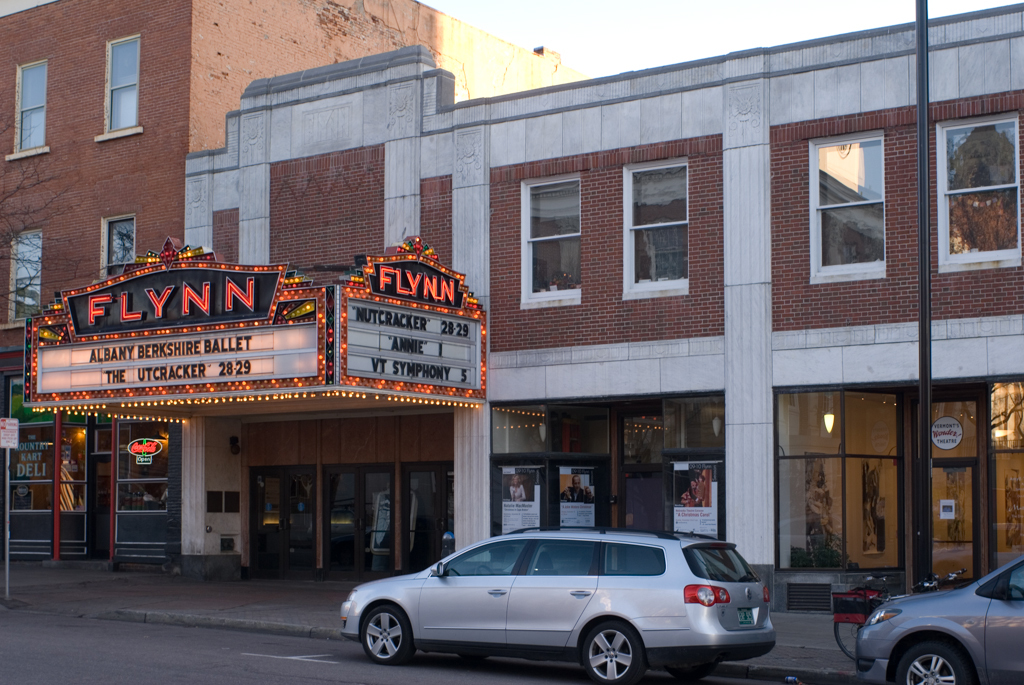
The most striking exterior feature of this theater is its original sheet-metal marquee, with rear-lit attraction boards surmounted by the name of its principal local investor, John J. Flynn, in framed neon channel letters, and topped by multicolor incandescent chaser lights that brought the dazzle and glitz of a big-city theater district to downtown Burlington. The comparatively subdued asymmetric brick facade behind the marquee is embellished in marble: shallowly fluted Art Deco pilasters with stylized floral capitals, a belt course that separates the two floors, and a stepped parapet with an inset panel that also carries the name “Flynn.”
A long, terrazzo-floored vestibule leads to the 1,454-seat auditorium. This grand space features a polychrome-banded ceiling, translucent lighting fixtures with metal filigree, Art Deco crested exits, fluted pilasters, elaborate ornamental organ grilles flanking the proscenium, a two-tiered balcony, and deco rative stencil work. Surprisingly, its volume is virtually invisible from Main Street because the designers set the auditorium into Burlington's “ravine” at the rear of the site.
Planned in the late 1920s, the Flynn was designed for both live and screen productions. It was the first theater in New England built primarily, as claimed in the opening night program, for sound pictures, since “talkies” had become the dominant movie-house fare by the time the theater opened in 1930. Nevertheless, it also featured a stage and fly loft for presenting plays and vaudeville performances.
By the 1970s, following destruction by arson of the Strong and State theaters, the Flynn was downtown Burlington's last movie house. In 1974 its owner, Merrill Jarvis, accommodated a new local theatrical group, the Lyric Theater, on the old stage. When a subsequent owner announced plans to divide the auditorium, a nonprofit group was organized to raise funds to buy and restore the theater. Today, with updated stage and live-performance capabilities, the Flynn Theater is northern Vermont's premier performing arts center.