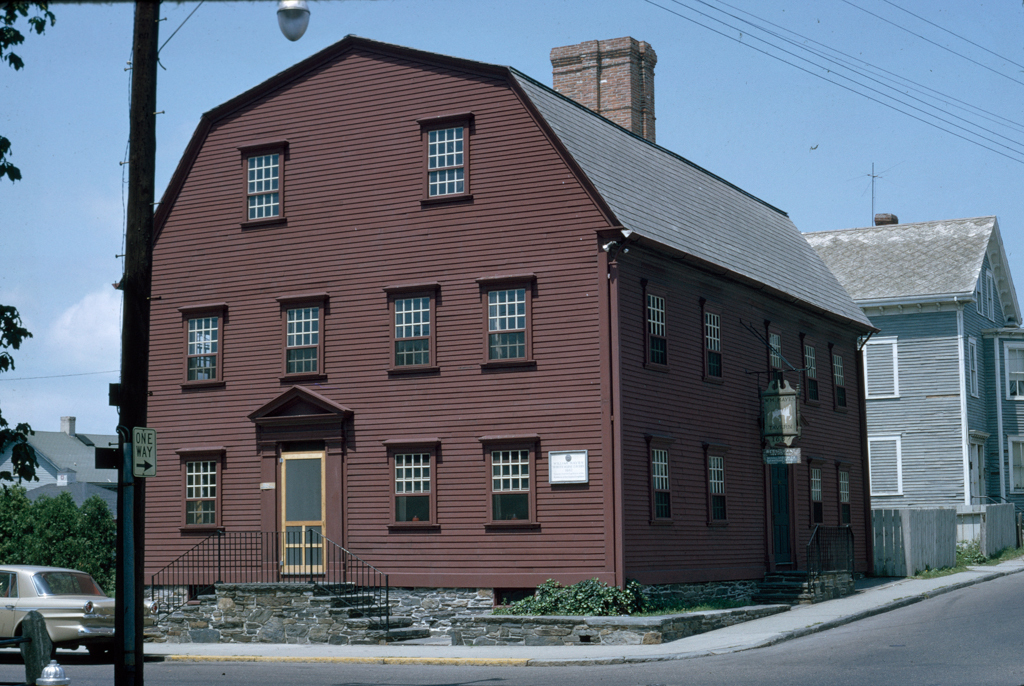
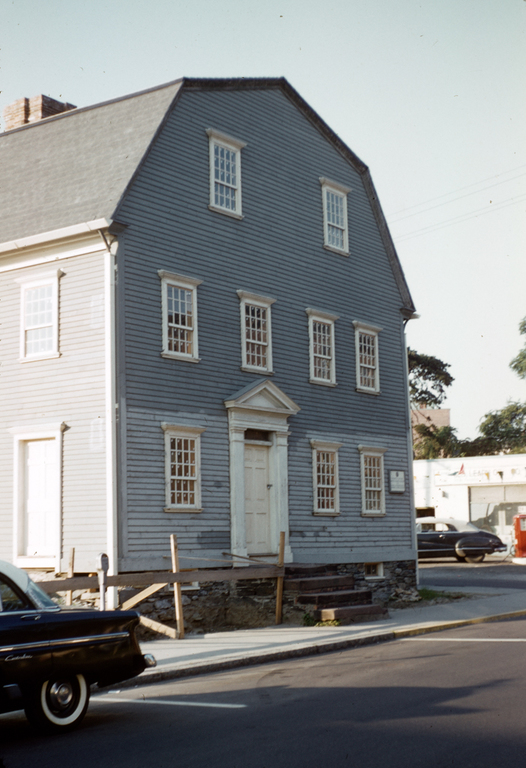
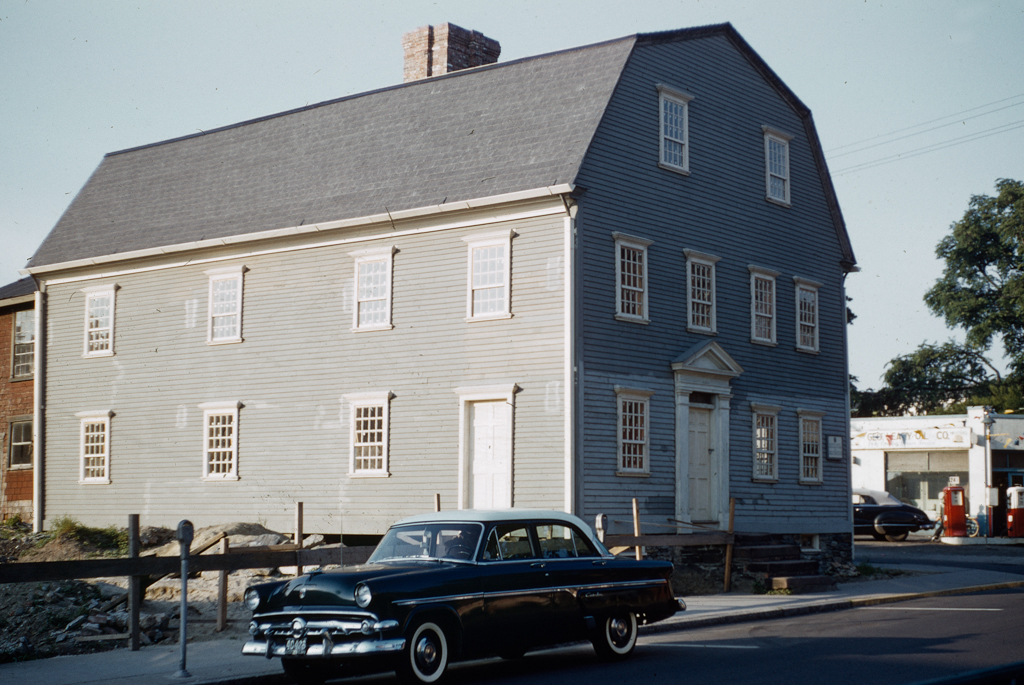
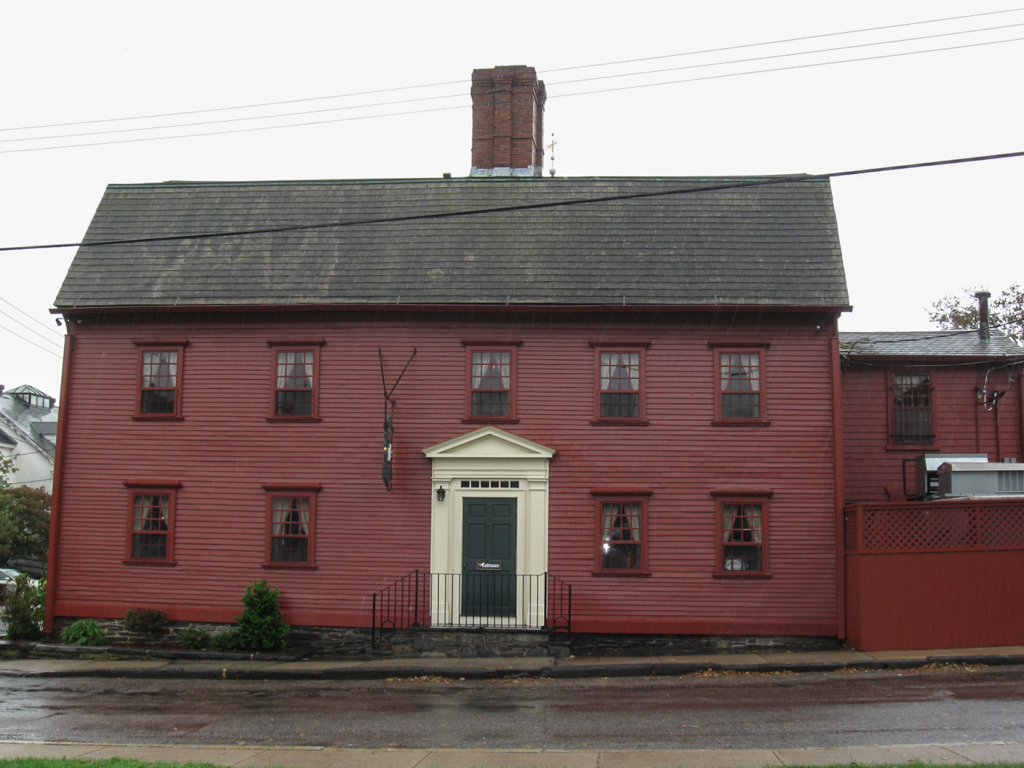
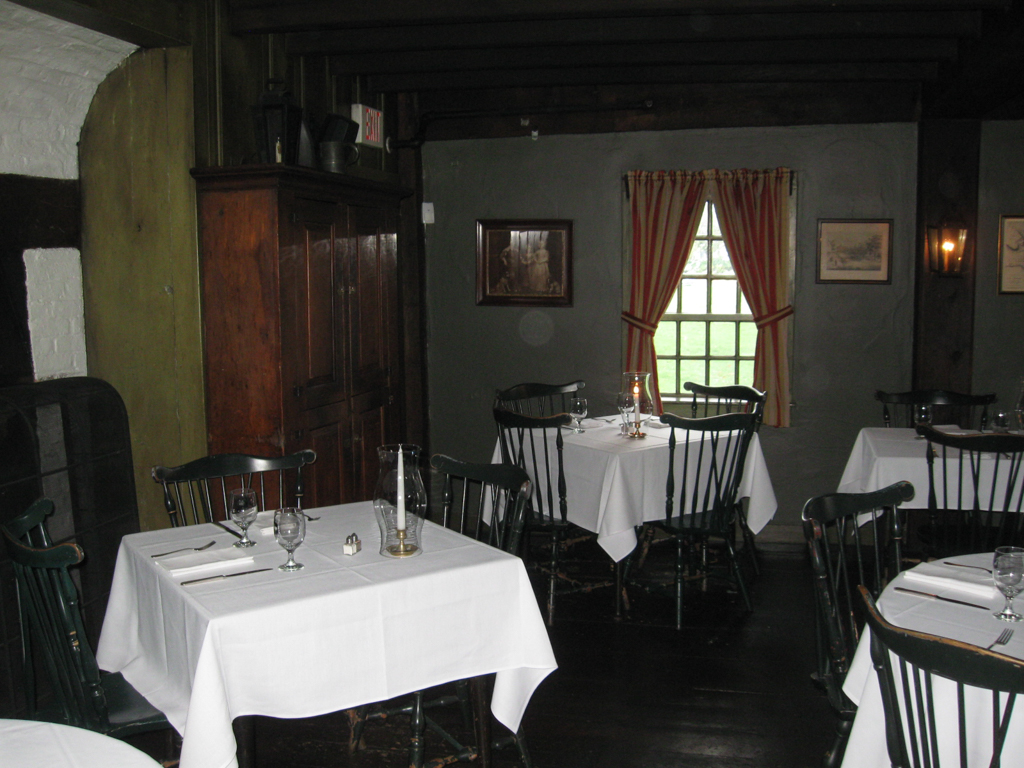
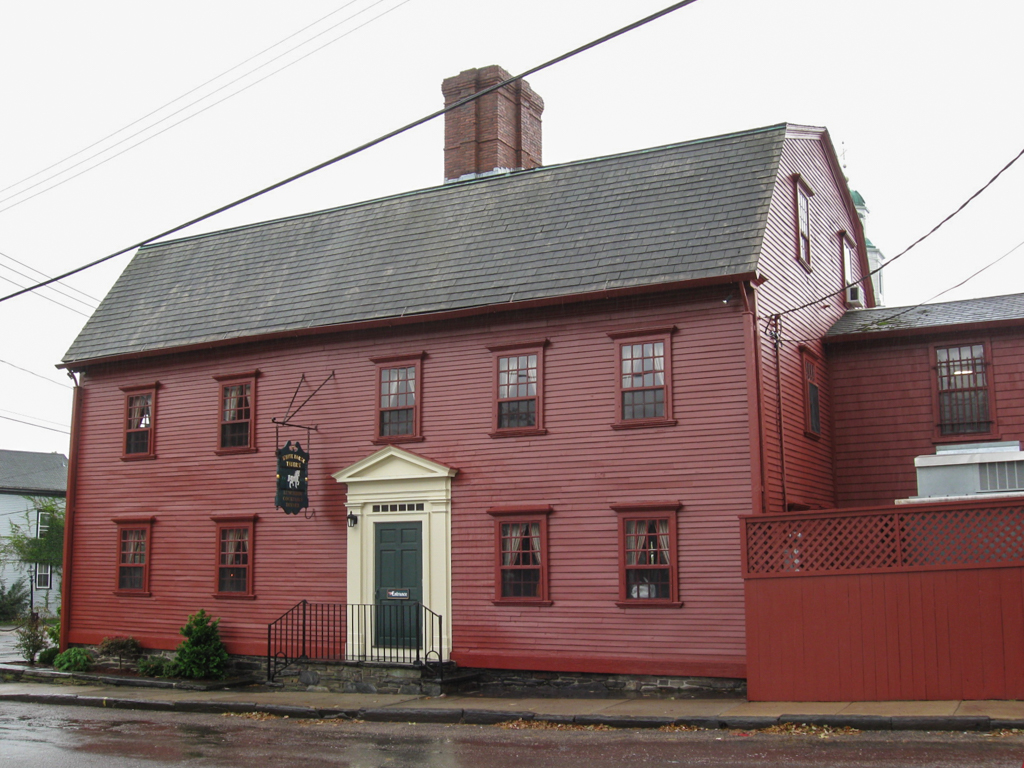
Of all the buildings which ringed the property of the meeting house, the White Horse Tavern, already in place when the Friends built across the way, alone still stands. Its history is entwined with that of the city, even as its architecture is characteristic of colonial Newport. After acquiring the property from the breakup of founder William Coddington's original six-acre plot, William Mayes was granted a license to keep a tavern by 1687. The oldest parts of the building—which was originally a two-room house with central pilastered chimney and huge framing timbers—can still be seen within. Jonathan Nichols II, a prominent merchant who later became lieutenant governor, first hung the White Horse sign. When a later family member, Walter Nichols, returned to Newport after evacuating because of the British occupation, he changed the look of the house to the appearance it now presents: a broad, gambrel-roofed, clapboarded structure with classically pedimented doorways and a balanced, five-bay elevation facing Farewell Street. Although by the mid-twentieth century it was somewhat derelict, the venerable structure, which has had so many uses (as a meeting hall for the town council in the eighteenth century, a popular tavern, and the residence of a pirate, a cabinetmaker, a silversmith, and an innkeeper) was restored and still serves the public in one of its original guises, as a highly regarded restaurant. It is one of the best public places in Newport in which to gain a sense of colonial domestic space.