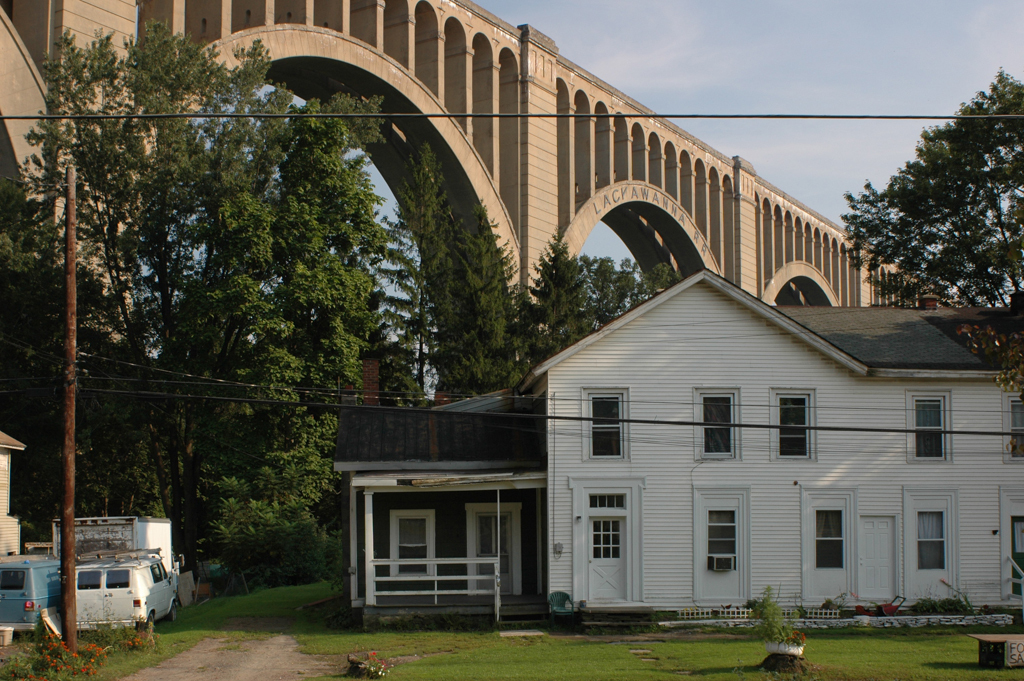
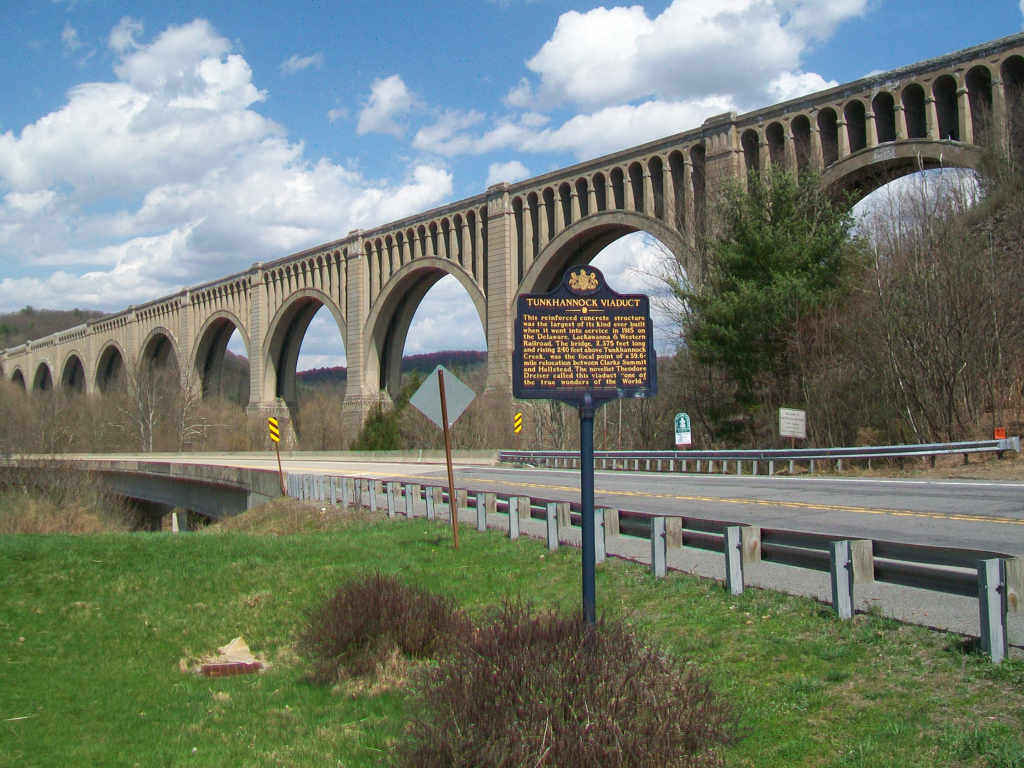
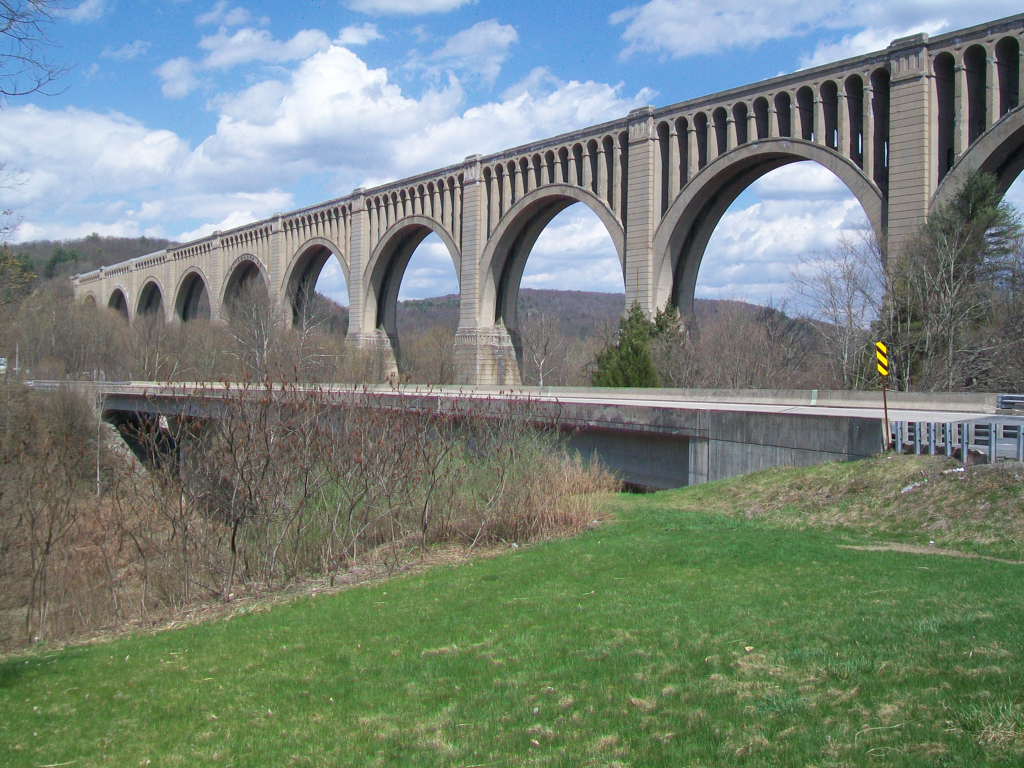
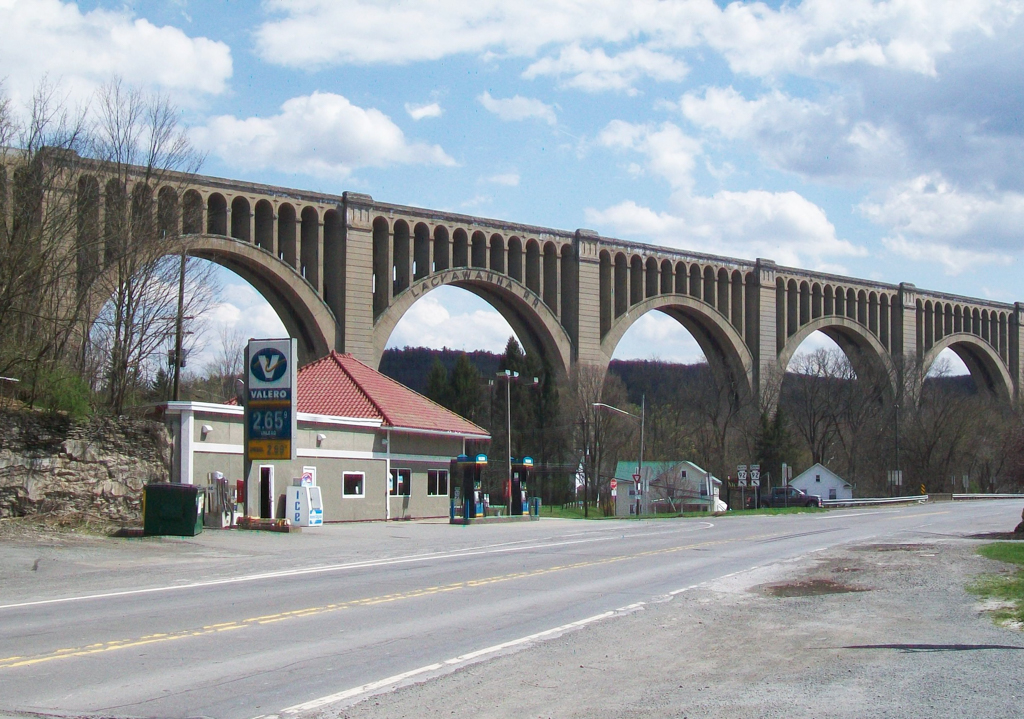
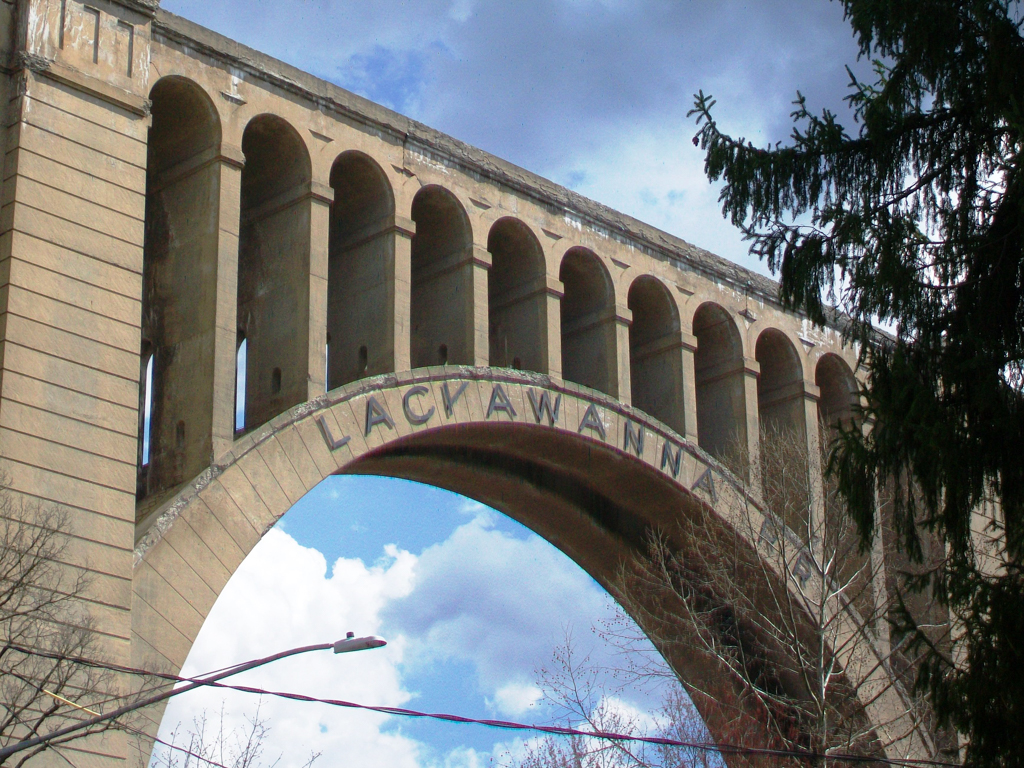
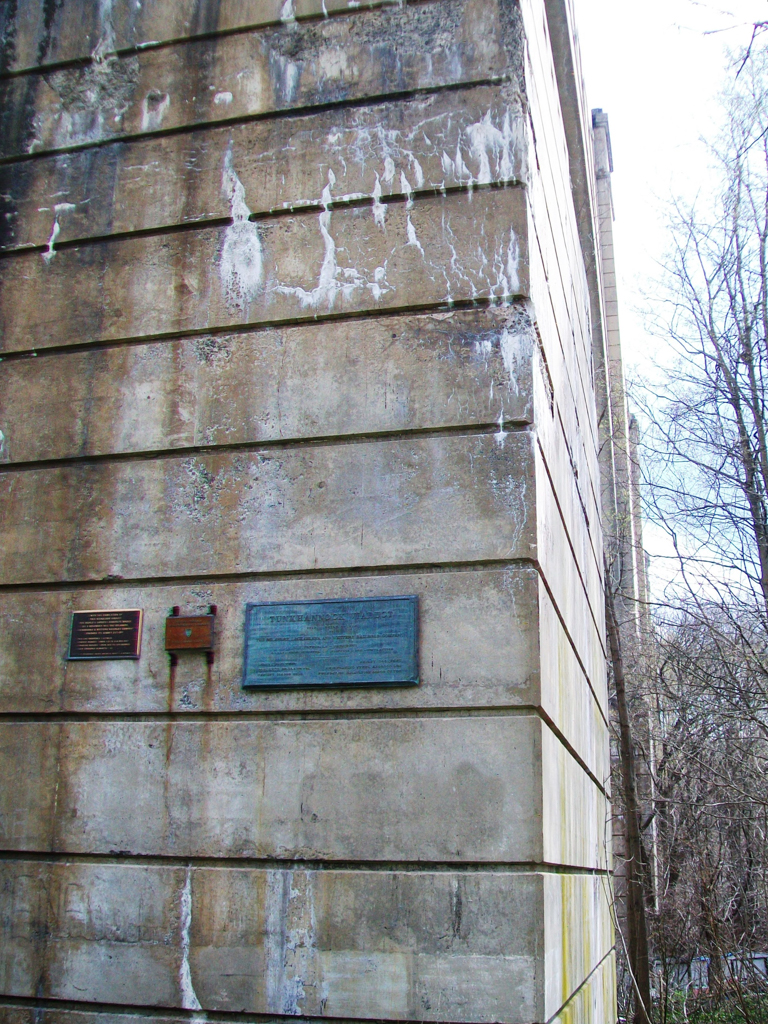
Modern in material and function but traditional in form and action, the Tunkhannock Creek Viaduct was the largest reinforced concrete bridge of its kind when it opened. The Lackawanna, Delaware and Western Railroad built the 2,375-foot-long bridge as part of its Summit Cut-off in response to increased anthracite trade. With its ten semicircular, tworibbed, open-spandrel 180-foot-span arches, the bridge resembles an ancient Roman aqueduct, a notion reinforced by the scoring of the concrete to resemble ashlar. The engineers’ choice of the semicircular arch, however, was structural, in order to minimize the horizontal component of the arch thrust on piers and abutment arches. Two smaller and flatter abutment arches are buried in the fill. The arches contribute heavily to the bridge's aesthetic. On seeing the bridge under construction, rising to 240 feet above the creek, novelist Theodore Dreiser considered it “one of the true wonders of the world … a thing colossal and impressive—those arches! How really beautiful they were.” Almost half of the bridge's bulk is underground; the piers reach 138 feet down to bedrock. The bridge's scale is so great that a crossing train appears little more than an accent line along the bridge's upper edge. Frame gable-ended houses, some with classical pilasters framing their entrances, stand immediately below the viaduct. Some are recent prefabs but those with classical proportions arguably look to Connecticut for their inspiration, while their juxtaposition with the New York–based railroad illustrates the fusion of different social forces in the Northern Tier. A smaller version of the viaduct is Martin's Creek viaduct, along U.S. 11 just south of Kingsley, Susquehanna County. It also was completed in 1915 as part of the railroad's improvement project.