

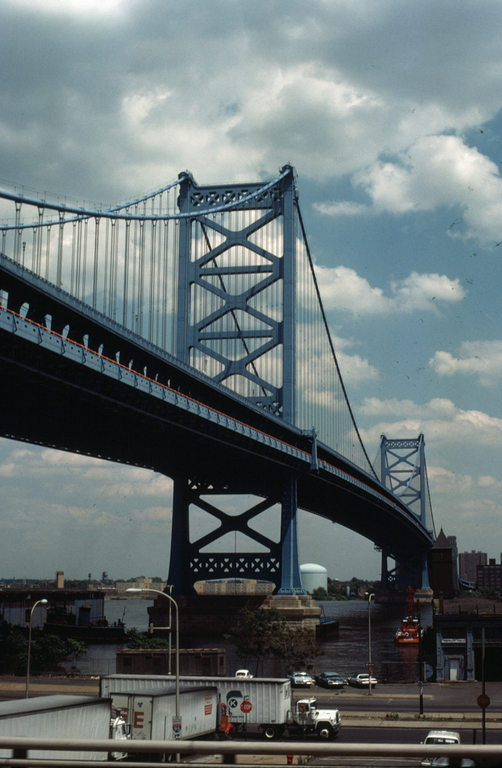
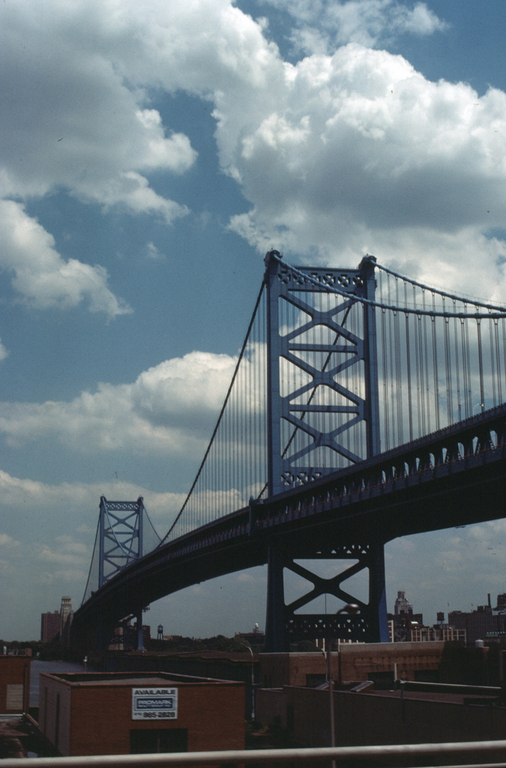
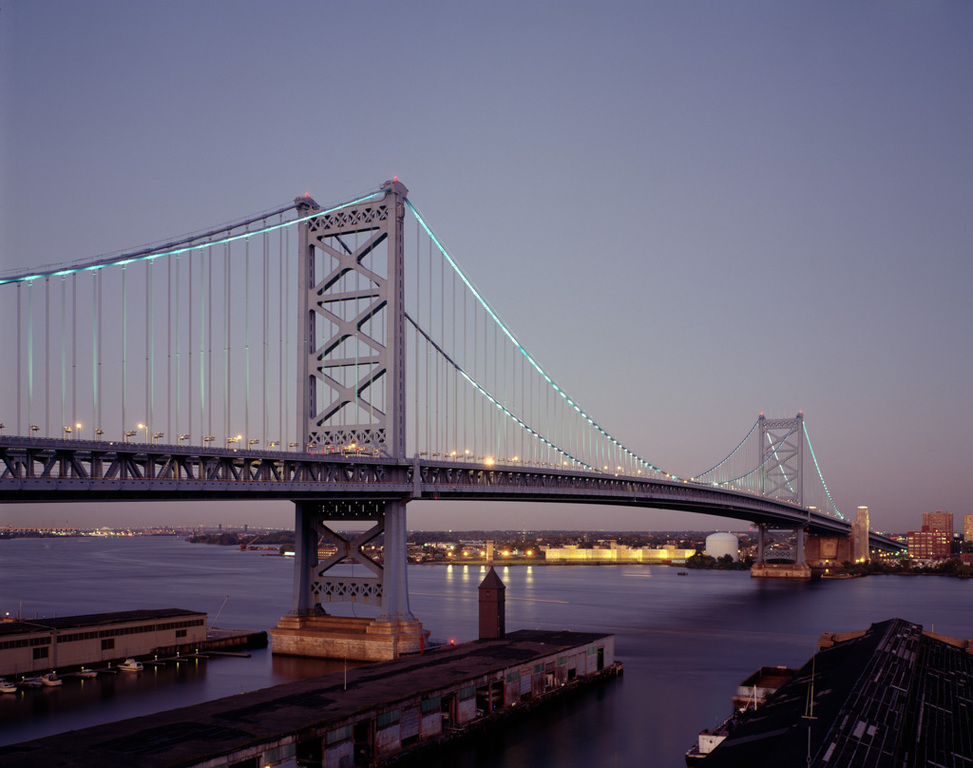
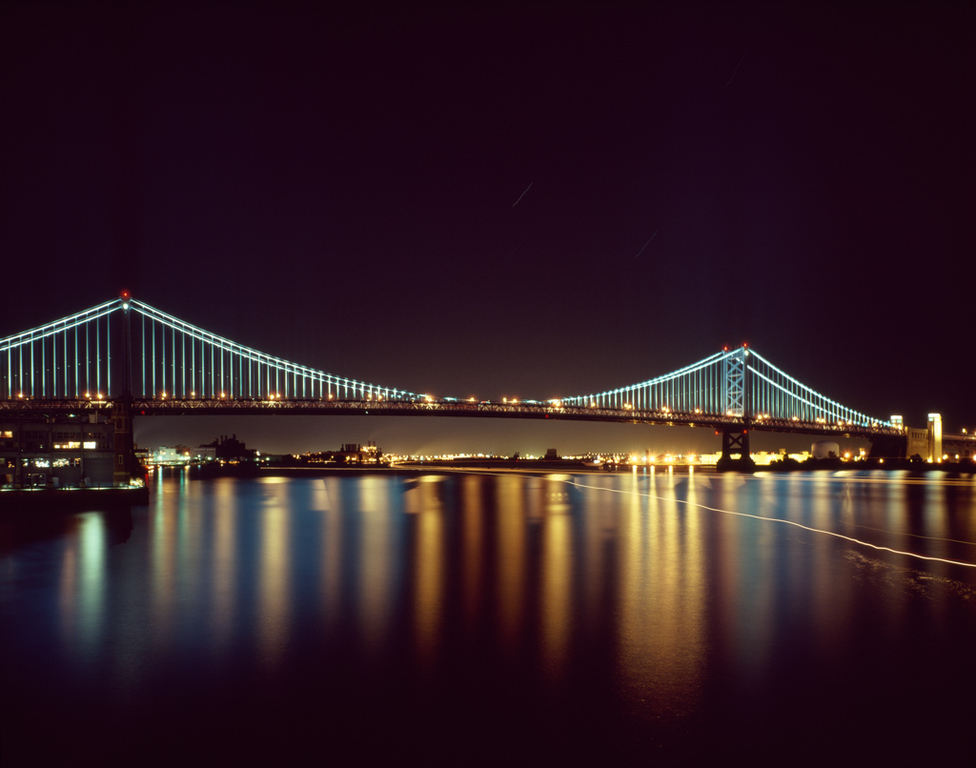
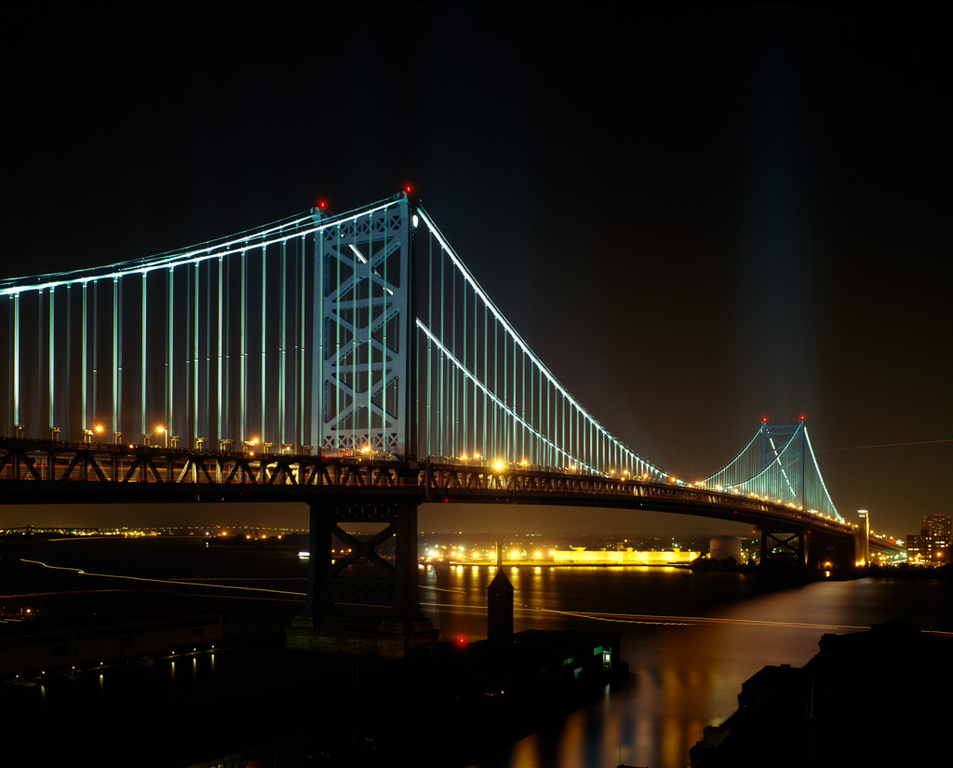
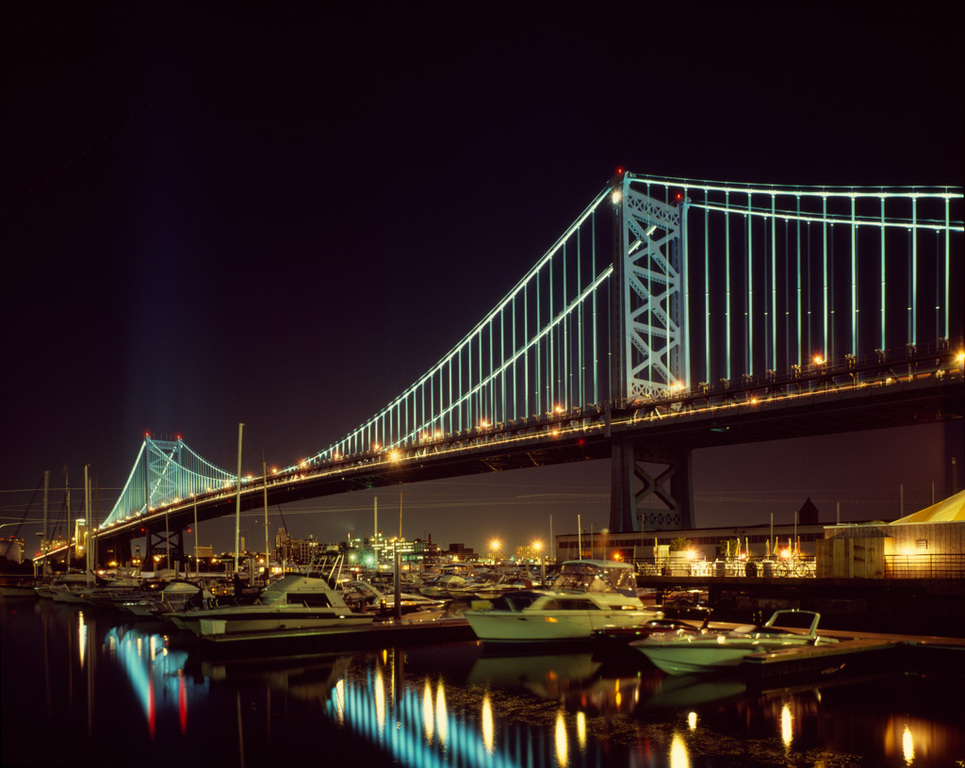
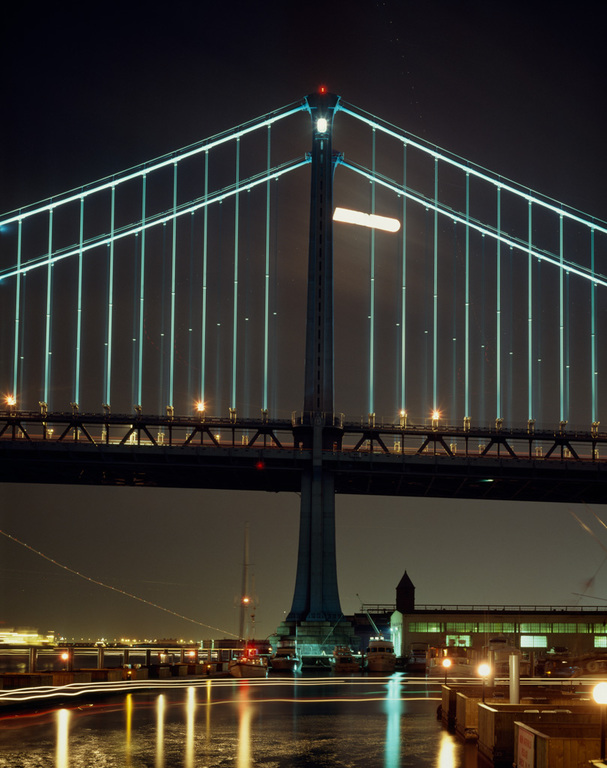
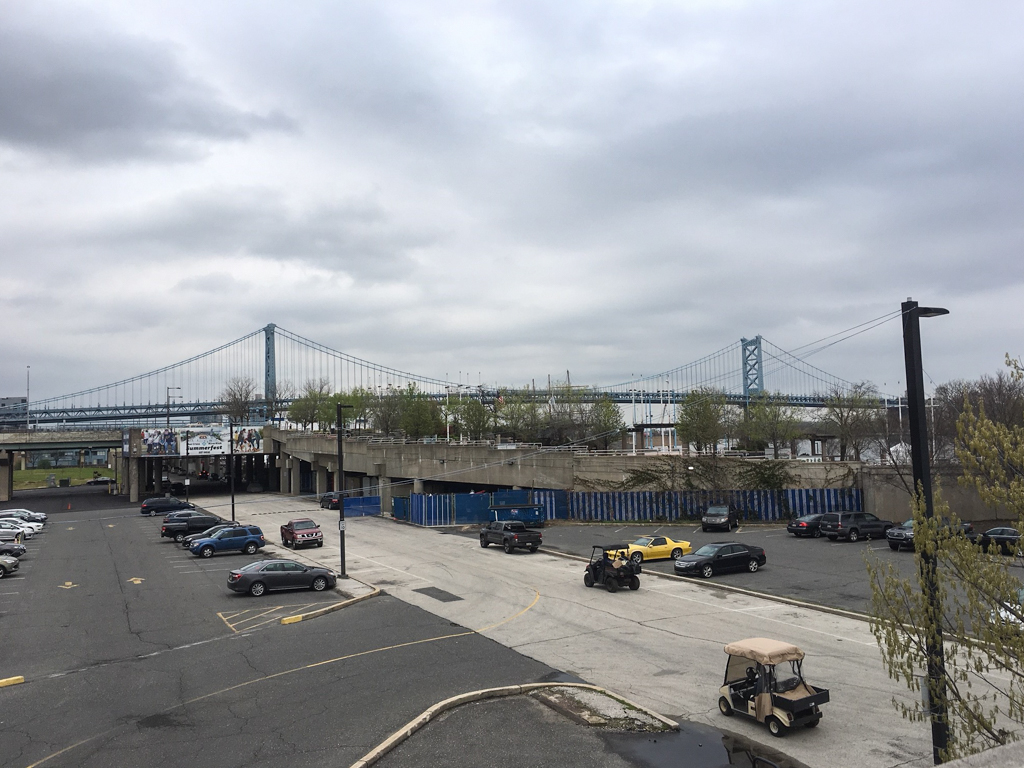
Completed in time for the nation's sesquicentennial celebration, this bridge marked the maturation in the design of suspension bridges, and for several years, until the completion of the George Washington Bridge in New York City, was the longest in the world with a span of 1,750 feet. Juxtaposed against the small scale of eighteenth-century brick houses and churches, the bridge's soaring towers of riveted steel and the parabolic curve of the suspension cables are reminders of two centuries of technological transformation along the banks of the Delaware River. The massive stone buttresses at the ends, the gracious plazas at each end, and a cool classical office building for the bridge commission on the Camden side show Cret's influence and mark the urbane pleasures of bridges at the onset of the automobile age. In 1986, the bridge was lighted with an imaginative scheme devised by Steven Izenour of Venturi, Scott Brown and Associates that typically marks the movement of the cross-river trains and can be played like a giant color organ, with a console lighting each chord.
Benjamin Franklin Bridge (Delaware River Bridge)
1919–1926, Ralph Modjeski and Leon Moissieff, engineers; Paul P. Cret. N. 5th and New sts. and Delaware River