

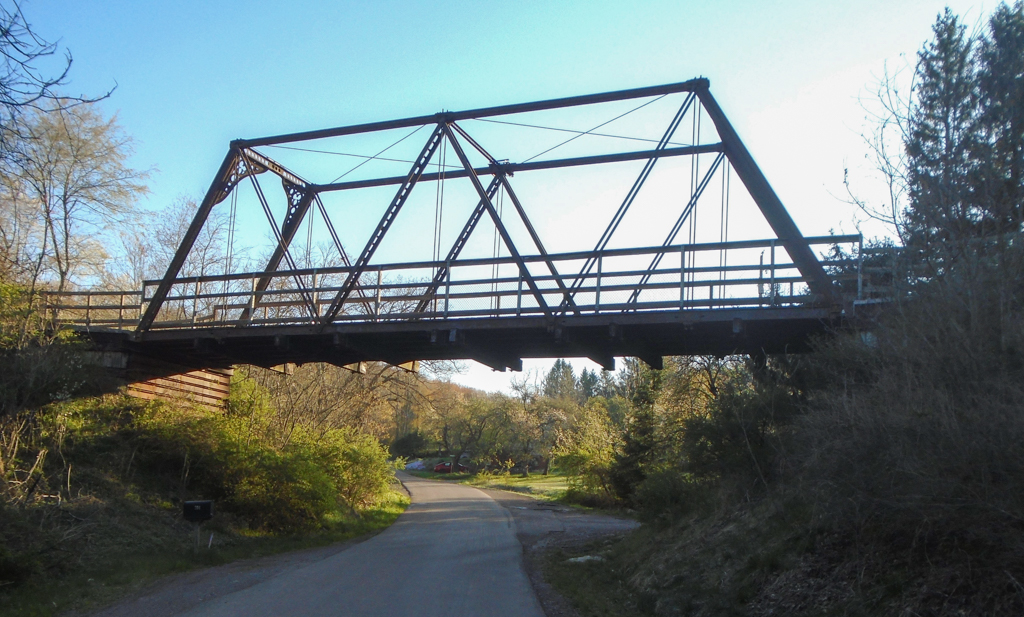
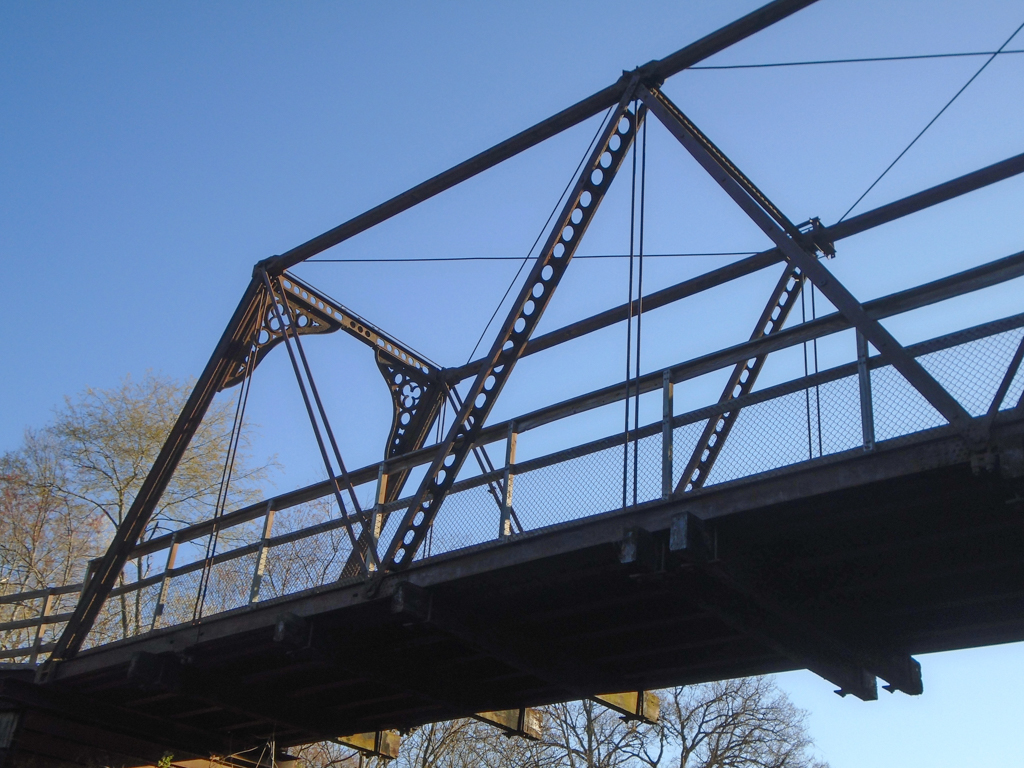
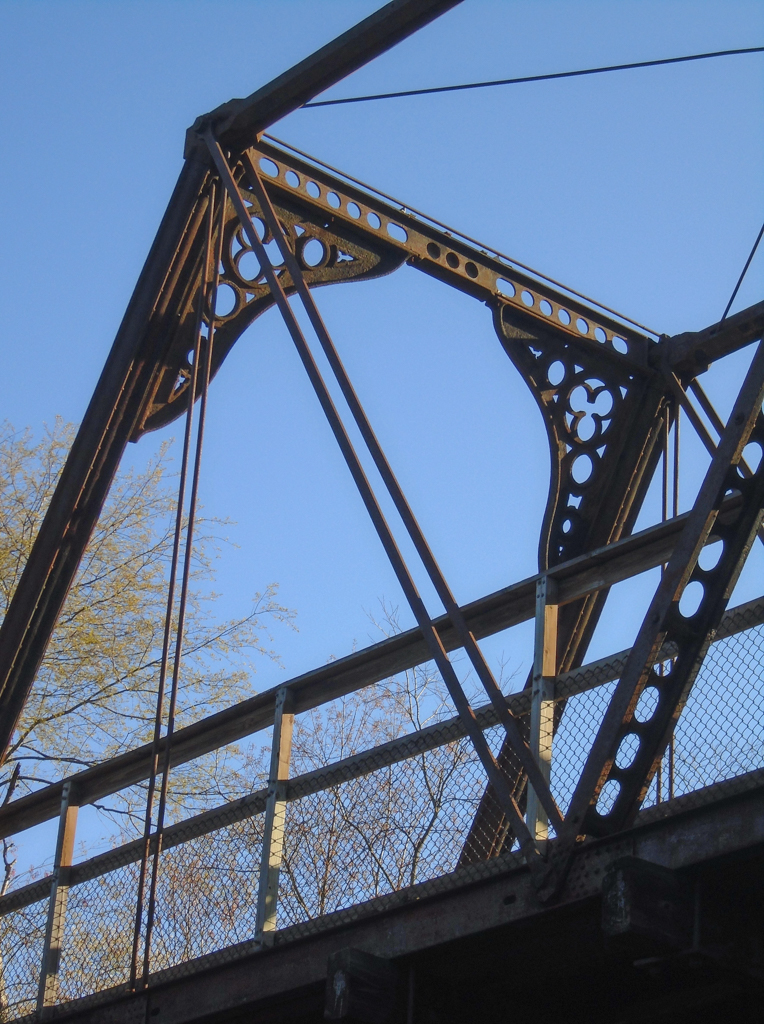
Built to carry the Baltimore and Ohio over one of the many creeks between Cumberland and Pittsburgh, this bridge is probably the only bridge in the commonwealth associated with Wendel Bollman. This is not, however, a Bollman truss type, but a Warren truss built by Bollman's company. By 1910, restricted from carrying rail traffic, the bridge was moved to Meyersdale to carry vehicular traffic, and moved again in 2007 to become part of the Great Allegheny Passage hiking and biking trail (see SO13). Bimetal bridges—those of both cast and wrought iron—such as this one, were the dominant metal truss type between 1840 and 1880. Yet, of the thousands built, fewer than seventy-five are known to survive in the United States. This bridge's notable features include riveted wrought-iron columns of the inclined end posts, cast-iron top chords, cast-iron diagonals in the middle of the bridge fabricated in three separate castings, and decorative portal bracing. There is another small iron Warren truss bridge remaining along the Casselman River near Meyersdale; it can be viewed from Hetz Road and the Casselman River.
Wills Creek Bollman Railroad Bridge
1871, Wendel Bollman. Across Scratch Hill Rd., 1.5 miles east of Meyersdale