

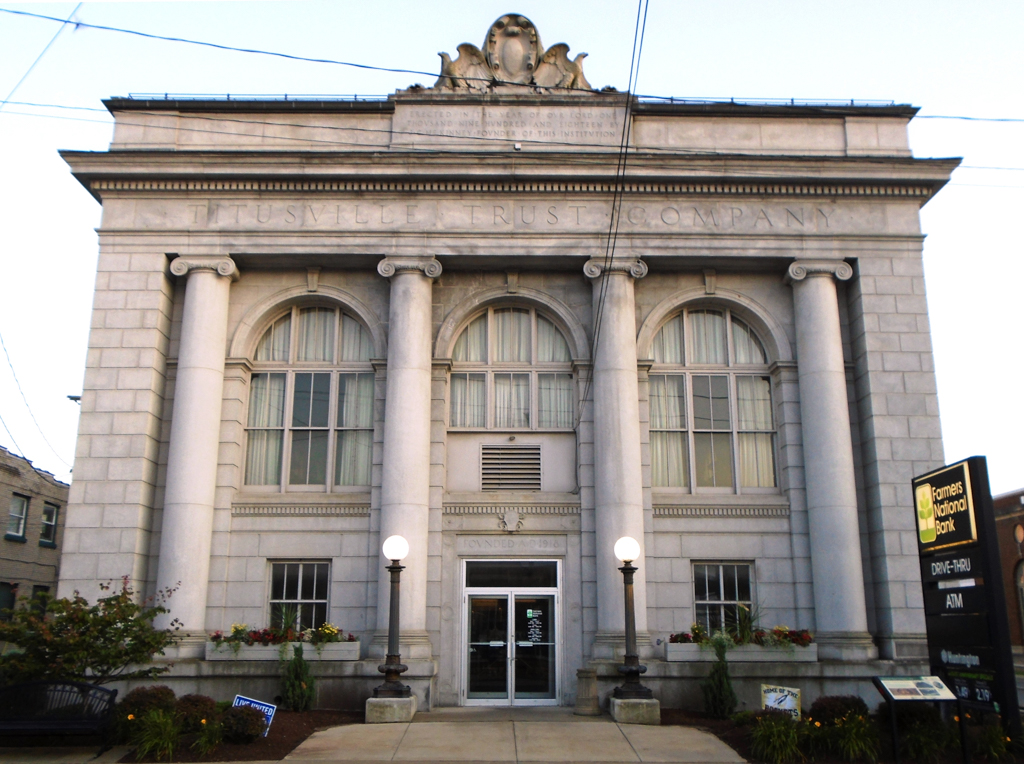
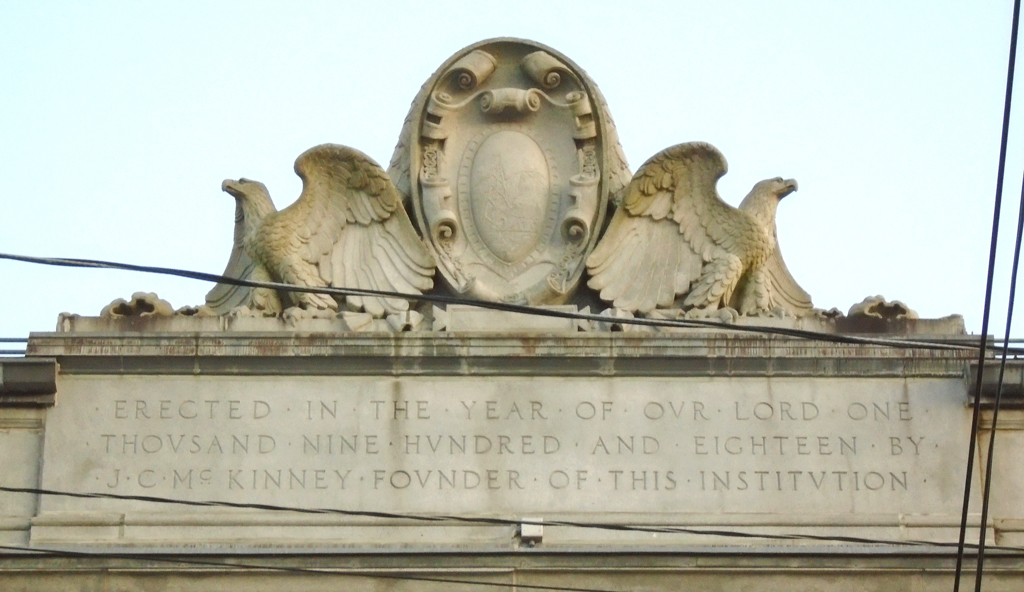
This bank's exterior features four engaged Ionic columns, an anthemion cartouche above the parapet of its limestone facade, and the type of large round-arched windows found on many banks across the nation that date from the early twentieth century. However, it has two surprising elements: an English architect and colorful murals. Alfred Charles Bossom (1881–1965), from Maidstone, England, practiced architecture in New York City from 1906 to 1926. After he returned to England, he became a member of Parliament in 1931, was created a baronet in 1953, and in 1960, a life peer of the realm. Bossom came to the United States in 1904 at the behest of Henry Phipps to work on the design of the Phipps model tenement in Allegheny (demolished) and a nine-story office building at 947 Penn Avenue in Pittsburgh. In New York, Bossom
The interior, with an open central banking space lined with three kinds of marble, is a veritable temple of finance. The ceiling murals by Alfred Valiant and the firm of Mack, Jenney and Tyler depict the discovery of oil by Colonel Edwin Laurentine Drake and barrels of oil being shipped via flatboat and horsedrawn wagon; smaller lunettes surrounding the central medallion illustrate various modes of transportation that used petroleum, such as planes, trains, and dirigibles.