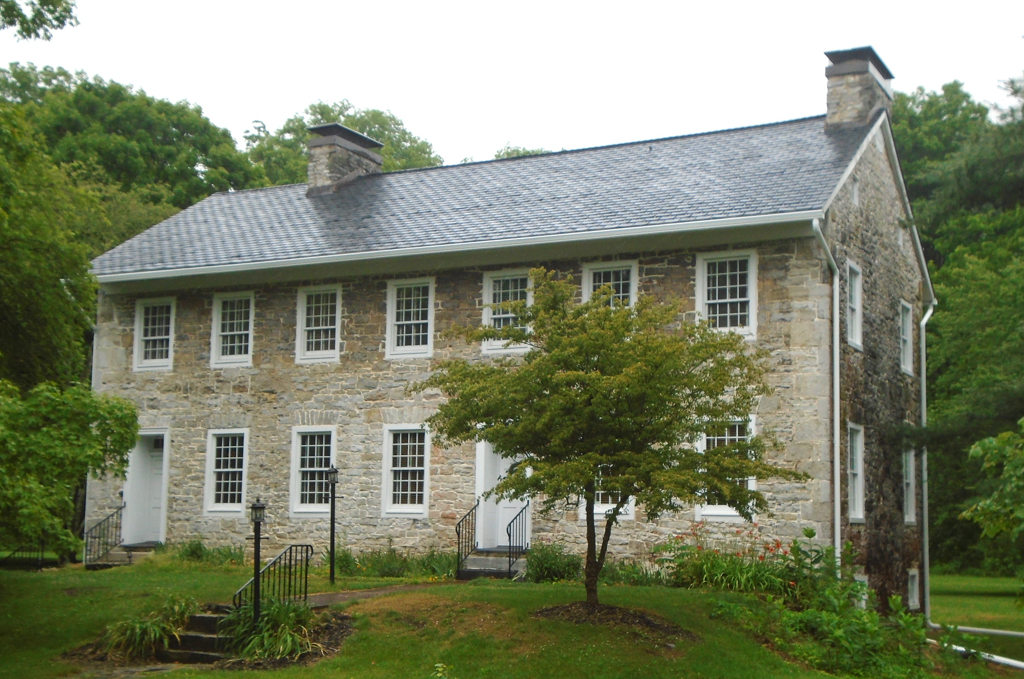
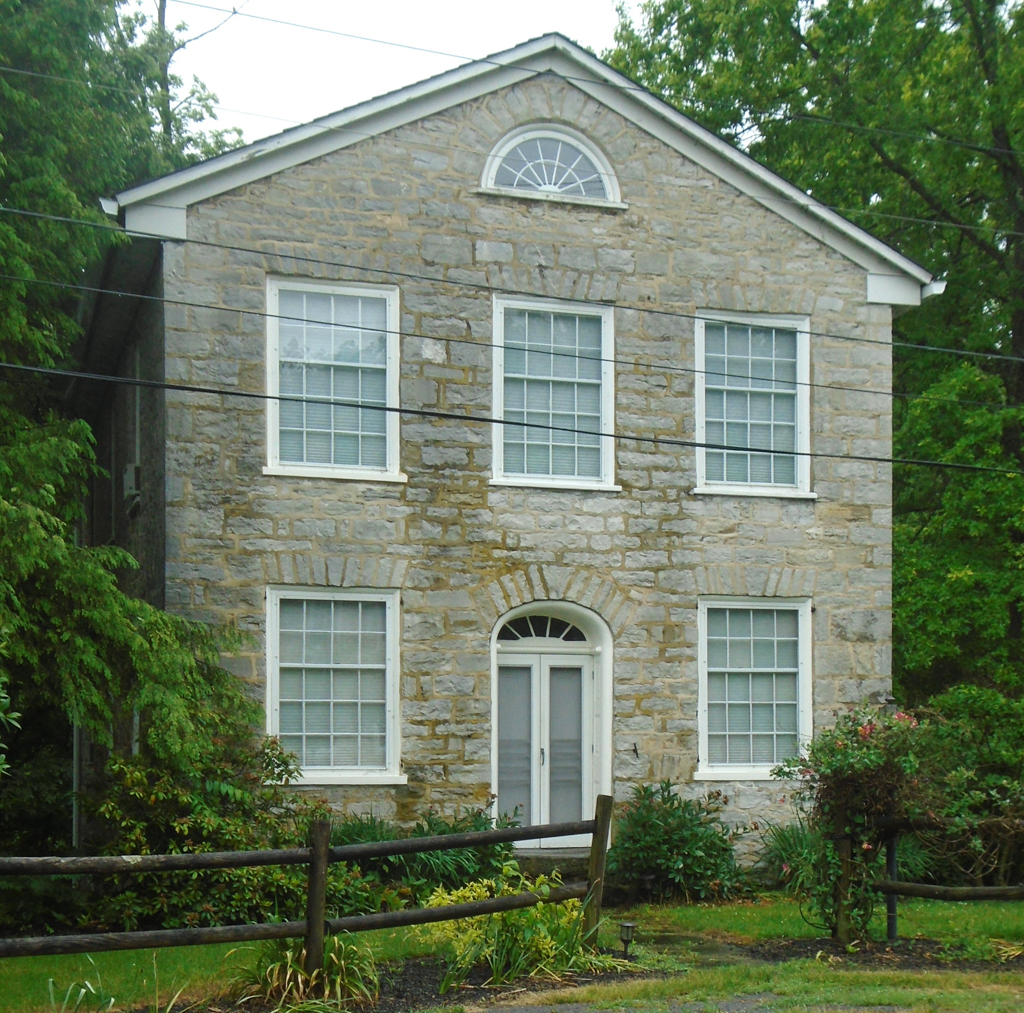
The entire Isett complex illustrates the evolution of a late-eighteenth-century farm into a small settlement and back again, with a sampling of nineteenth-century vernacular buildings added to maintain its operation. When Jacob Isett, from Berks County, first arrived in Sinking Valley in 1785, Fort Roberdeau was already abandoned, and Scots-Irish and German settlers were establishing farms in the sheltered limestone valley. Although trained as a cobbler, Isett set up a store, sawmill, and gristmill (the latter two demolished) along Sinking Valley Run. A small village flourished around these enterprises, including three millworkers' houses (all demolished). Isett's restored limestone house is seven bays across with doors in the first and fifth bays from the south. Its datestone is distinctive for listing the name of Isett's wife, Elenor. A simple gable roof, corner quoins, and jack arches above the double-sash windows distinguish the main house. A small (16 × 20 feet) summer kitchen at the rear southwest corner is constructed of irregularly coursed limestone two feet thick, as in the main house and store. The store, east of the house across PA 1013, is an elegant rectangular building with a gable roof, fanlights at the gable end and above the double entrance doors, and large double-sash eight-over-twelve windows throughout. Five vertical-board-sided farm buildings c. 1870 dot the landscape south of the main house. They include a timber-frame barn with double outsheds banked at the rear and a weigh shed with the scales intact.