

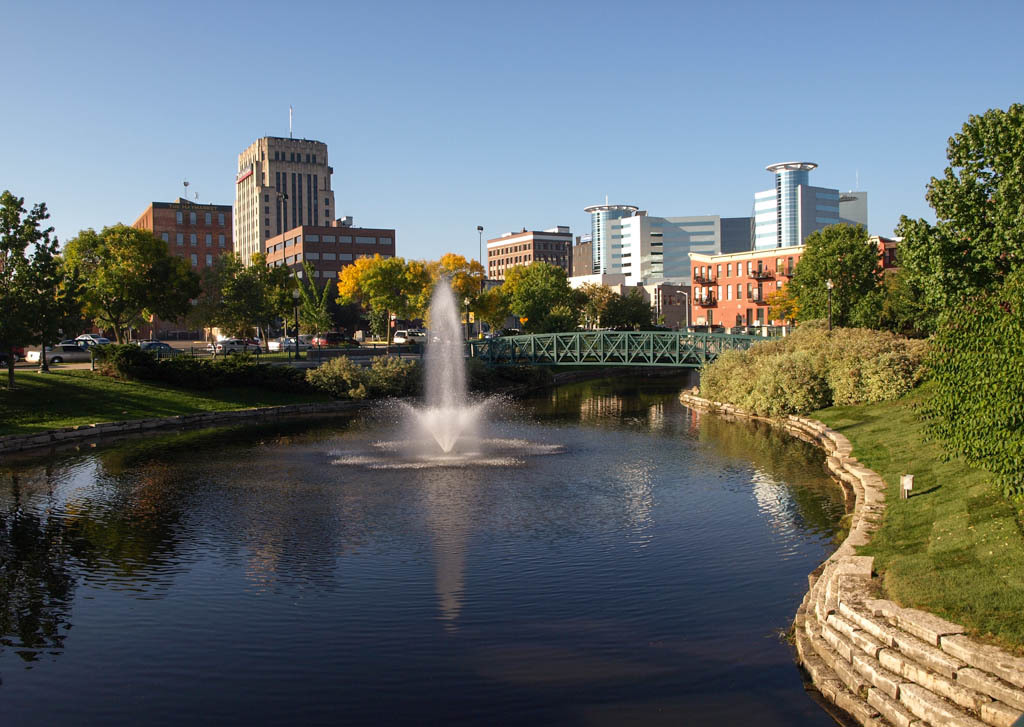
As the community expanded in the late nineteenth century, excavated trenches and pipes for flooding diversion and sanitation that were buried underground around Arcadia Creek eventually began to cause flooding. In 1981 the local chapter of the American Institute of Architects (AIA) and the Downtown Kalamazoo Association organized a design charrette led by architects Stanley Tigerman, Robert A. M. Stern, Frank Gehry, and Merril Elam. This inspired the newly formed Downtown Development Authority to engage Skidmore, Owings and Merrill to develop a plan for Arcadia Creek that addressed physical issues, future development, and integration with downtown. In 1986, for five blocks the stream was returned to a more natural open state in an action called daylighting. Daylighting not only addressed flooding problems, but also helped restore the declining downtown area. In the process the city created a large retention pond that holds the high winter flows and releases the water gradually into the storm-water system. In summer, the city uses its pond area as an amphitheater for outdoor concerts and festivals. The city and the Arcadia Creek Commons Partnership encouraged local businesses to invest in the area. The Kalamazoo Valley Community College Arcadia campus and museum, residential lofts, renovation of the Radisson hotel, and new retail stores resulted.
Arcadia Creek Commons
1986, O'Boyle, Cowell, Blalock and Associates, landscape architects and land planners, and Eckert Wordell. Bounded by Kalamazoo and N. Westnedge aves. and N. Edwards and Water sts.