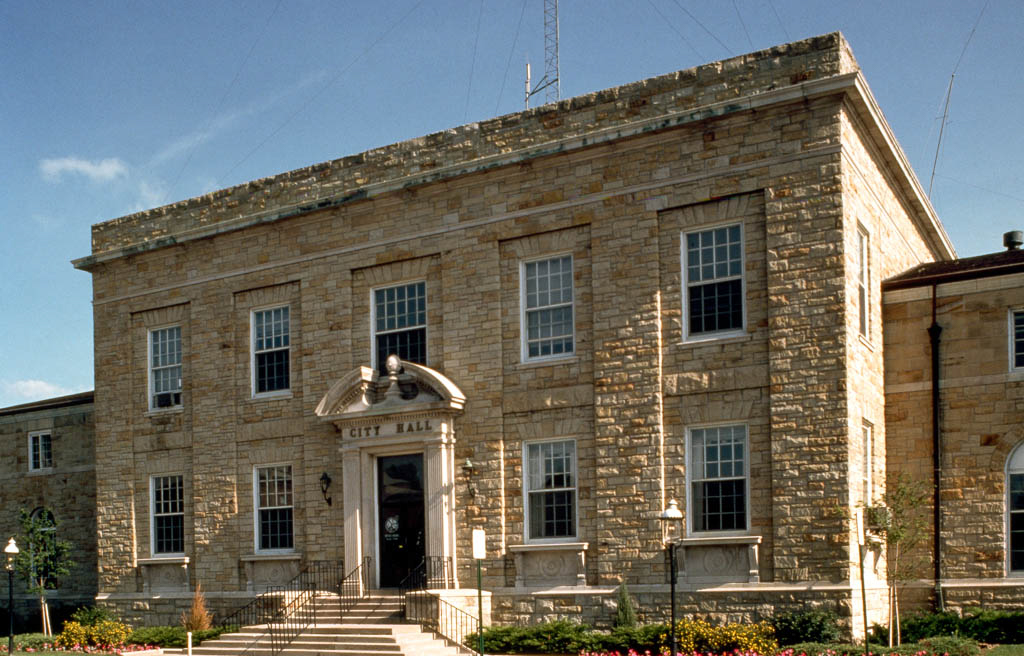
On his inauguration as mayor of Albion in 1931, Norman H. Wiener, together with city councilmen and interested citizens, initiated plans for a new city hall. Dreams for this building were realized within two years, when Harry B. Parker donated the building site, and the Civil Works Administration (CWA), the Works Progress Administration (WPA), and the Emergency Relief Administration (ERA), in an emergency effort to relieve unemployment, put federal monies into this public works project. Dean of Albion, brother of a councilman, designed the city hall in a symmetrical and bland rendition of the Colonial Revival style prevalent during the Great Depression era. The central section of the rough-cut limestone building is flanked by two wings; the fire department is housed in one, and the police department in the other. A broken segmental pediment with pineapple finial surmounts the central entrance. On the eve of its dedication in 1936, the Albion Evening Recorder called the Albion City Hall “one of Southern Michigan's most pretentious municipal buildings.”

