

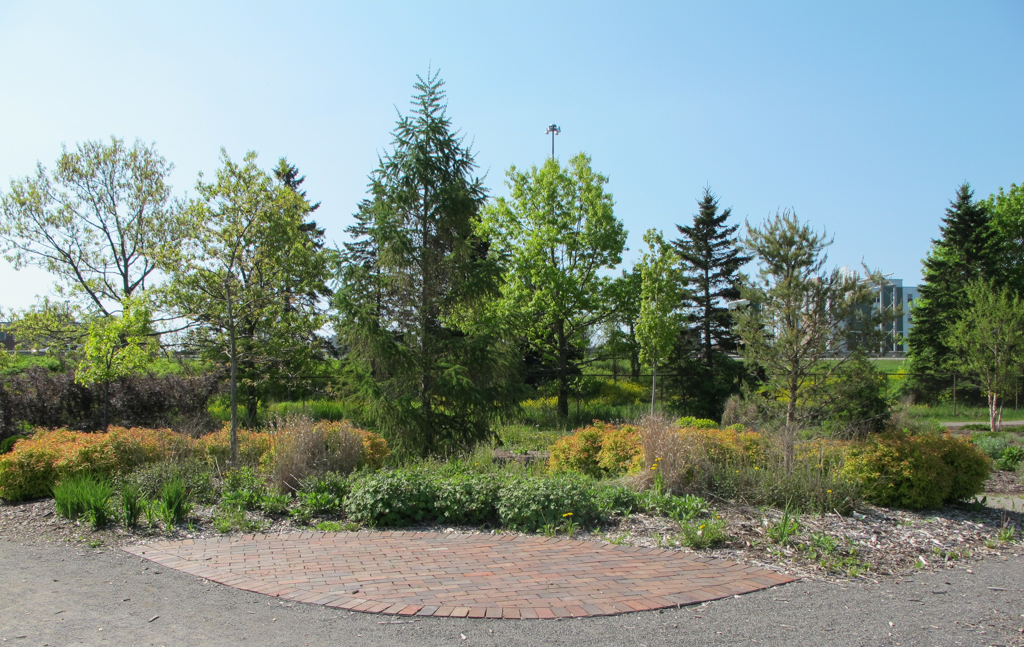
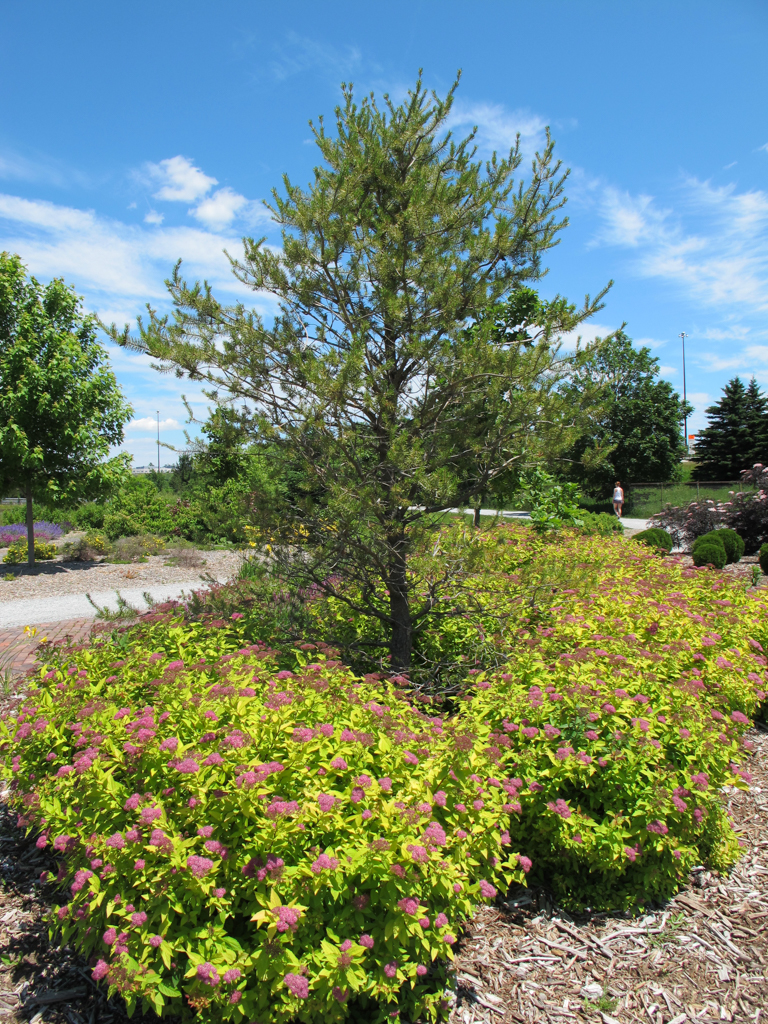

In 1895, Portland mayor James Phinney Baxter consulted the landscape architecture firm Olmsted, Olmsted and Eliot to conduct a study of the city’s Back Cove. The firm submitted its plan to transform Portland’s malodorous and toxic Back Cove into an attractive parkway and recreation area. Back Cove proved as much an engineering problem as a landscaping one. To clean up the Cove and its shoreline for recreational use and enhance the real estate value of adjacent land, the Olmsted firm proposed building a massive gravel and stone dam and a sanitary channel that would flush the cove with every tide. While this was never completed, the Olmsted Brothers proposed a new scheme as part of their 1905 master plan for the Portland parks system. Although Baxter lost his bid for re-election in 1905, work recommenced in 1911 on a 100-foot-wide parkway that opened in 1917 and was named in Baxter’s honor in 1925. The work included stabilizing the edges of the cove, grading the roads, and constructing sidewalks and bridges. When completed it was a delightful esplanade, with brick gutters and granite curbing. Baxter Boulevard and the entire Back Cove park project was completed in 1925, and it formed an important link in the city’s park system—the 3.5 mile Back Cove Trail connects to the Eastern Promenade. Lined with linden trees, today the trail is a popular with runners and bikers and remains an ideal spot from which to view the Portland skyline.
Back Cove
1895–1925, Olmsted Brothers. Back Cove.
References
References
“Back Cove and Baxter Boulevard.” The Cultural Landscape Foundation. Accessed October 12, 2106.
http://tclf.org.
Bauman, John F.
Gateway to Vacationland: The Making of Portland, Maine.Amherst, Massachusetts: University of Massachusetts Press, 2012.
Holtwyk, Theodore H.B., and Earle G. Shettleworth, Jr., eds.
Bold Vision: The Development of the Parks of Portland, Maine.Kennebunk, Maine: Greater Portland Landmarks, 1999.