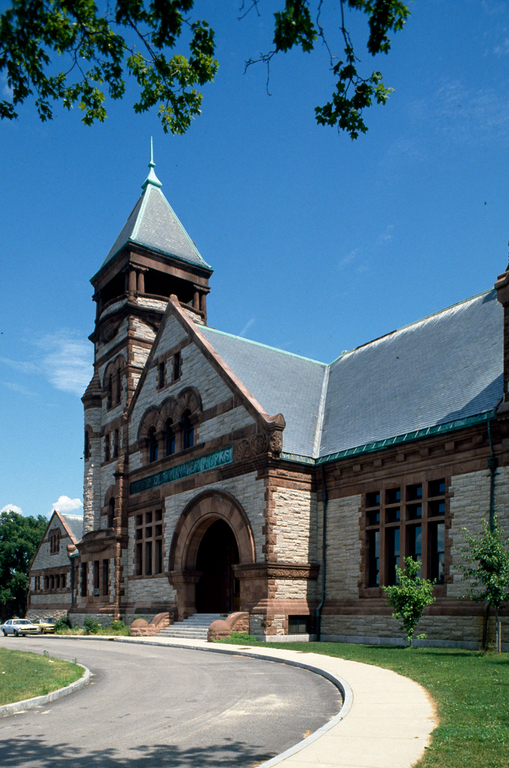
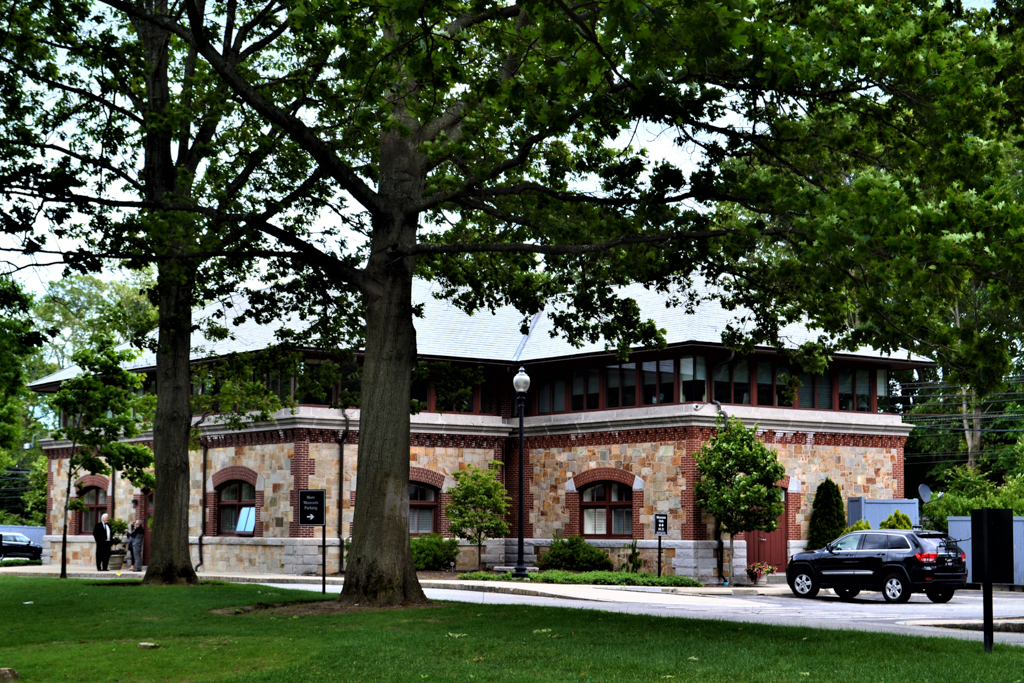
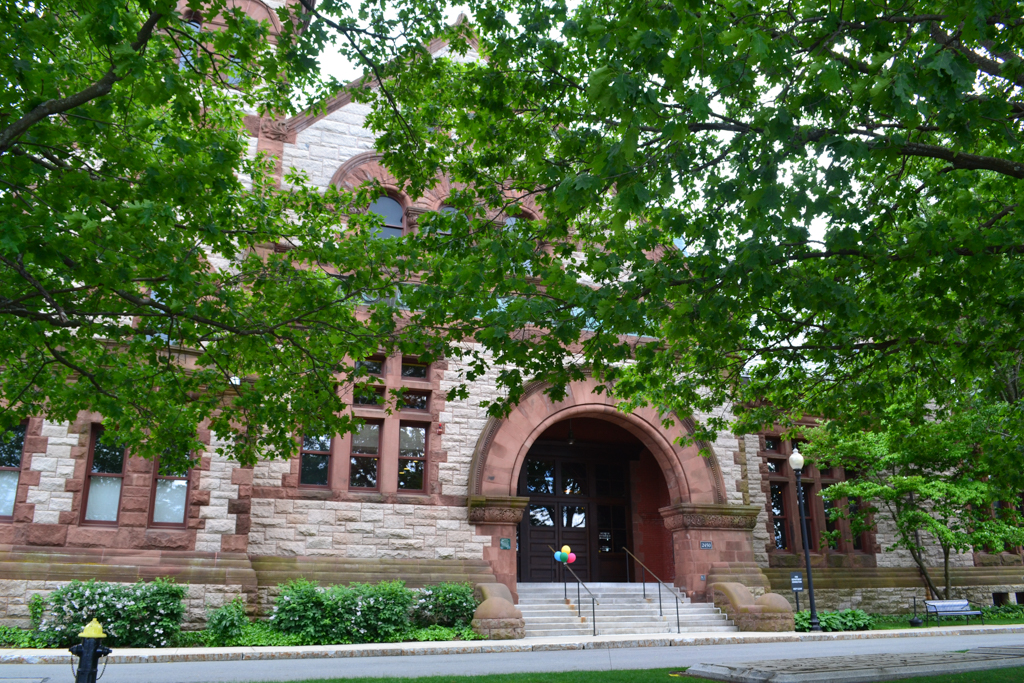
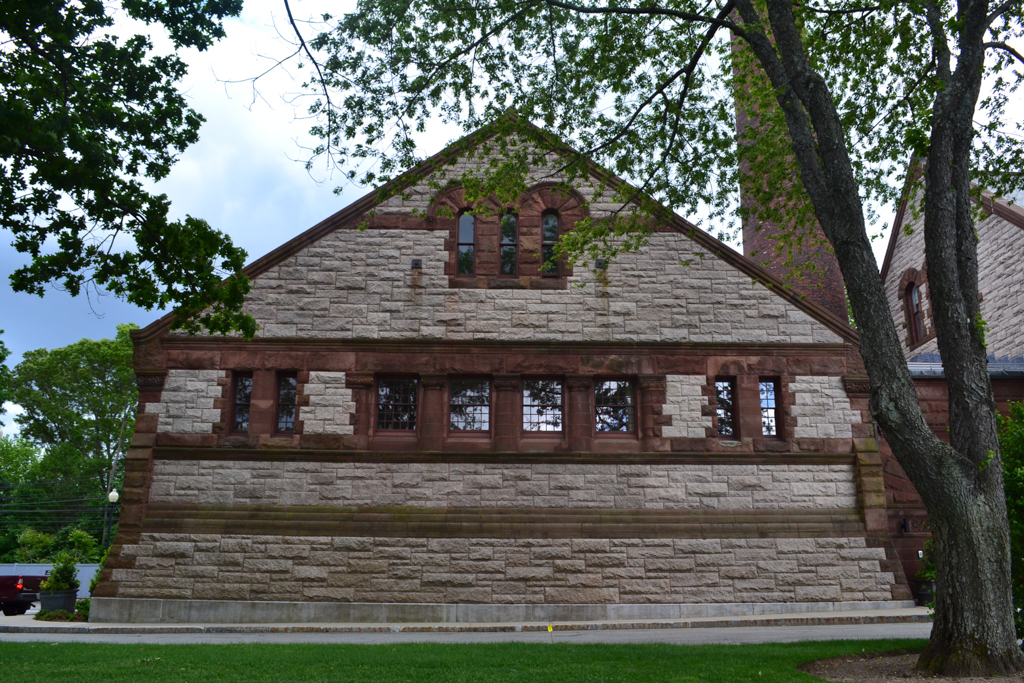
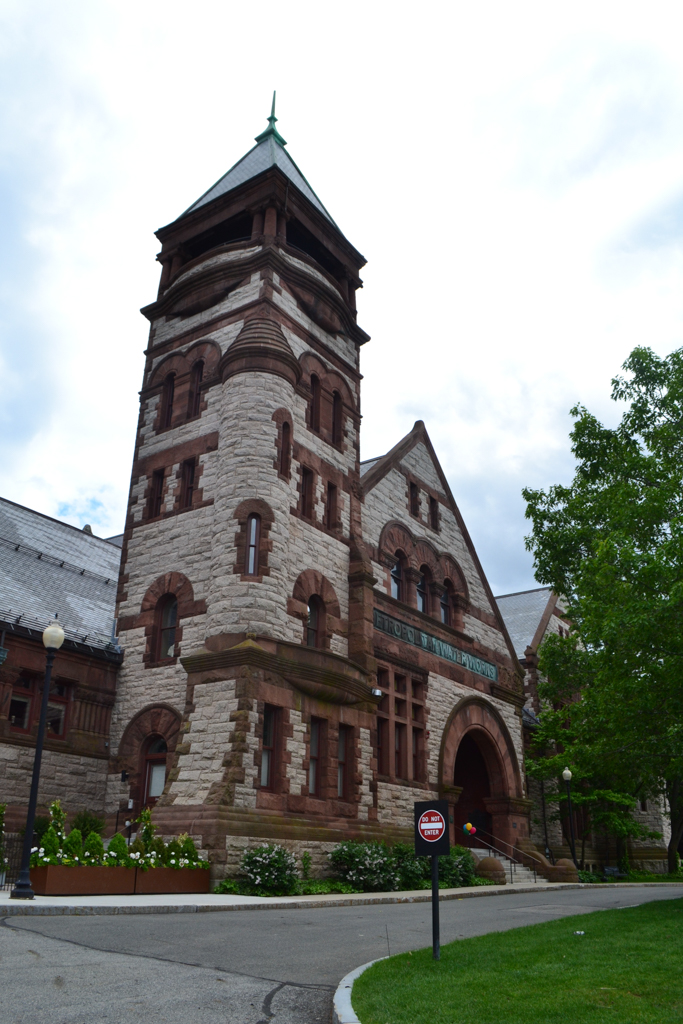
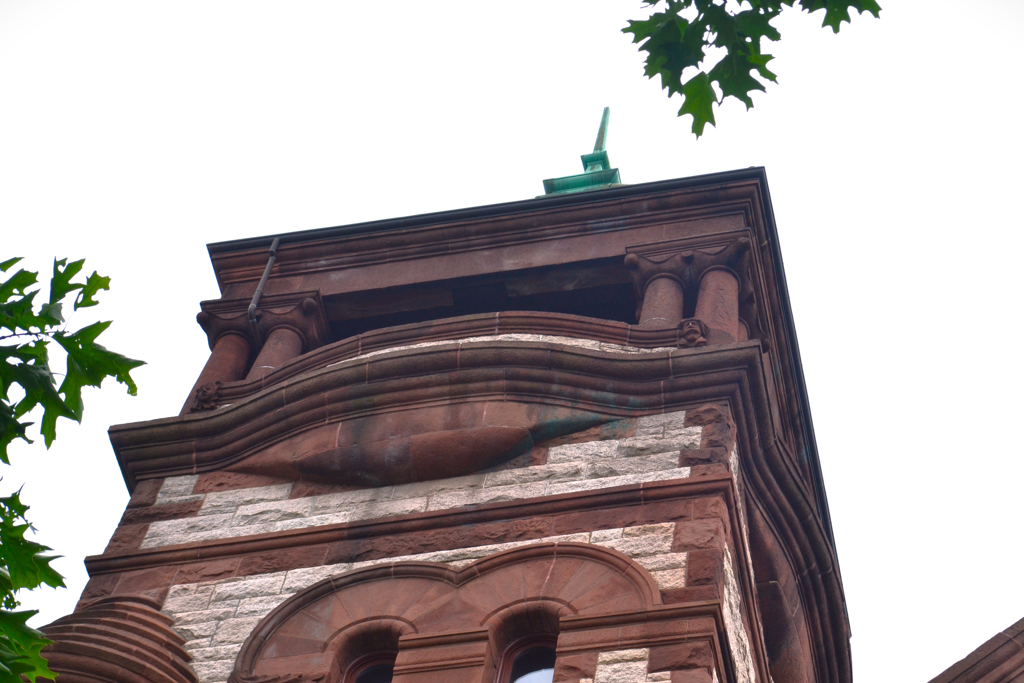
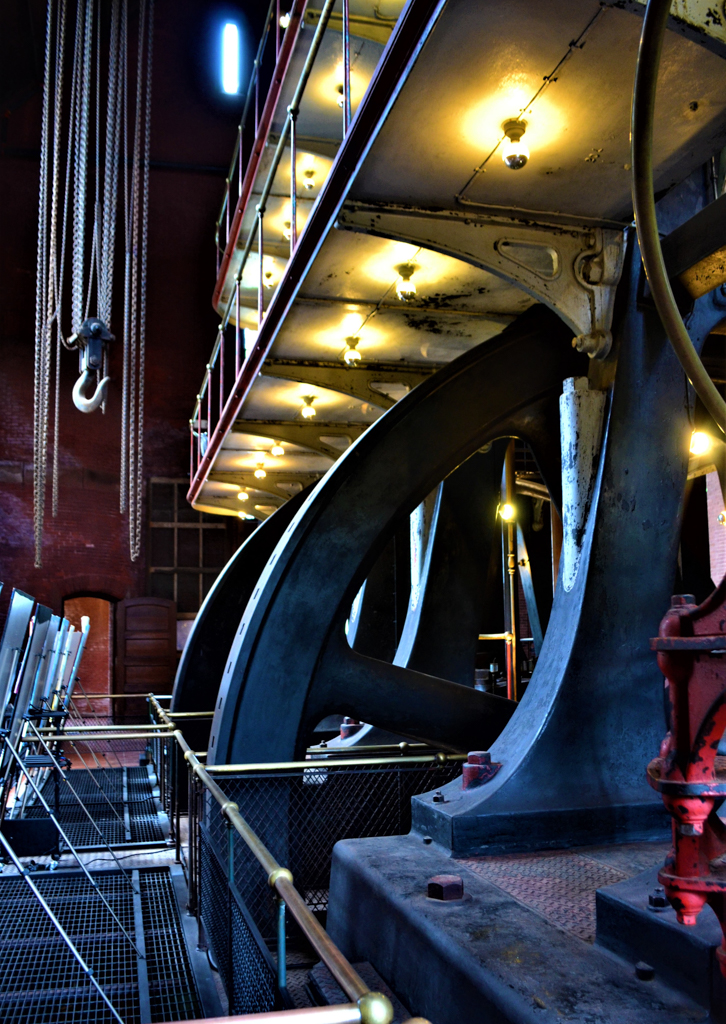
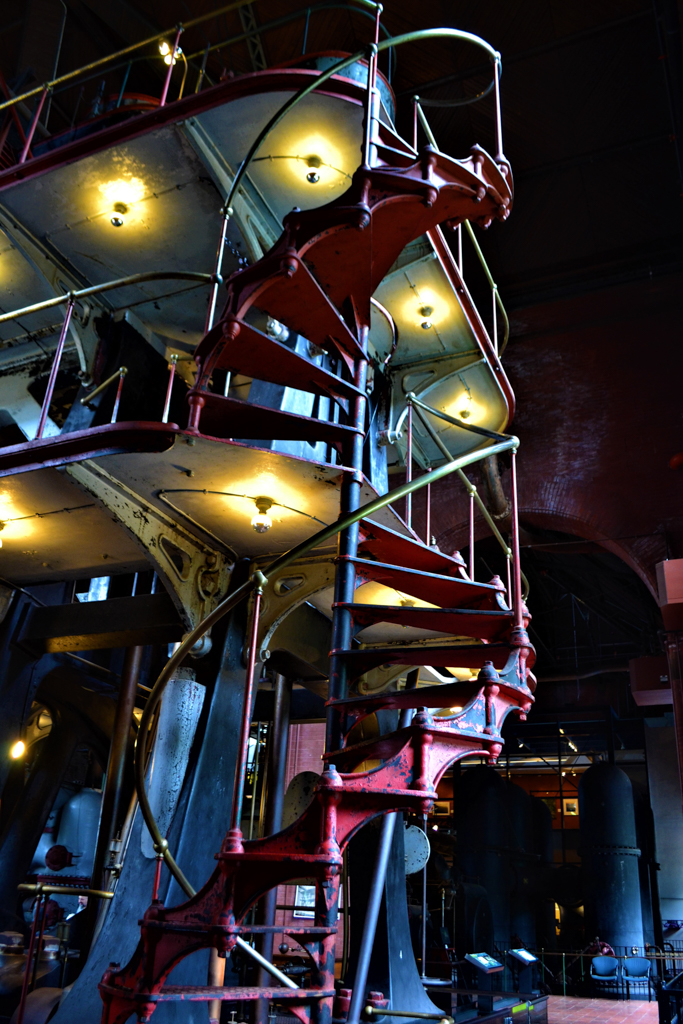
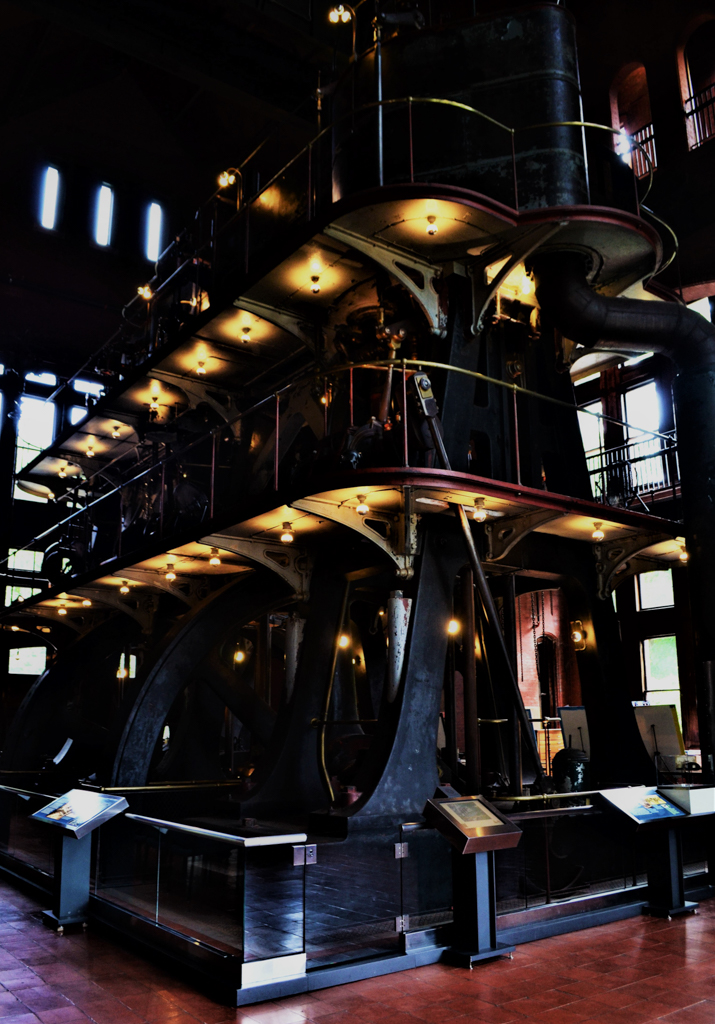
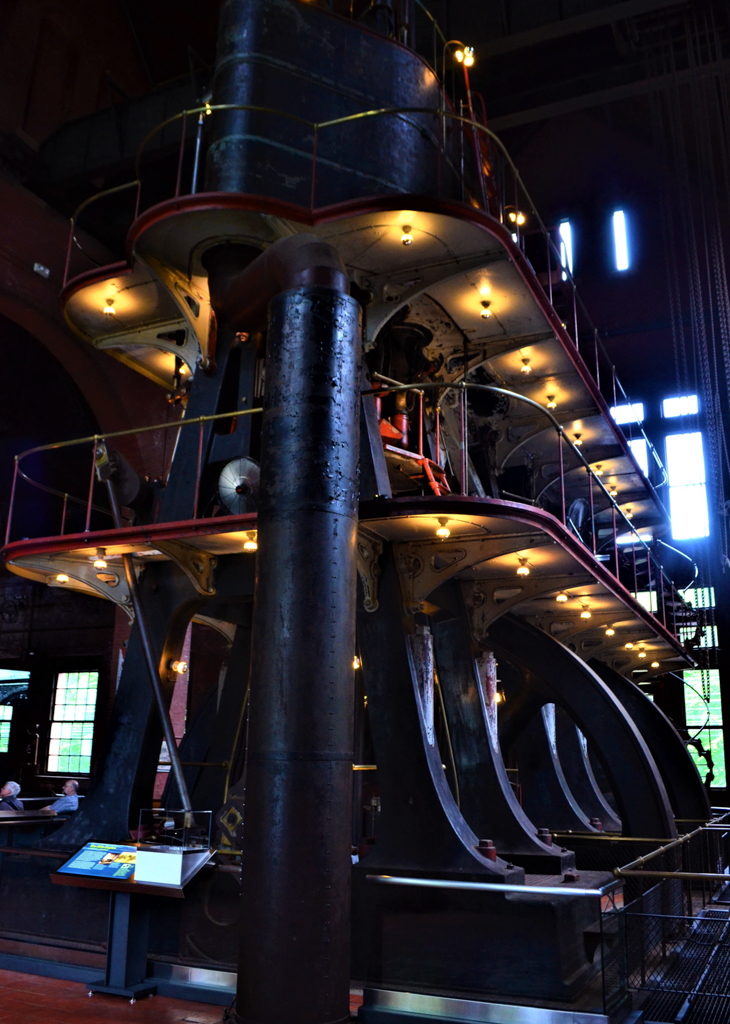
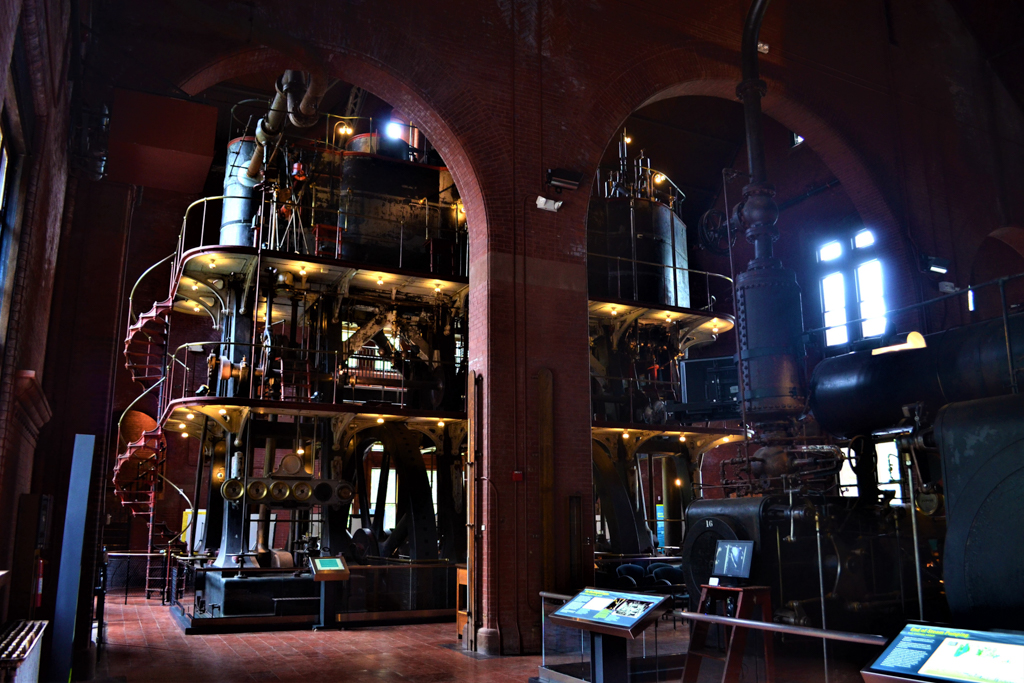
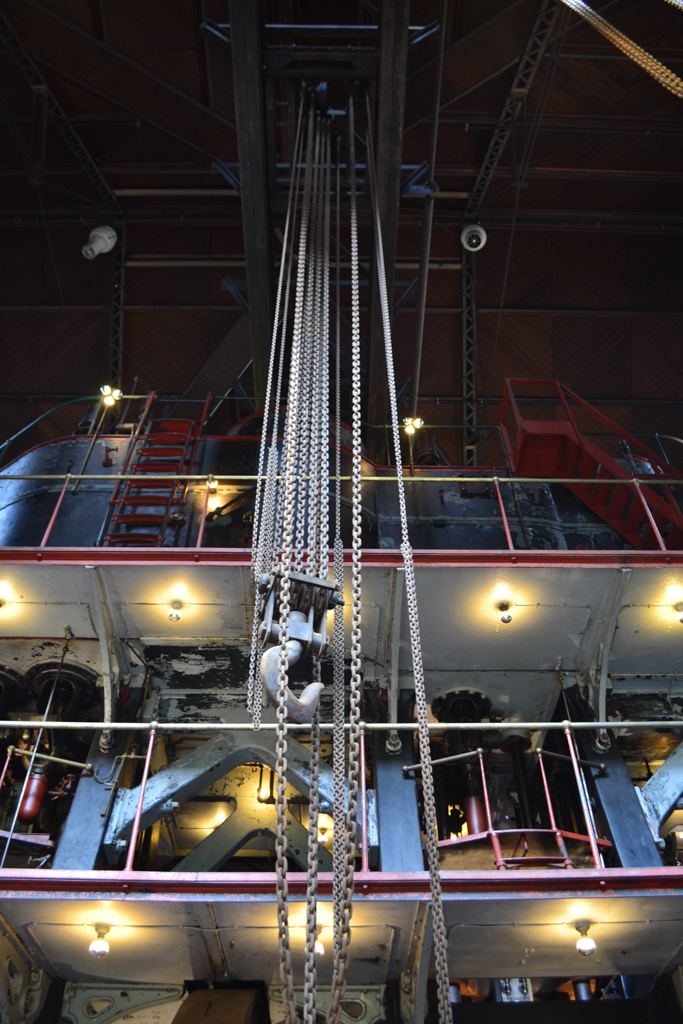
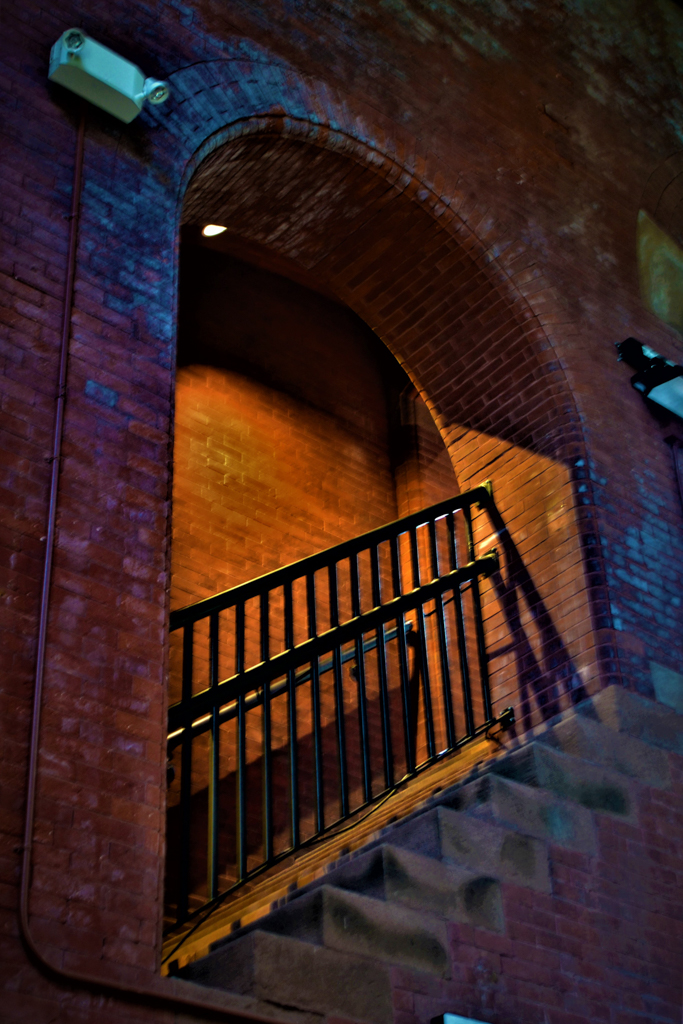
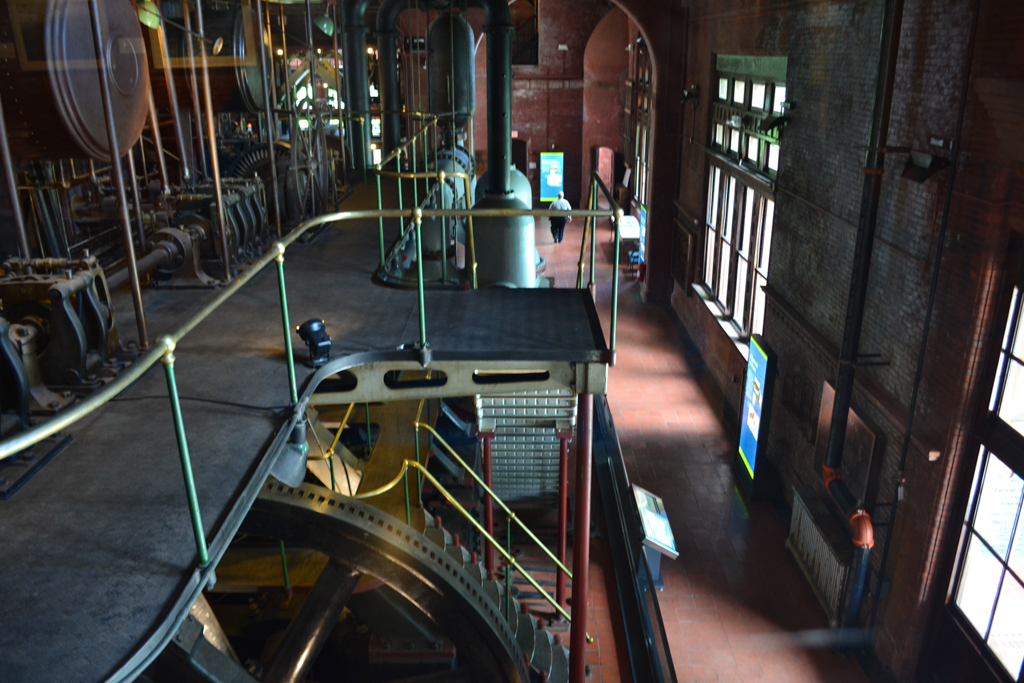
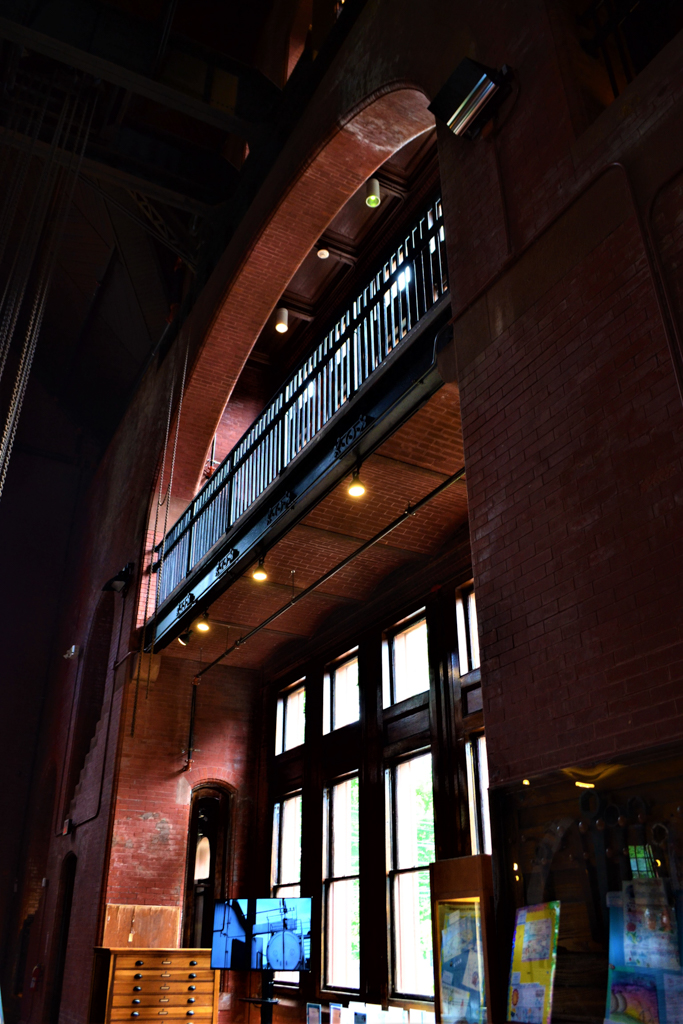
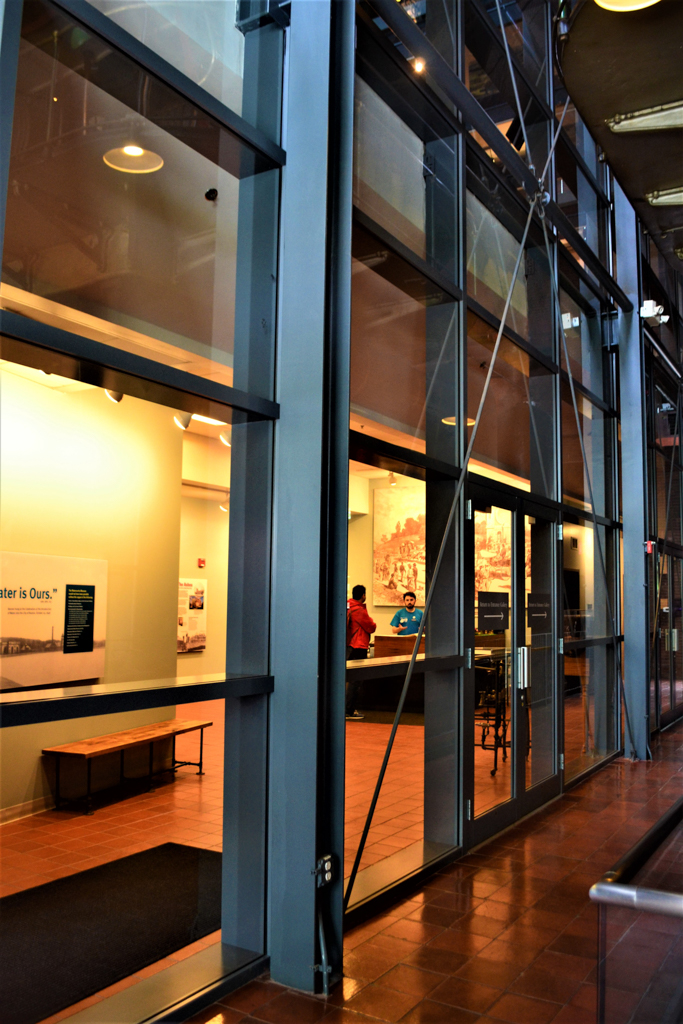
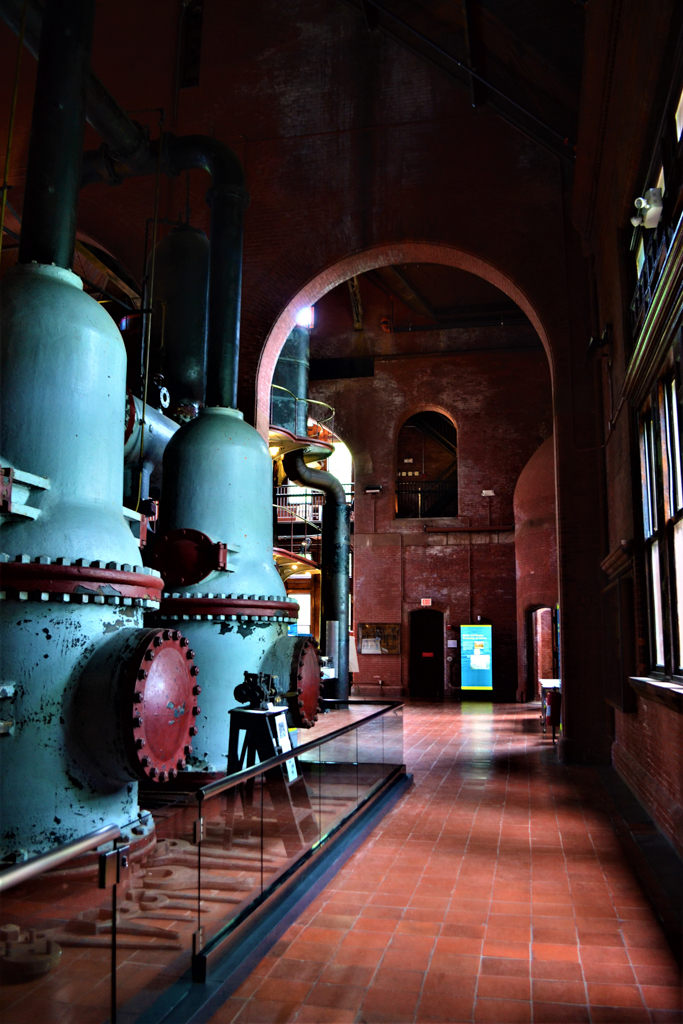
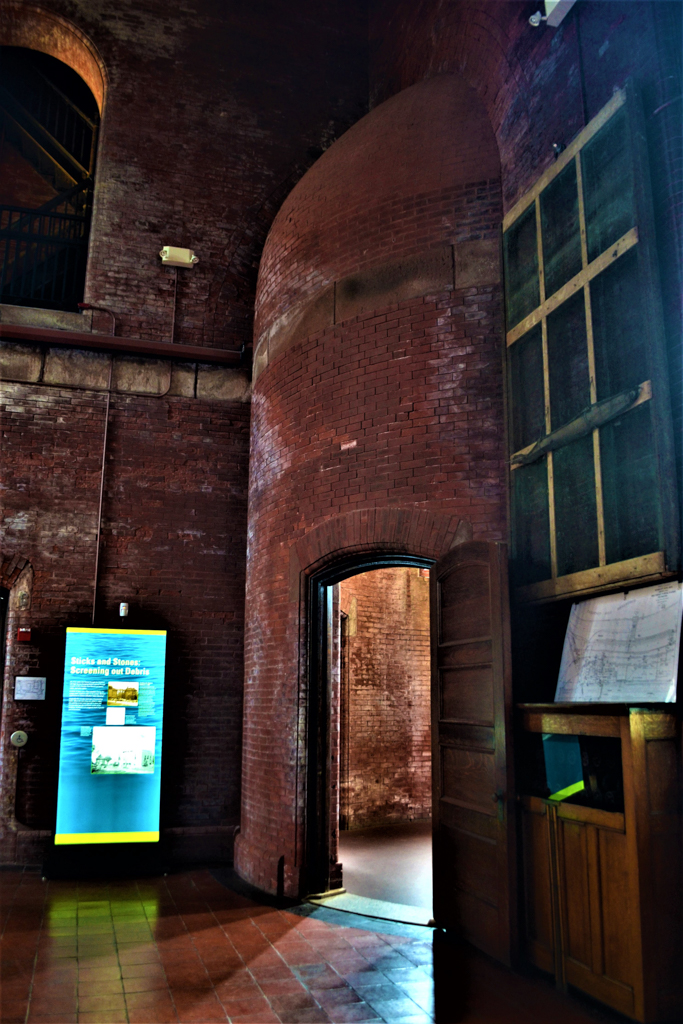
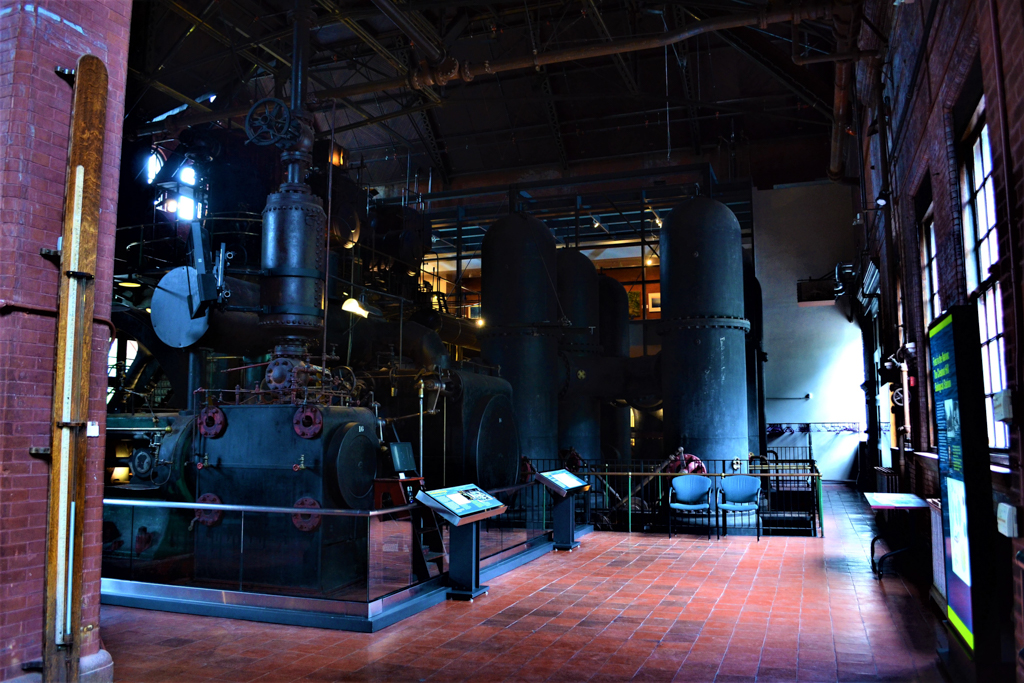
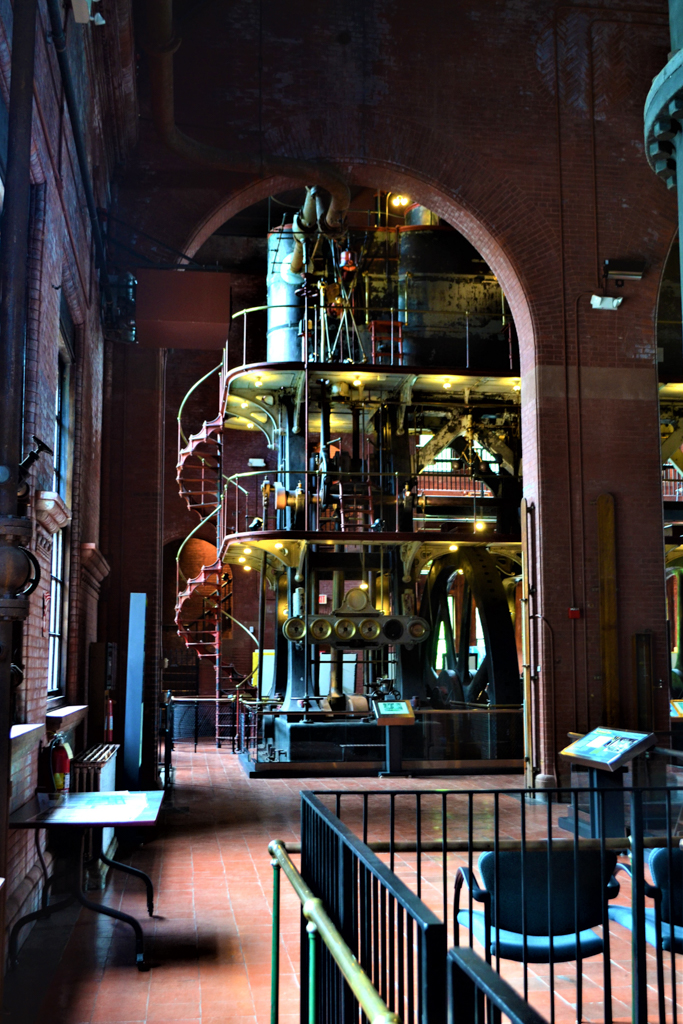
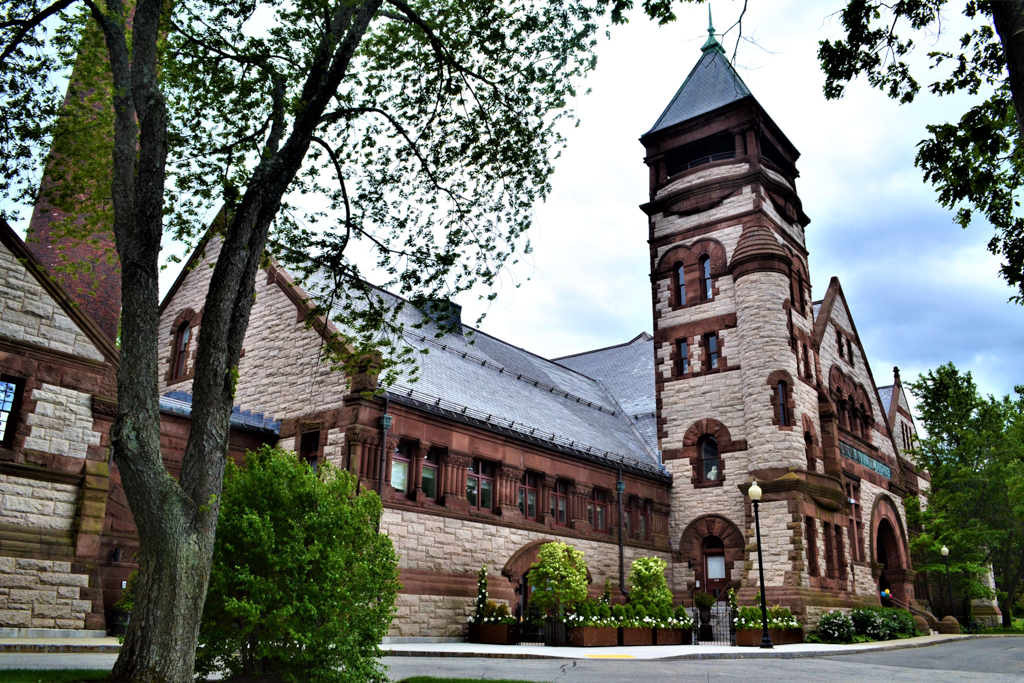
Developed between 1865 and 1901, the Chestnut Hill Reservoir complex remains one of Boston's best examples of engineering, technology, and public architecture. By the 1870s, the Boston water system served the fifth largest population in the nation. The two Chestnut Hill reservoir basins (the surviving Bradlee Reservoir Basin and the Lawrence Meadow Reservoir Basin to the north, filled in by Boston College for a playing field and other facilities in 1950) were equipped with new pumping equipment to meet the growing city's needs. The Richardsonian Romanesque High Service Pumping Station increased water pressure in the city by filling the Fisher Hill reservoir, at a higher elevation one mile away in Brookline. With its 112-foot hipped-roof tower, picturesque massing, and polychromatic facade of rock-faced Milford granite and Longmeadow freestone trim, the building still houses the original Leavitt steam engine, built 1892–1894 and the only known surviving work of prominent engineer Erasmus Darwin Leavitt Jr.
The Classical Revival Low Service Pumping Station pumped water from Chestnut Hill to the storage and distribution reservoir at Spot Pond in Stoneham. The steel and reinforced concrete building is clad with light gray Indiana limestone, set off by a foundation and main stairs of pink Milford granite and cast-iron window frames and grillwork. The Chestnut Hill complex began to be phased out in the 1940s with the completion of the City Tunnel from the Quabbin reservoir in central Massachusetts and ended service in the 1970s. Although the reservoir is maintained for the short-term as an emergency back-up, plans for a mixed-use redevelopment of the High Service and Low Service buildings have been a preservation issue for several years.
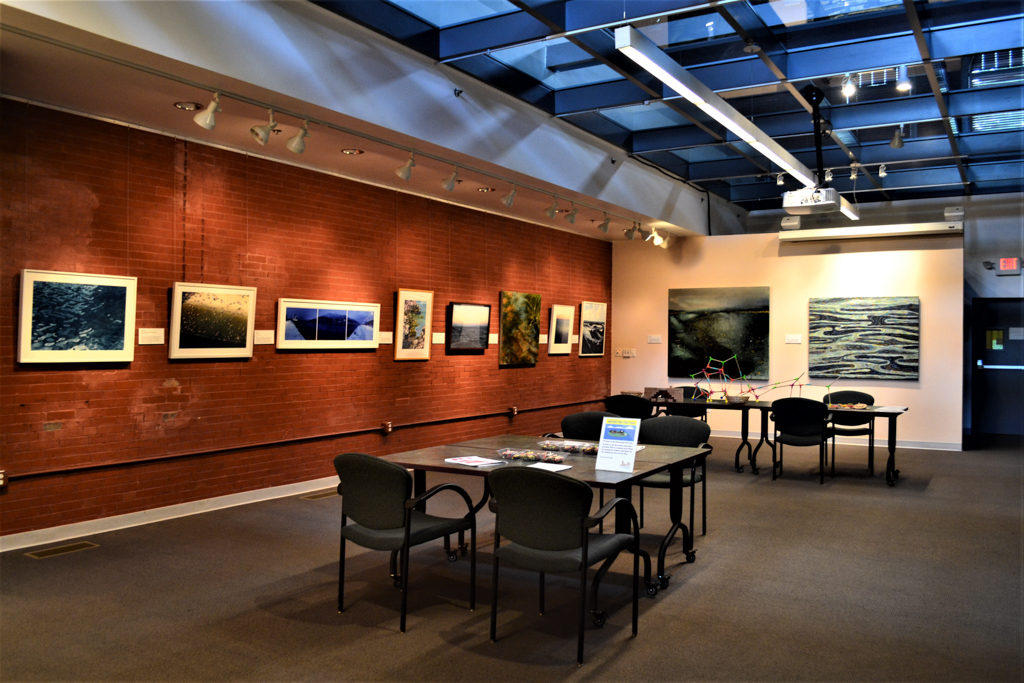
Following restoration in the early 2000s, the station reopened as the Metropolitan Waterworks Museum in 2011.