

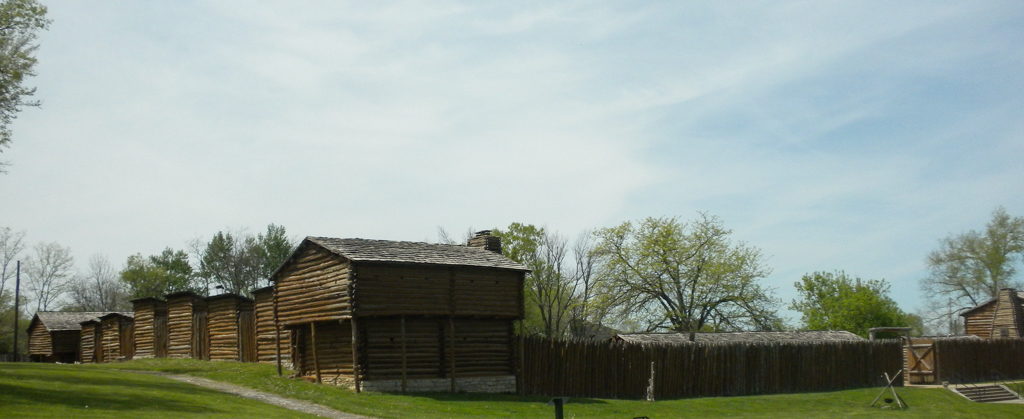
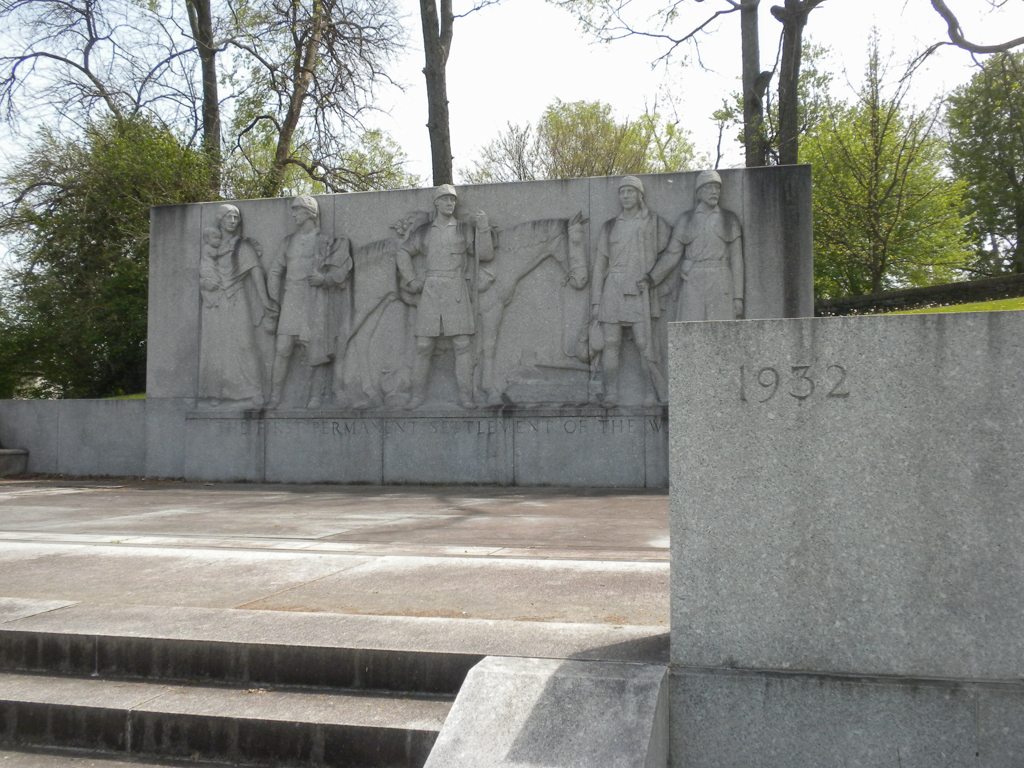
Old Fort Harrod is a reconstruction of an original pioneer fort, although smaller in size and in a different location. In June 1774 James Harrod led thirty-seven men from the Monongahela and Ohio Rivers to the mouth of the Kentucky River and from there to the Salt River. Stopping when they came across a large spring, the party quickly built rough log cabins. They stayed for almost a month before a Shawnee ambush forced a retreat to Virginia. Harrod and his men returned in May 1775, after Lord Dunmore forged the Treaty of Camp Charlotte with the Mingo and the Shawnee, and established a palisade or stockade fort with log cabins for families. This was the first permanent settlement west of the Alleghenies in what would become the state of Kentucky.
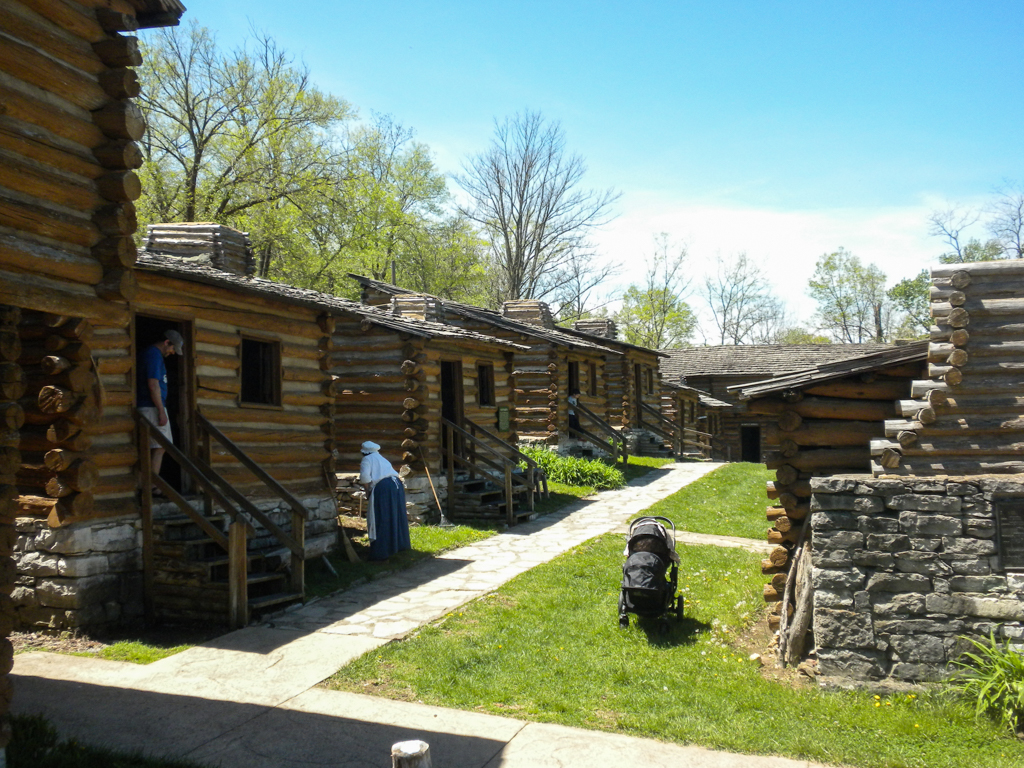
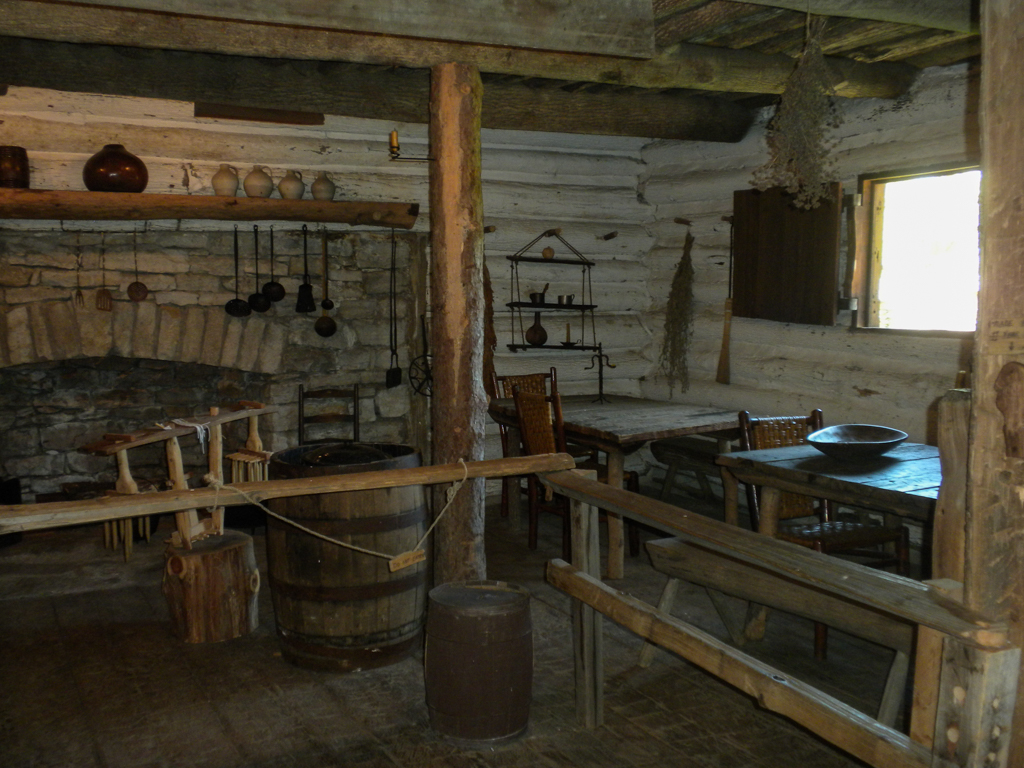
Tall, defensive blockhouses stood at three of the four corners of the twelve-foot high trapezoidally-shaped fort. James Harrod lived in the southeast blockhouse; the southwest corner blockhouse was the home of General George Rogers Clark. A total of eighteen cabins were housed within the 264 x 264–foot fort. The notched log cabins themselves formed the stockade, complete with loopholes or ports in their outer walls to permit the frontiersmen to fire on attackers. The original mudded wood chimneys of the cabins were replaced with fireproof stone ones and were purposefully placed on interior walls to prevent attackers from stopping them up. A schoolhouse stood at the center of the enclosure and records indicate that no chinking was used in the building. This led to its being recreated as a notched log cabin with significant space between each log.
By 1777 there were almost 200 white men, women, children, and slaves living within the fort. By 1815 Fort Harrod had been abandoned and the stone on which it had been built was quarried for the city of Harrodsburg. Today the site is under a parking lot.
In 1927, a replica of Fort Harrod was built slightly southwest of the original location and this is now the centerpiece of Old Fort Harrod State Park. The complex includes the oldest settler cemetery west of the Alleghenies, a monument to George Rogers Clark that President Roosevelt dedicated in 1934, the 1813 house of Major James Taylor, and the Lincoln Marriage Temple, a brick structure that contains the log cabin in which Abraham Lincoln’s parents were married in Beechland in 1806.