

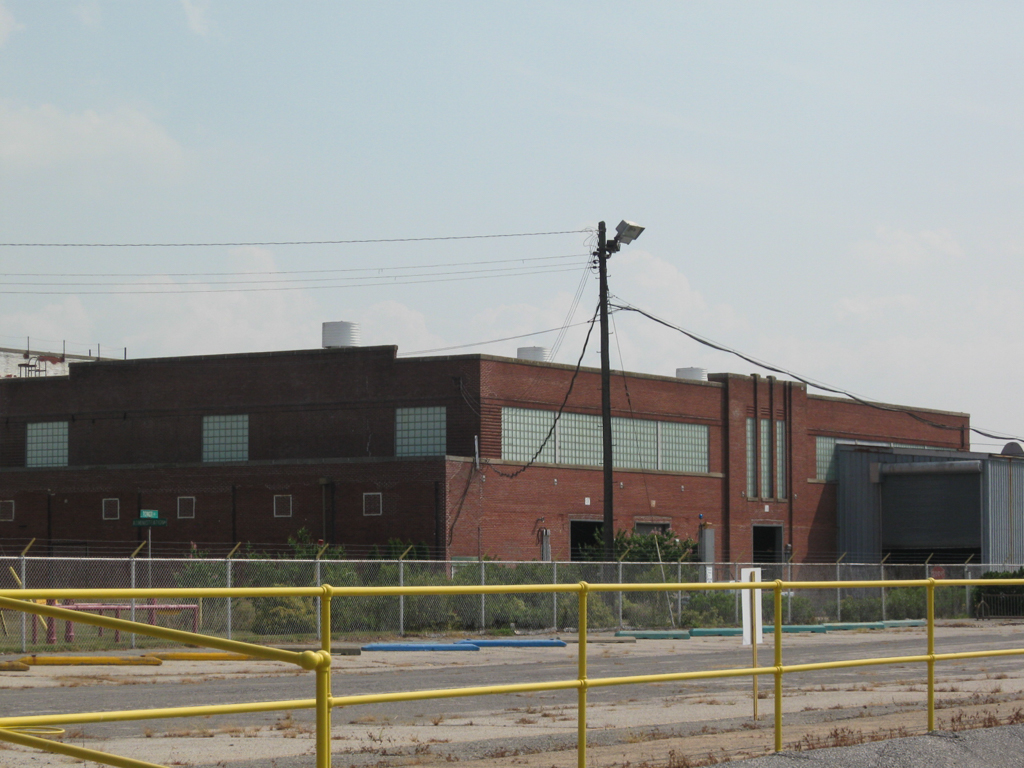
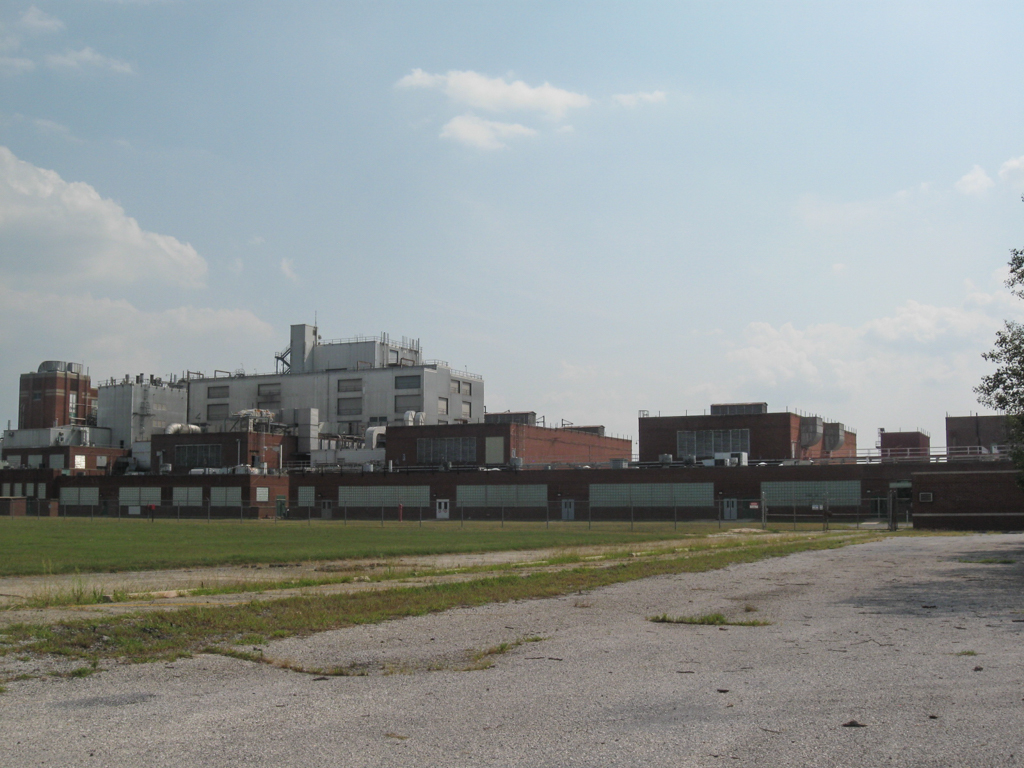
A pilot plant at the DuPont Experimental Station ( BR25) produced the first run of an extraordinary new substance, “Fiber 66,” in 1938. Various names were considered for the textile polymer, including “Delawear,” before “nylon” was chosen. It was advertised to the public at the World's Fair of 1939 in New York City: “strong as steel, as fine as a spider's web.” DuPont's siting of their nylon factory downstate in Seaford was regarded as a boon to Delaware. The Moderne plant came online with 850 workers in December 1939, which was about the time Japanese silk supplies were cut off by World War II. The product, of course, proved a sensation among consumers nationwide. Employment here peaked at 4,600 in the 1970s, but subsequently shrank to just 650 by 2004, the year DuPont sold the historic facility, part of which had previously been demolished. In its original form, the plant's buildings showed a complex rectilinear interplay between horizontals and verticals, at the time an architectural approach as innovative as the technology housed within.
Invista Seaford Plant (DuPont Seaford Plant)
1938–1939, Walter R. Hope and others for DuPont Engineering Company. 400 Woodland Rd.