

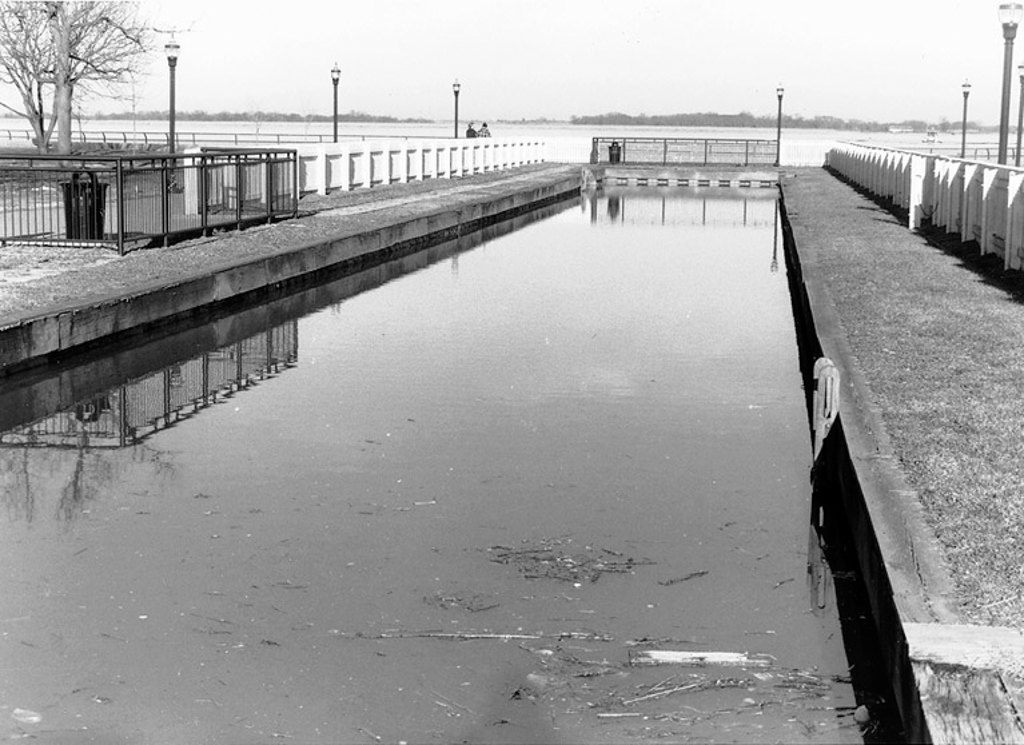
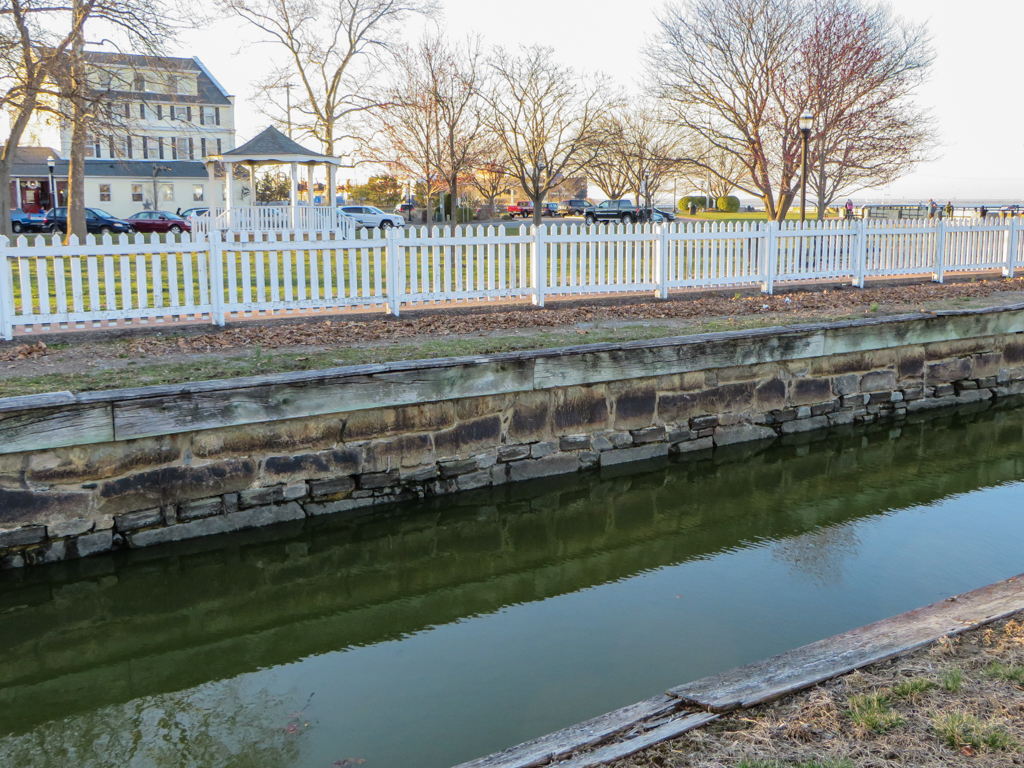
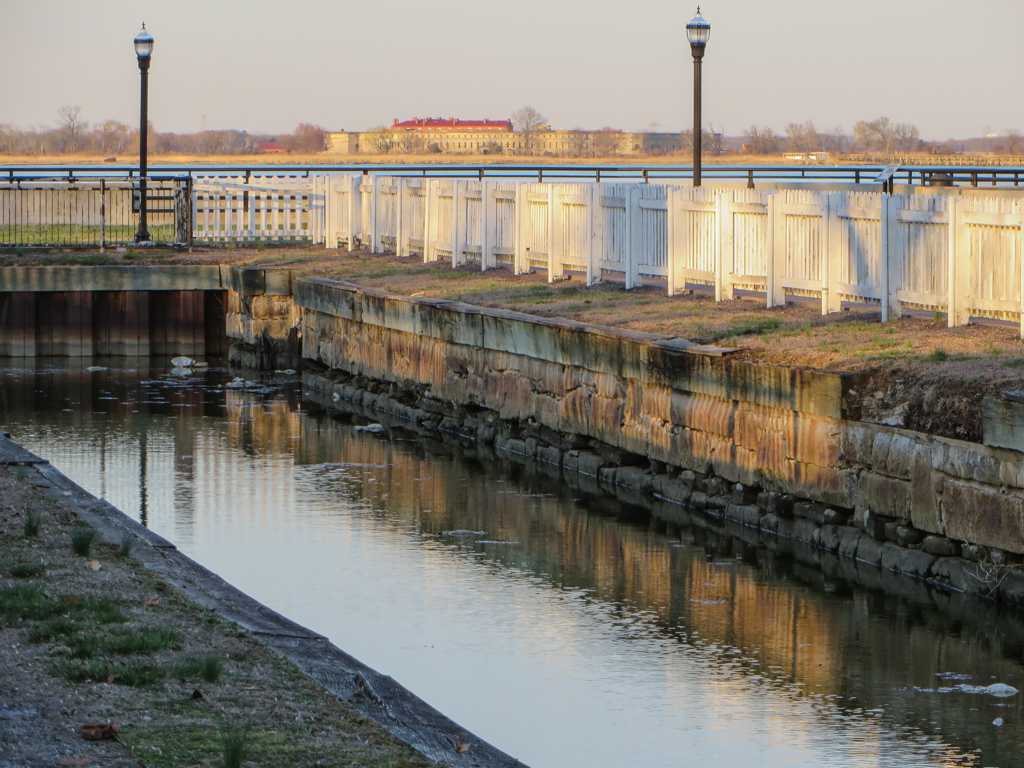
The only surviving lock of the original canal and an engineering landmark of national significance, the Delaware Tide Lock was spared destruction only because the enlarged waterway of the 1920s was shifted two miles south. Engineers Wright and Randel, brought down from the Erie Canal in 1823, designed the lock to be 100 feet long and twenty-two feet wide, with a lift of seven feet. What exists today is the replacement of the 1850s, much longer and somewhat wider; it has been partly filled in, along with the Basin westwards. (A lock pumphouse of 1850s date, similar to the kind that would have stood here, can still be seen at Chesapeake City, Maryland, where a museum is devoted to the canal.) The lock is of stone on wooden underpinnings, with a wooden floor. Underwater mechanisms were repaired by means of an iron, Philadelphia-made diving bell (1839), which stands nearby. A restoration in 1999 recreated the gravel towpath. Battery Park itself dates back to a U.S. Navy fortification of 1814 protecting Newbold's Landing.
Delaware Tide Lock, Chesapeake and Delaware Canal
1824–1825, Benjamin Wright and John Randel Jr. 1851–1854 rebuilt and enlarged. Battery Park at the riverfront