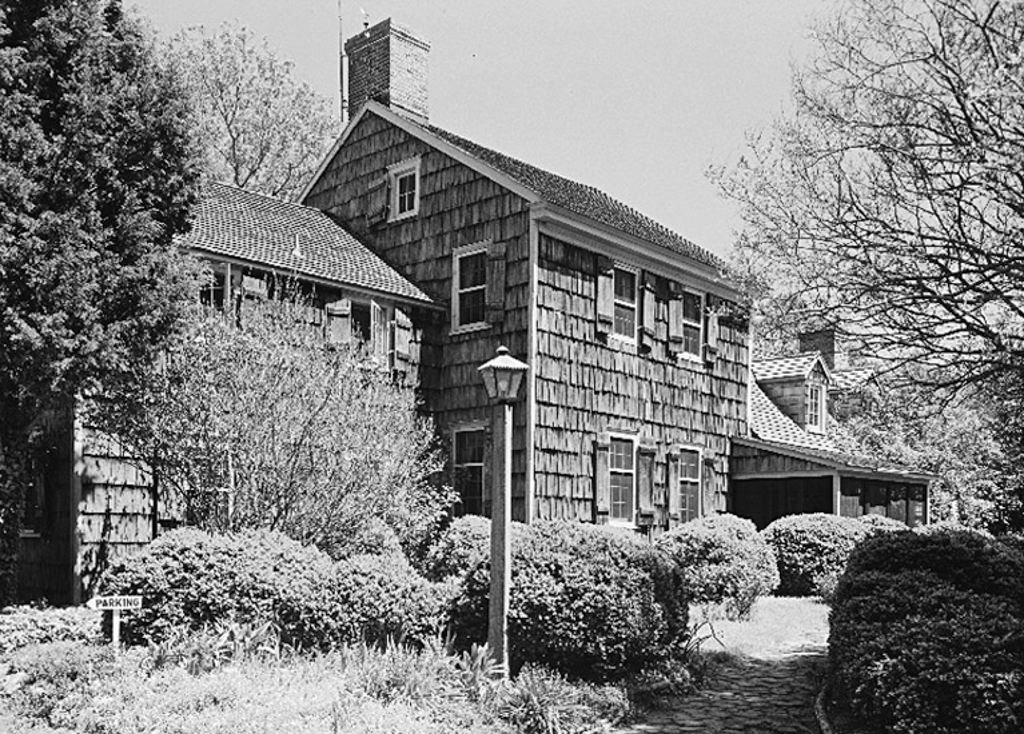
Marsh and his descendants lived in this two-story shingled house until 1871, farming and making salt from sea water. The house was later given over to tenant farmers and had fourteen inhabitants at the time the Corkrans bought it in 1929. Louise Corkran described their Colonial Revival remodeling in American Home (August 1934), and the house and its quaint “wishing well” were depicted a year later in National Geographic. A paneled colonial partition-wall from Morristown, New Jersey, was inserted to create an entrance passage. Louise Corkran established the Rehoboth Art League in 1938, which occupied small buildings on the property before taking over The Homestead in 1979. Reverend Richard S. Bailey led the restoration of the house in 1979–1982, finding its black walnut framing (with brick nogging) still undecayed. Walnut was used inside the dwelling for paneled chimneybreasts. Forty-inch-long riven cypress shingles braved the weather for 230 years until a new set was applied in 1982. The Homestead's garden (1931), restored in 1998–1999 by A. C. Durham and Associates, has specimen trees. On The Homestead grounds, rustic studios are maintained for artists. The doors of one studio accumulated many autographs of vacationing painters and others, including architect Charles Z. Klauder.

