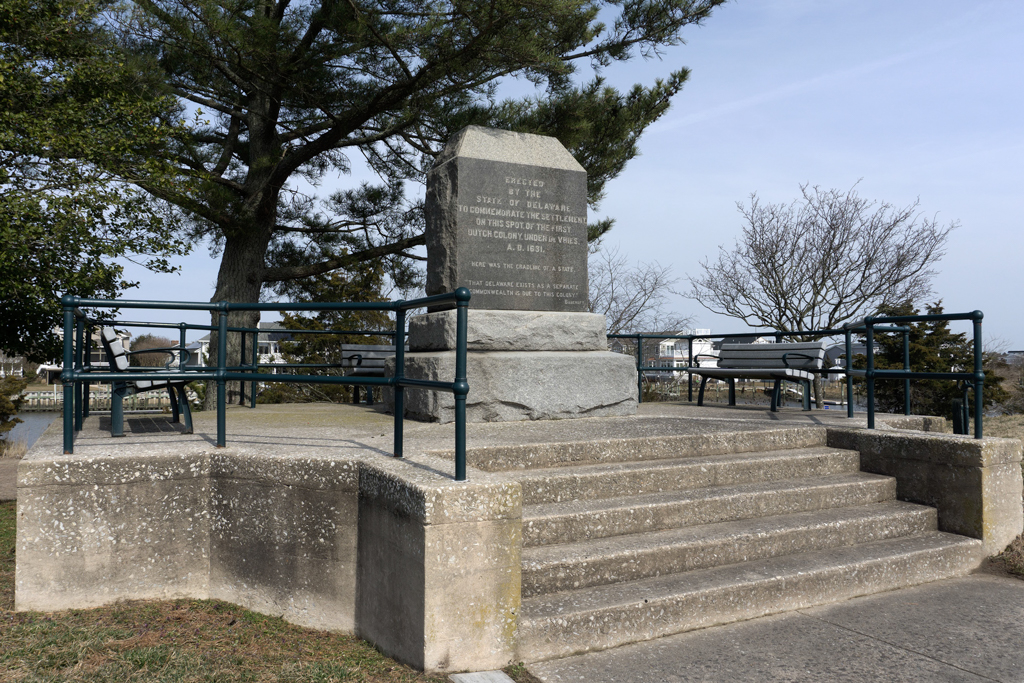
According to archaeologist Chesleigh A. Bonine, the roadway and a cemetery overlie the remains of the earliest European architecture in Delaware. The twenty-eight Dutch settlers who disembarked from the Walvis in 1631 under Captain David Pieterssen DeVries fashioned a palisade, inside of which is thought to have stood a house of yellow bricks brought from Holland. Indians soon massacred the settlers, and the fort vanished. Archaeology by Bonine in 1956 uncovered rows of nearly 200 postholes and postmolds (possibly from the palisade) inside the cemetery, which itself may date back to the burial of the Dutch victims. Pieces of yellow Dutch brick were also found. Plans of the 1970s to rebuild the fort nearby proved fruitless. Today, the nature of the site is controversial, some historians doubting that this was the earliest Lewes fort or even a fort at all; earthfast construction, we now know, persisted for generations, and this might be an eighteenth-century farmstead. A stone marker commemorates Captain DeVries.

