

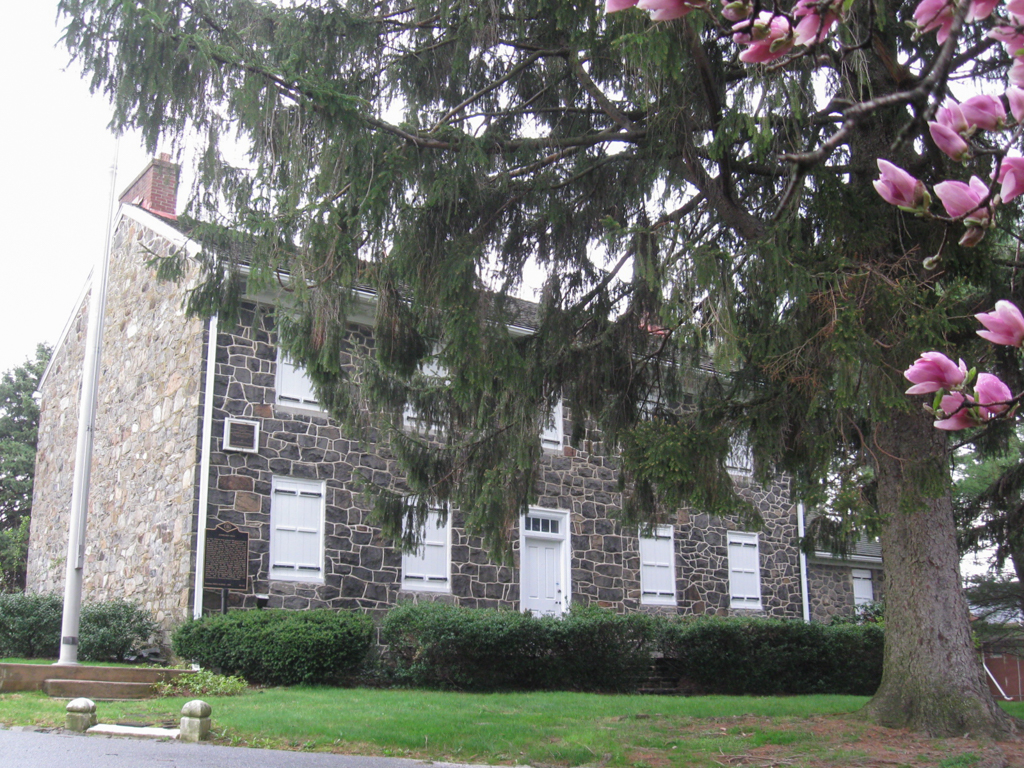
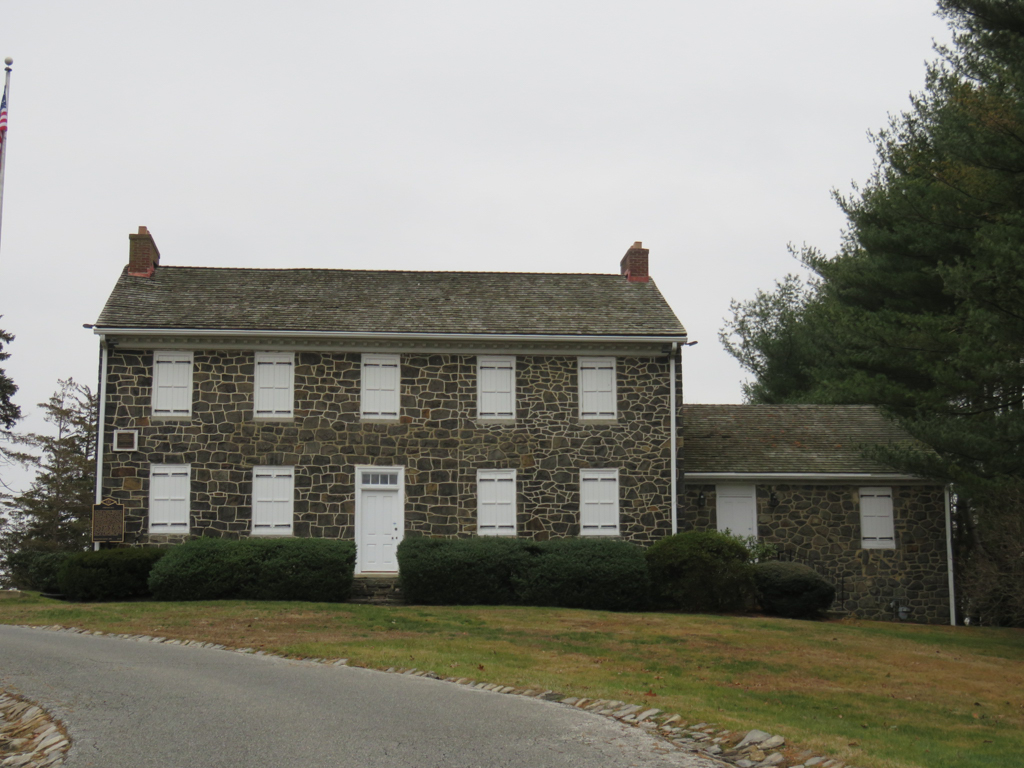
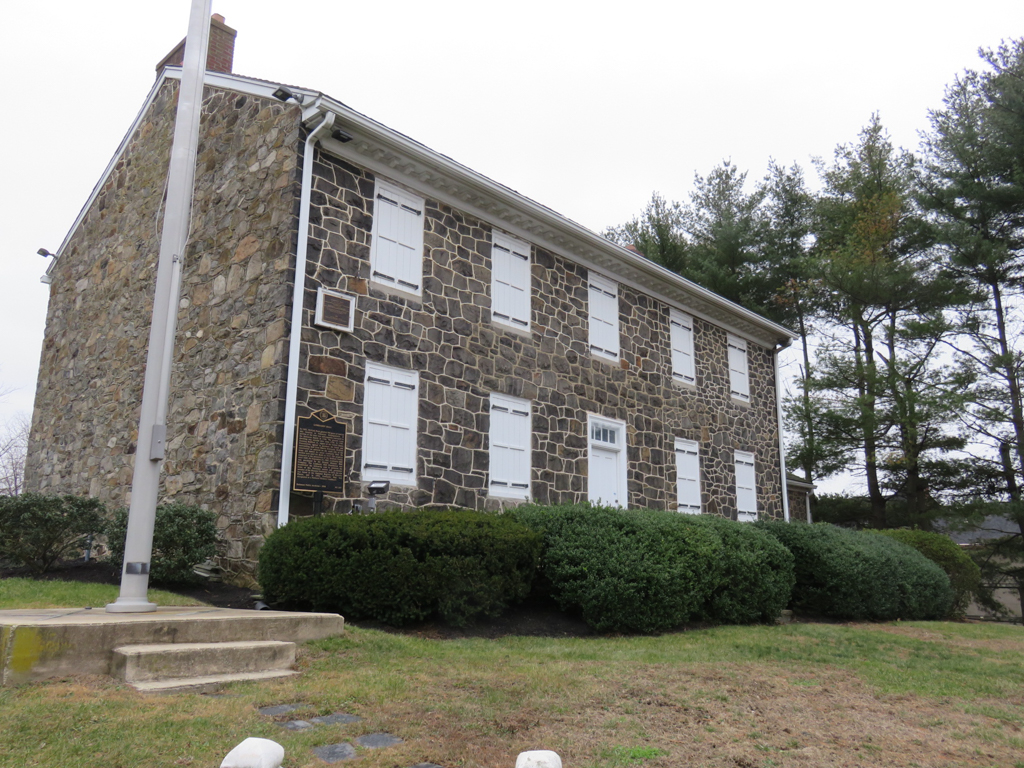
Signer of the Constitution Gunning Bedford Jr. (one of ten contemporary “Gunning Bed-fords,” to historians' confusion) bought 250 acres as a summer place in 1786, when he was thirty-nine. He first occupied the two-story side-hall stone house in 1792 and enlarged it to five bays, including the so-called downstairs Ballroom on the south. The name Lombardy Hall probably refers to a double row of poplar trees once planted before the door. An exceptional Adamesque chimney-piece was installed in 1820, eight years after Bedford's death here. Over the generations, the estate was whittled down, and a cemetery was created (1889), the dwelling serving as a morgue. Eventually, the crumbling house was occupied by vagrants. Emilio Capaldi purchased it in 1966 with hopes for restoration, but his death put an end to those plans. A new Masonic lodge created to serve the booming suburbs bought Lombardy Hall the next year as the only home of a colonial first Grand Master owned by a Masonic organization. Restored by 1986, the National Historic Landmark is occasionally open to the public.
Lombardy Hall
1750. c. 1793 south section. Concord Pike (U.S. 202), north of Foulk Rd. (DE 261)