

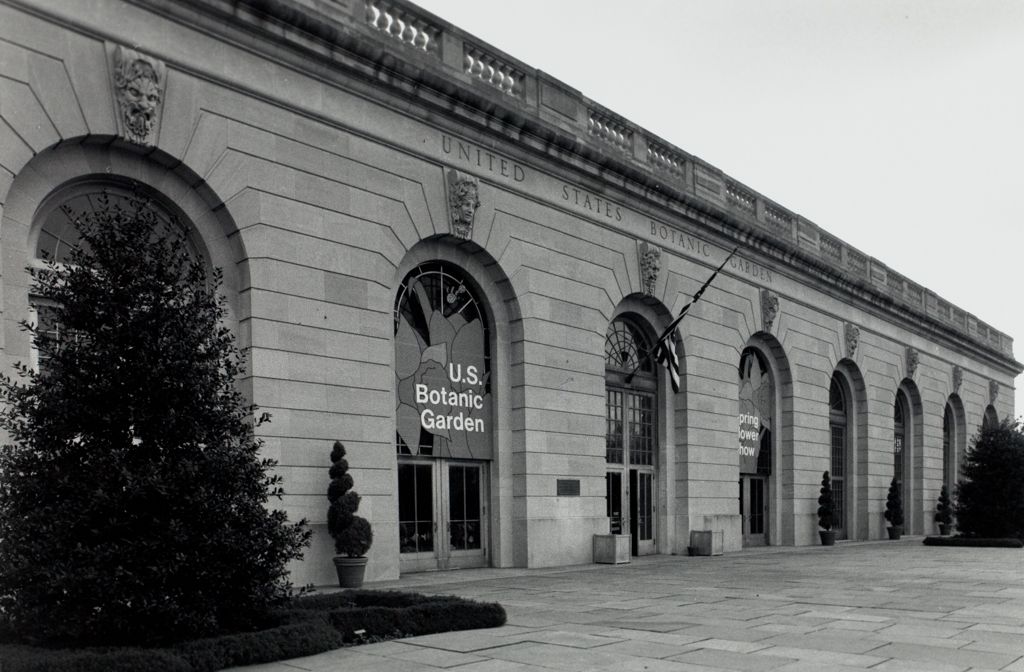
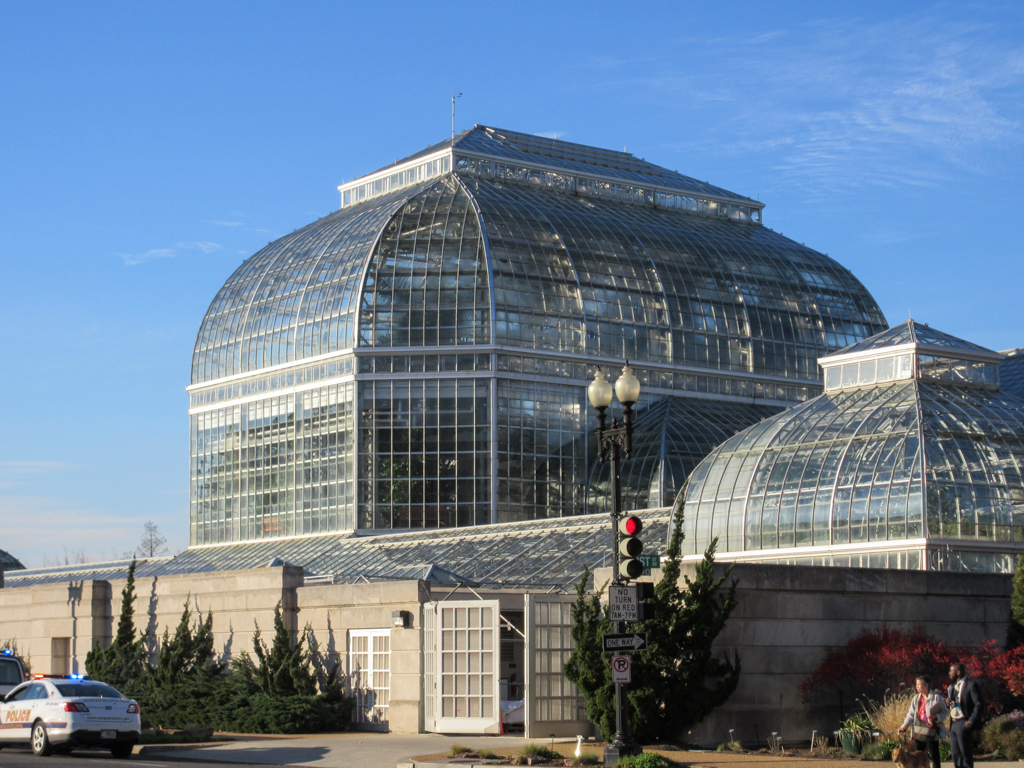
In this late example of Beaux-Arts design, the Chicago firm Bennett, Parsons and Frost combined a French-inspired orangery with a glass conservatory. Ultimately derived from the orangery at Versailles, the arcaded and balus-traded 40-foot-tall building has the clarity and rhythmical grace of its seventeenth-century antecedent. The beautifully proportioned and detailed limestone orangery is essentially a 200-foot-long, 17-foot-wide entrance hall to the domed palm house (by Lord and Burnham), as well as fifteen climate-controlled rooms for the display of plant groups ranging from temperate to subtropic. The planar surface of the shallowly channeled rusticated walls is punctured by fifteen arched doorways whose sculpted keystone mascarons show classical figures traditionally associated with nature. Here Pan, Pomona, Triton, and Flora represent different kinds of gardens: wild, agricultural, water, and flower.
United States Botanic Garden
1931–1933, Bennett, Parsons and Frost. Southeast corner of the Mall between Independence and Maryland avenues SW