

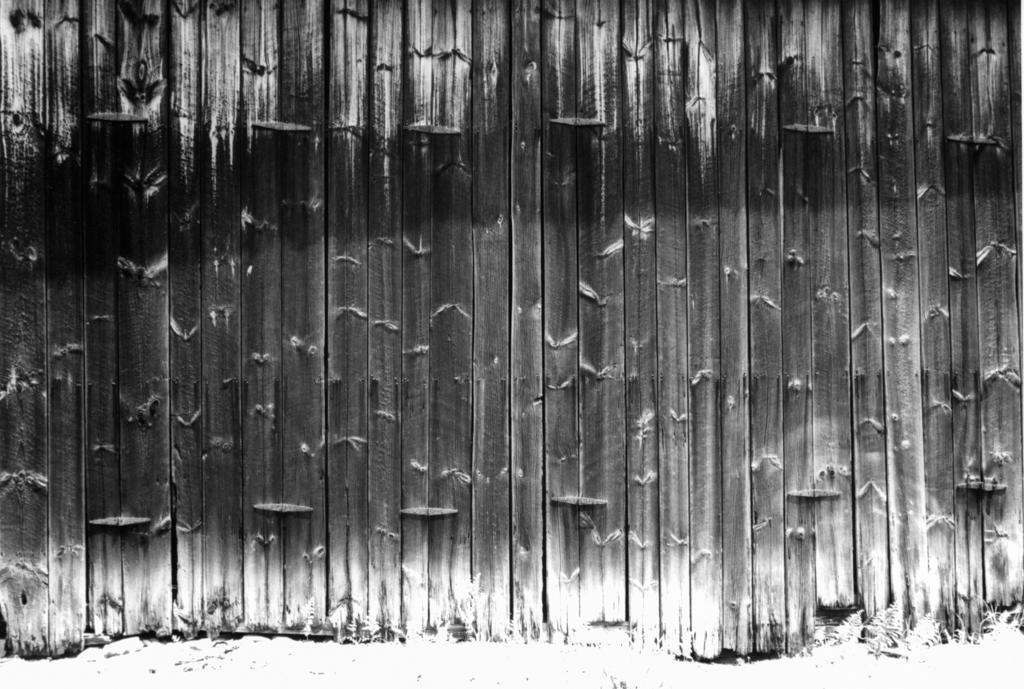
This eighty-foot-long, wood-frame barn is a fine and easily accessible example of a tobacco barn, a barn type once common throughout the lower Connecticut River Valley at the turn of the previous century. Narrow and gable roofed, its vertical board siding is attached with alternating top and bottom hinges. The hinges allowed vertical slats to be opened along both eaves sides of the barn to dry the tobacco hung inside. Judging by the two patterns of hinge placement, this barn likely had an extension or another barn added to increase its length and capacity. In 1900, Windham County farms produced 99.9 percent of the tobacco grown in Vermont, amounting to nearly two hundred thousand pounds of leaf. Its leaf was used primarily as wrappers for cigar rolling. Once the mass production and marketing of cigarettes began in the United States after 1910, the cigar industry declined, as did tobacco growing in New England. Most of these barns were moved and converted to new uses or have since decayed.
Tobacco Barn
c. 1900. VT 142, 1 mile north of Tyler Hill Rd.