

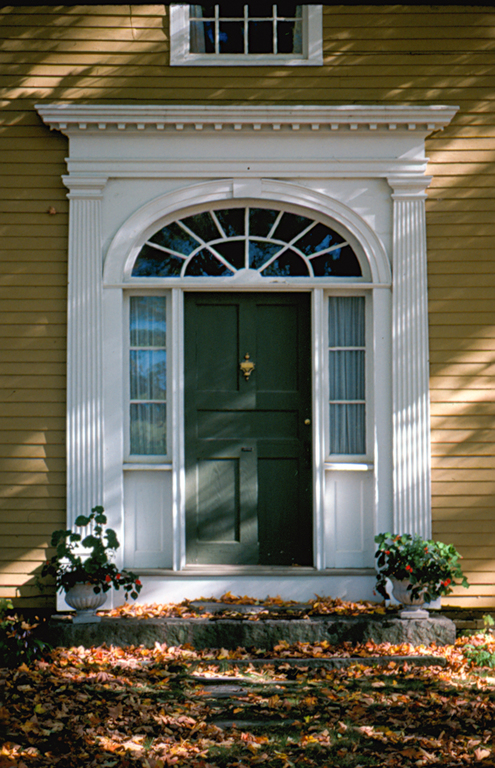
The quality and conservatism of this substantial, frame Georgian-plan house say much about construction and society in northern Vermont in the early nineteenth century. The upland town of Brownington was chartered in 1780, and the village formed at the end of the century along Timothy Hinman Road, which was built in 1791 as a stagecoach road from Greensboro to Stanstead, Quebec. Browning-ton shared with Craftsbury the status of half shire for Orleans County until 1816, became home of the county grammar school in 1823, and maintained a regional significance until the mid-nineteenth-century emphasis on railroads and water-powered industry shifted economic attention northward. As this house suggests, Brownington was a place of quality in the early 1830s. The proportions and organization of the hipped-roof block, with four major rooms per floor, central hall, and lateral entrance, would have been at home in the Connecticut River Valley in the late eighteenth century. The fine Federal front entrance, with a broad elliptical fan spanning the door and partial sidelights, is suggestive of the 1820s. However, the Doric pilasters with plain entablatures that enclose this door and that on the side indicate a transition to more Greek tastes to come and the true date of the building. The house is known as the home of pioneering educator Samuel Reed Hall, who lived here from 1854 to 1877 when he served as master of the grammar school and pastor of the church.
Samuel Reed Hall House
1831. Hinman Settler Rd. at Old Stone House Rd., Brownington village