

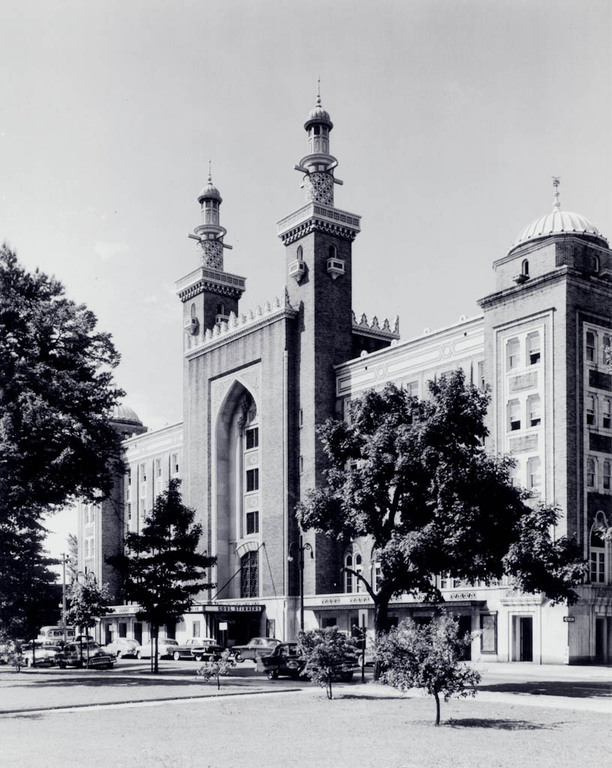
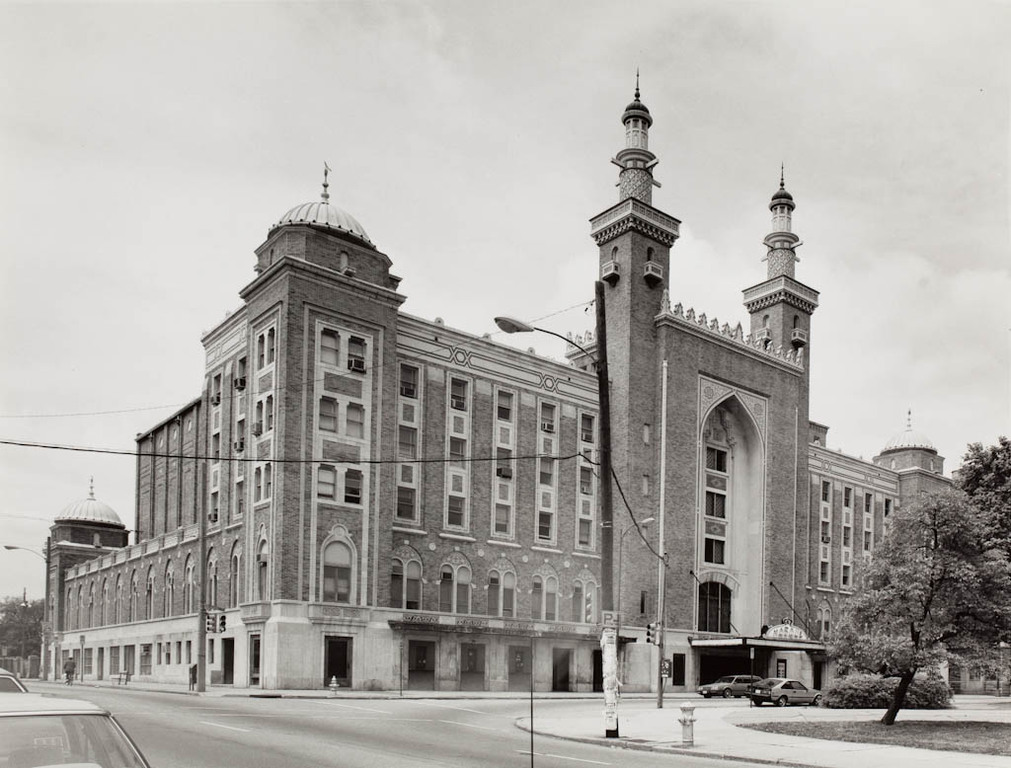
The Mosque is an example of a national phenomenon, Egyptian- and Saracenic-inspired auditorium buildings built by the Masonic Nobles of the Mystic Shrine (or Shriners), who drew upon Middle Eastern forms for their costumes and rituals as well as their buildings. A tall Saracenic arch flanked by minarets defines the center, and tiles from the United States and Europe provide ornamental emphasis. The lobby of the building, including a fountain, makes lavish use of tilework. The 4,600-seat auditorium is extensively decorated with Islamic motifs and murals of Middle Eastern scenes. The Shriners conceived of the building as a great auditorium for Richmonders and a playground for themselves. Unfortunately, the building went into bankruptcy and closed during the Depression. It became a municipal auditorium in 1940 and was continually in use until 1994. The 1994 renovation restored the original decoration and provided additional public art, including a mural in the grand tiered lobby and metal grilles for the box office. The building spaces outside the lobby and auditorium generally are either unrestored or have been put to other uses. In addition to the auditorium, the Shriners equipped the building with forty-two hotel rooms, a restaurant, a bowling alley, a swimming pool, a banquet hall, a billiard room, and four lounges. In the basement is a large ballroom decorated with Egyptian-inspired Art Deco tiles. When Richmond Muslims objected to the name, the building was officially renamed, but most Richmonders continue to identify the building by its old name.
Richmond Landmark Theater (The Mosque)
1926–1927, Marcellus Wright, Sr., and Charles M. Robinson; interior, J. Frank Jones, Raumbusch and Co.. 1966–1970, renovation, William Briggs. 1994–1995, renovation, Marcellus Wright Cox and Smith. 6 N. Laurel St.