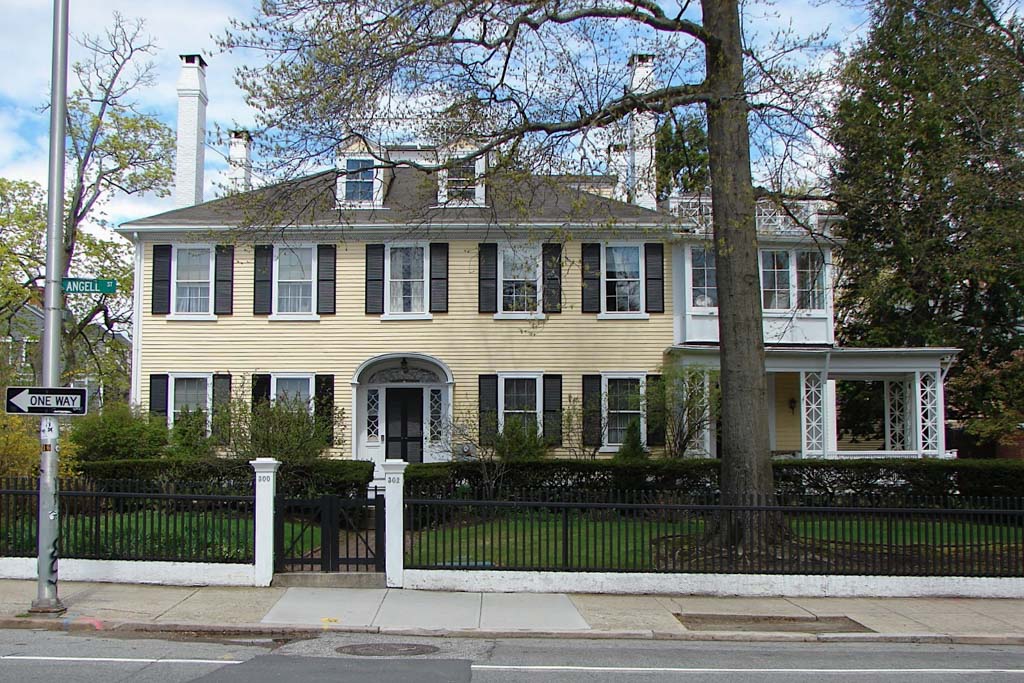
Ebenezer Knight Dexter–John J. Stimson House (Rose Farm)

Ebenezer Knight Dexter–John J. Stimson House (Rose Farm)

Ebenezer Knight Dexter–John J. Stimson House (Rose Farm) Photograph by Andrew Hope
c. 1799; mid-19th century, addition to east. 300 Angell St. (corner of Stimson Ave.)

When Ebenezer Dexter built this country retreat it stood at the eastern edge of settlement in Providence. Several of the city's wealthy residents maintained country seats on the thenrural outskirts of the city, but this is the only remaining gentleman's farmhouse from the period in the vicinity. This brick-ended Federal house, with exceptionally tall, paired end chimneys to accompany its high roof hipped to a balustraded deck behind paired dormers, recalls other substantial local houses from the 1790s. Its original plan, with a transverse hall crossing the center hall to doors on either side of the building, may have been more commonly used in the country than in town houses. Dexter, a businessman and philanthropist, left the bulk of his farm to establish a home for the poor on land immediately north of present-day Stimson Avenue. He gave more land on the west side of the city to establish a parade ground for the local militia, at one end of which now rises Cranston Street Armory. John Stimson bought the farmhouse and the residue of land around it. His grandson sold off the house lots for the eastern half of Stimson Avenue. So the Stimson farmhouse at one entrance to Stimson Avenue and the Beckwith villa (
PR140) at the other—rural versus suburban country types—indicate something of the scale and density of buildings in this part of Providence into the 1870s, as well as the fate of farmlands and villa estates with later city expansion.

Writing Credits