

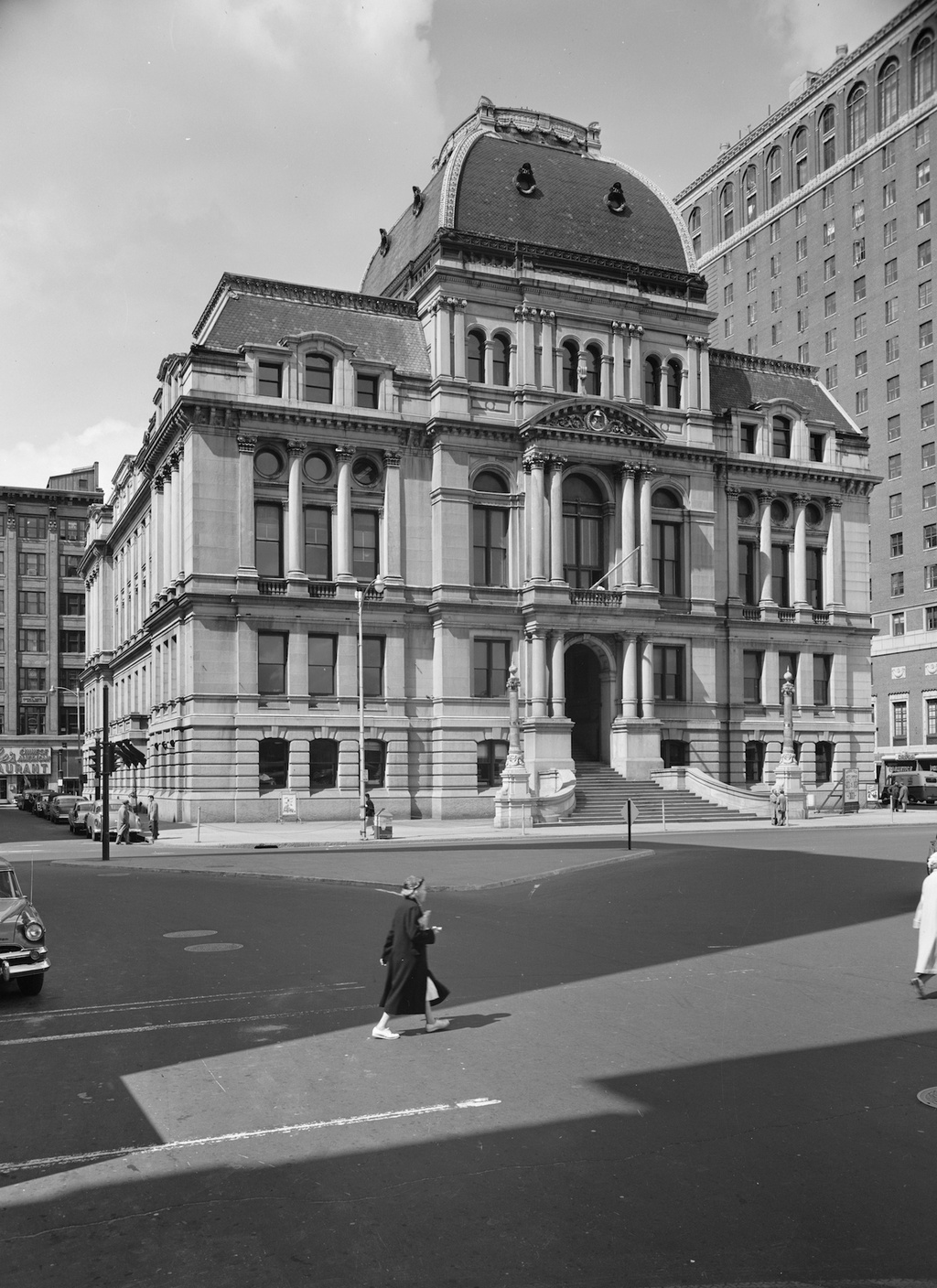
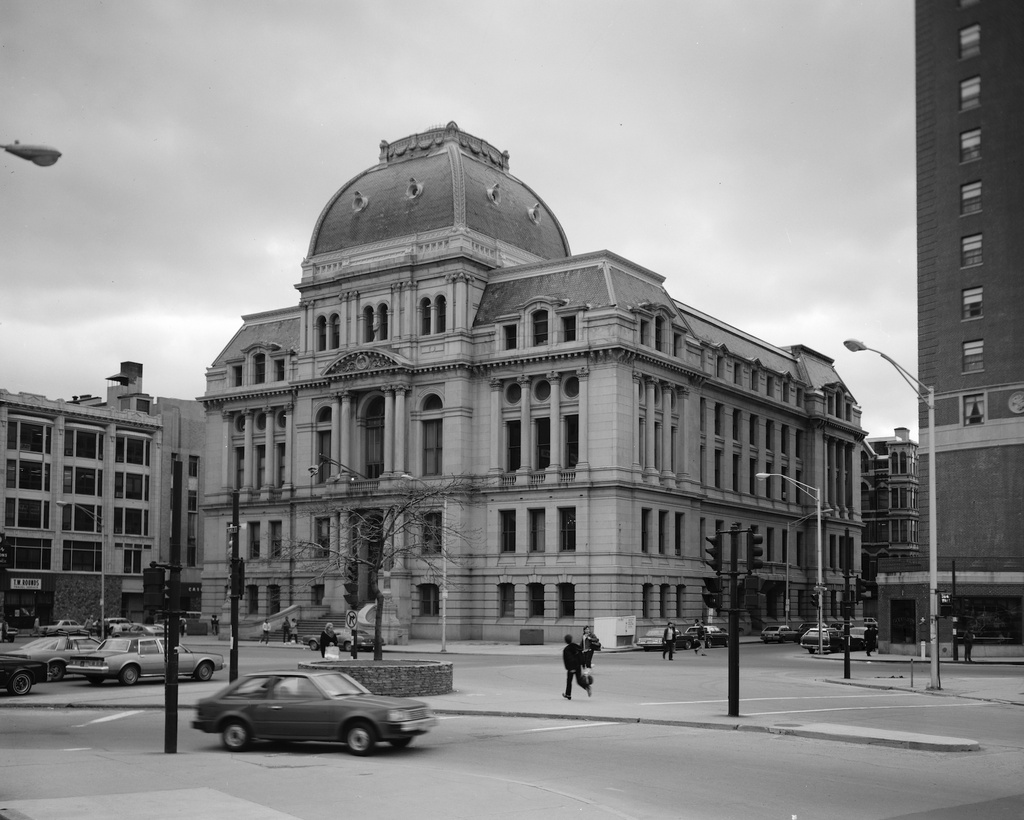
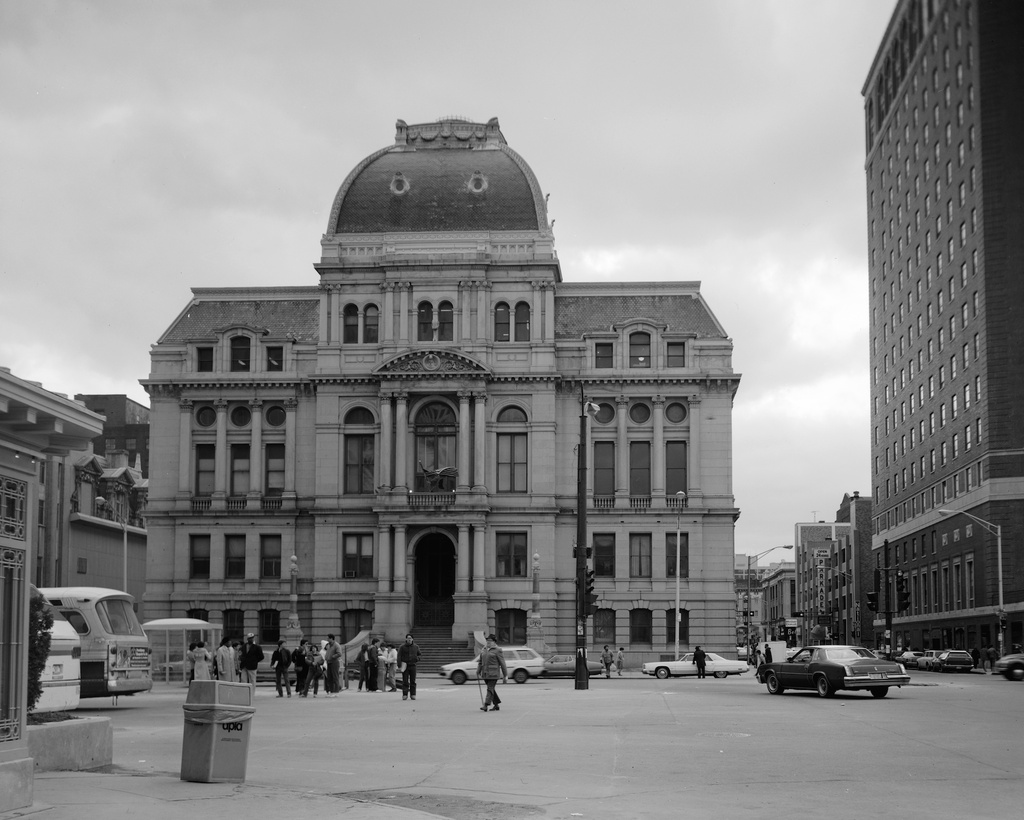
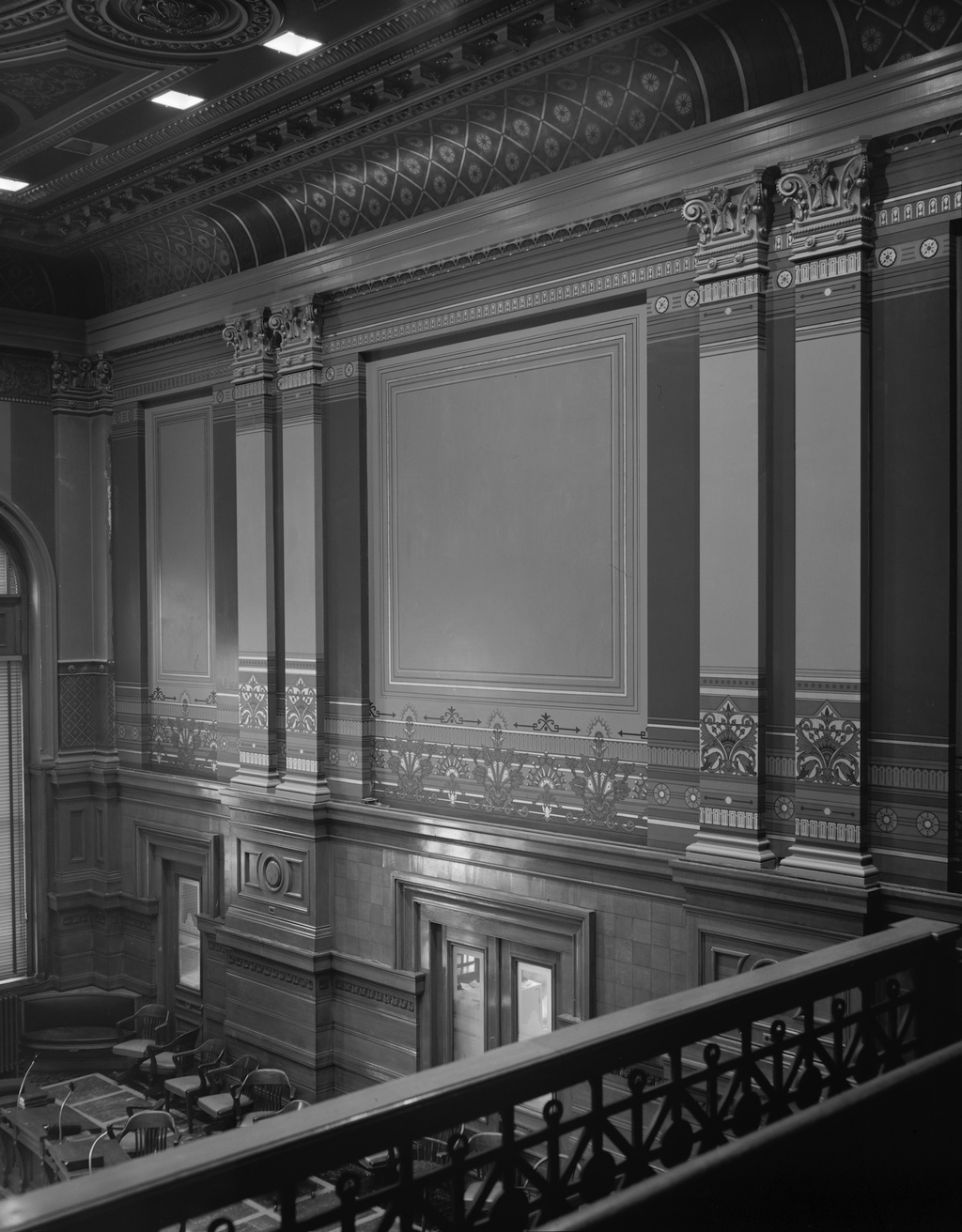
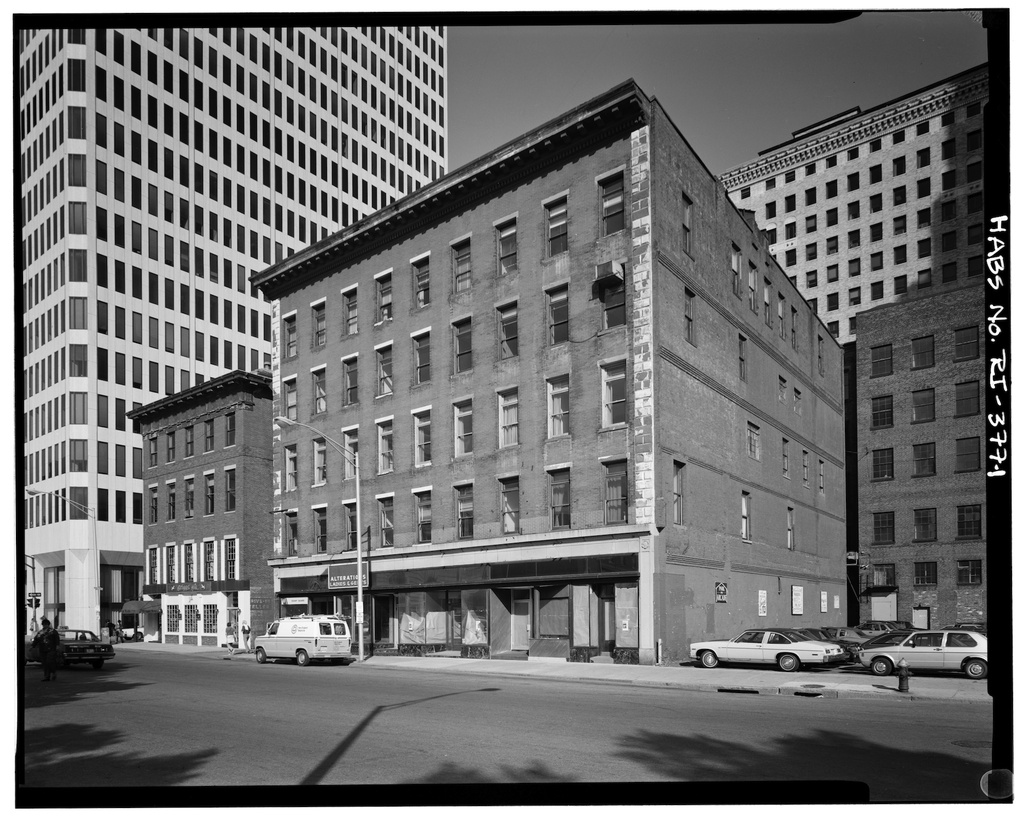
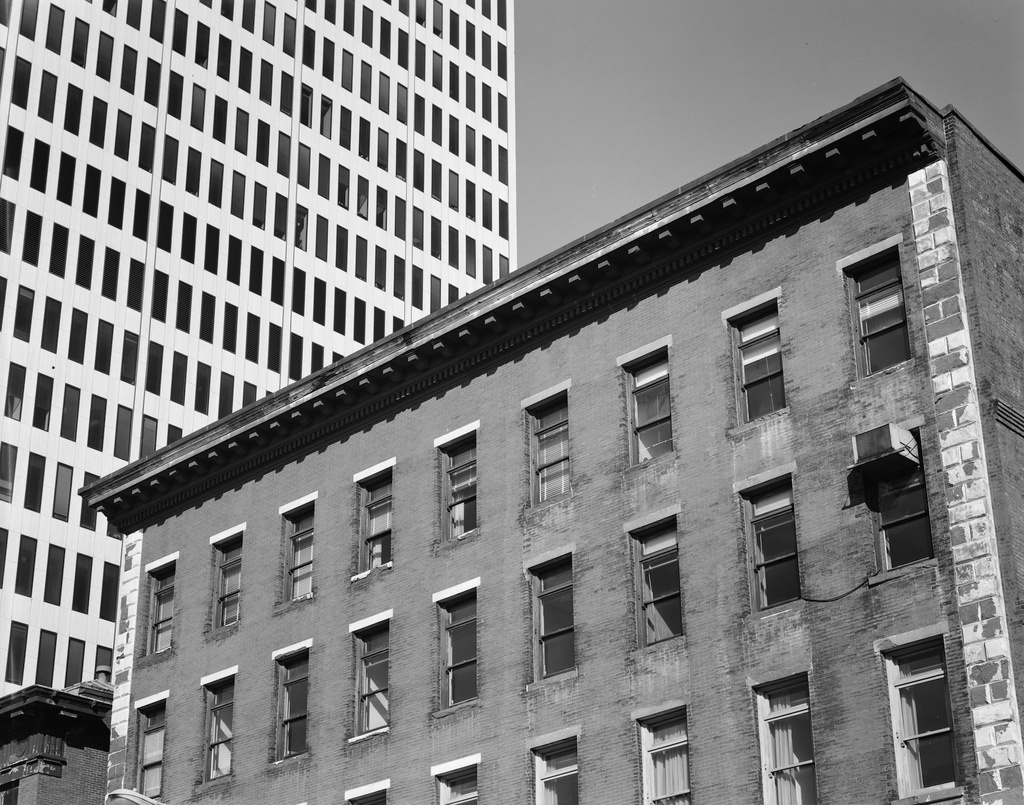
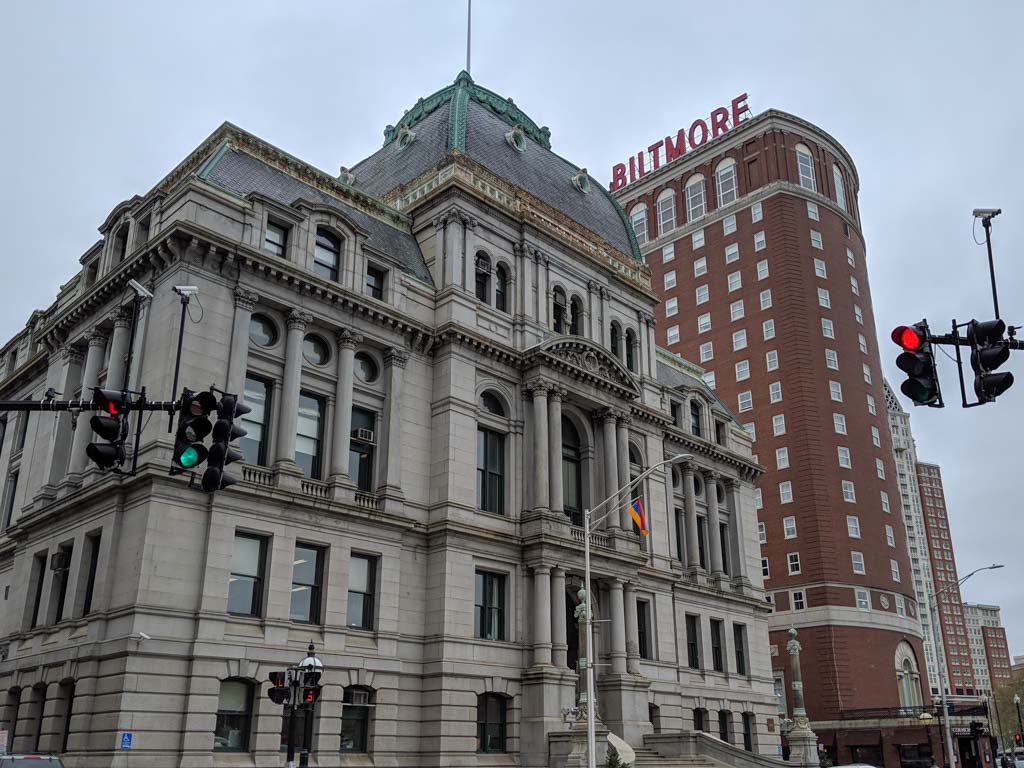
A large combination park and transportation center, as well as the civic center, Exchange Place (renamed Kennedy Plaza after the president's assassination) was originally a smaller space. It has always been defined by a row of commercial buildings on its south side and, during most of the nineteenth century, by Thomas Tefft's famed Union Depot in the brick Lombard Style (1847–1848; burned 1896) on its north side. In 1878, the completion of Providence City Hall at the area's western end reinforced its importance as the city's heart. The plaza assumed its present configuration in 1898, with the completion of the second (
PR6), which (as redeveloped for office and commercial use) is the area's present northern enclosure. The Federal Building (
PR2), at the east end, is the symbolic counterweight to City Hall opposite. In the early twentieth century, an axial mall was completed through the center of the plaza across the street from City Hall, with a frilly cast iron and glass trolley shelter (1914, Martin and Hall), now attached to an enormous bus waiting room, whose obvious, heavy-handed inspiration by the earlier building mocks rather than complements. The Mall, as it was known originally, and the landscaped park to the north were designed in the aura of the City Beautiful movement, spawned by the World's Columbian Exposition in Chicago. Along the way, the square acquired two commemorations of the Civil War: a quaintly provincial monument to Civil War soldiers and sailors (1871) by Randolph Rogers, then a respectable equestrian monument (1887) by Launt Thompson, to General (and later Governor) Ambrose Burnside, Rhode Island's contribution to the top command of the Union Army. Sculpturally more interesting, however, is the Bajnotti Fountain, by Enid Yandell, a composition of allegorical figures inflected with Rodinesque Art Nouveau undulation. The plaza assumed its current use as a metropolitan bus interchange in 1984–1985, but the rerouting of buses and construction of waiting areas
Kennedy Plaza (Exchange Place)
1848, 1898, 1908, 1913, 1964, 1984, 2002. Bounded by (clockwise from northwest corner) Exchange Terrace, Exchange St., Fulton St., and Dorrance St.