

Built as a summer farm by Daniel Coggeshall of Newport, this property is especially significant as one of the last survivors of Rhode Island's eighteenth-century plantation economy. Set on a hilltop overlooking stone-walled fields, the house, with gable-on-hip roof, is typical of contemporary Newport buildings. During the nineteenth century the farm became the summer home of the Caseys, Coggeshall's descendants. Silas Casey was a general in the Civil War, and his son Thomas Lincoln Casey was the engineer for the completion of the Washington Monument; the Library of Congress; the State, War, and Navy Building; and numerous other commissions in Washington and in New York City. Memorabilia from Thomas Lincoln Casey's building career make the house doubly interesting to the architecturally inclined traveler. A range of mostly nineteenth-century barns and the use of the property as an operating farm invoke, as nowhere else, the plantation life of so much of coastal South Kingstown. As early as the 1880s the Caseys, who spent much of their time in other parts of the country, began to worry about the farm's preservation. In 1955 Thomas's son Edward gave the house and 330 acres to the Society for the Preservation of New England Antiquities.
Silas Casey Farm
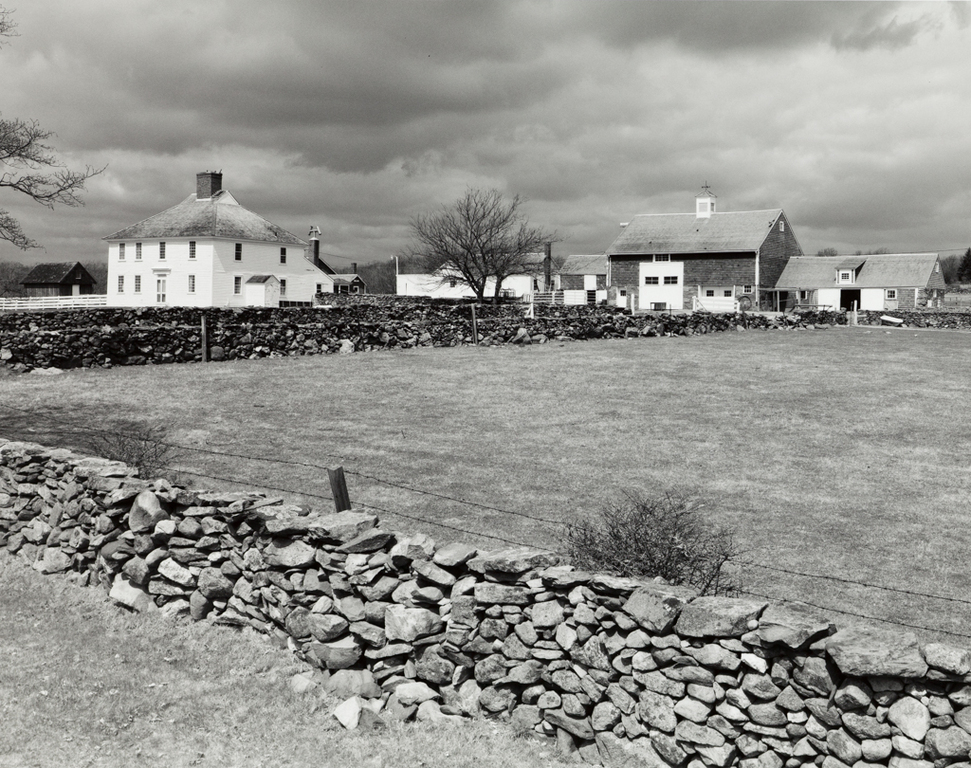 John M. Miller
Silas Casey Farm
c. 1750. 2325 Boston Neck Rd. (now owned by the Society for the Preservation of New England Antiquities)