

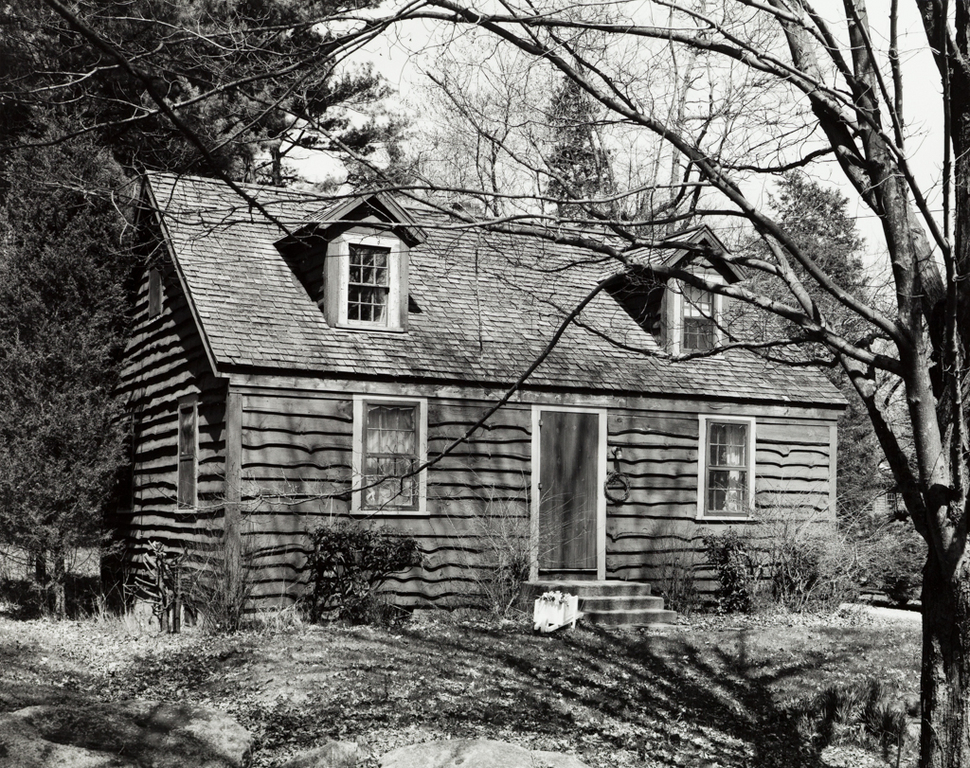
At this entrance to Arcadia, a 13,000-acre forest preserve acquired in the mid-1930s by the state's Department of Agriculture and Conservation (now Department of Environmental Management), a log reception lodge, now unused and becoming derelict, is backed by a ranger's house in “wavy board” construction. What is the special quality of CCC work? Perhaps the picturesqueness of rusticity without the usual sentimentality associated with rustic revivals. The very sensible aspect of these buildings proclaims the regimen of the corps and the stringencies of the Depression relief program that produced them. It also embodies an interest in establishing minimal but decent “standards” or “norms” for do-it-yourself building, implying that even in the hardest times, a nation might survive in beautifully plain, natural buildings, rationalized and improved from frontier prototypes directly expressive of their forest origin, as an alternative to lumberyard carpentry.
Ranger's House, Arcadia Management Area
 John M. Miller
Ranger's House, Arcadia Management Area
c. 1935. Civilian Conservation Corps. 230 Escoheag Hill Rd. (at the junction with Plain Rd.)