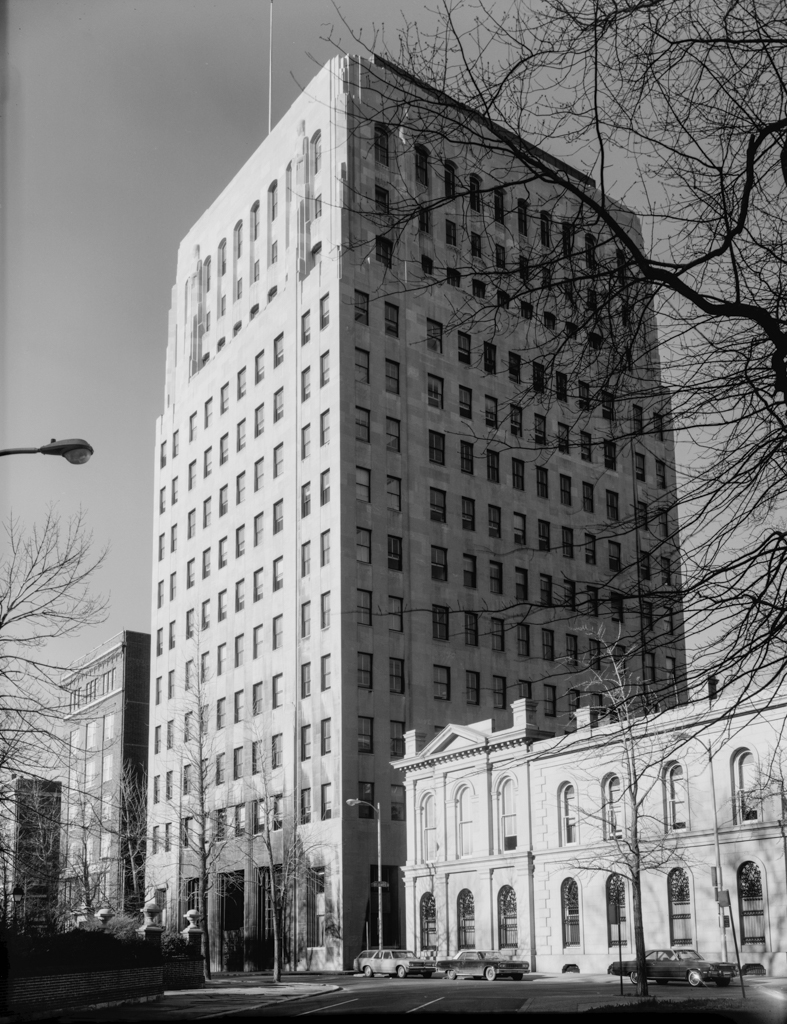
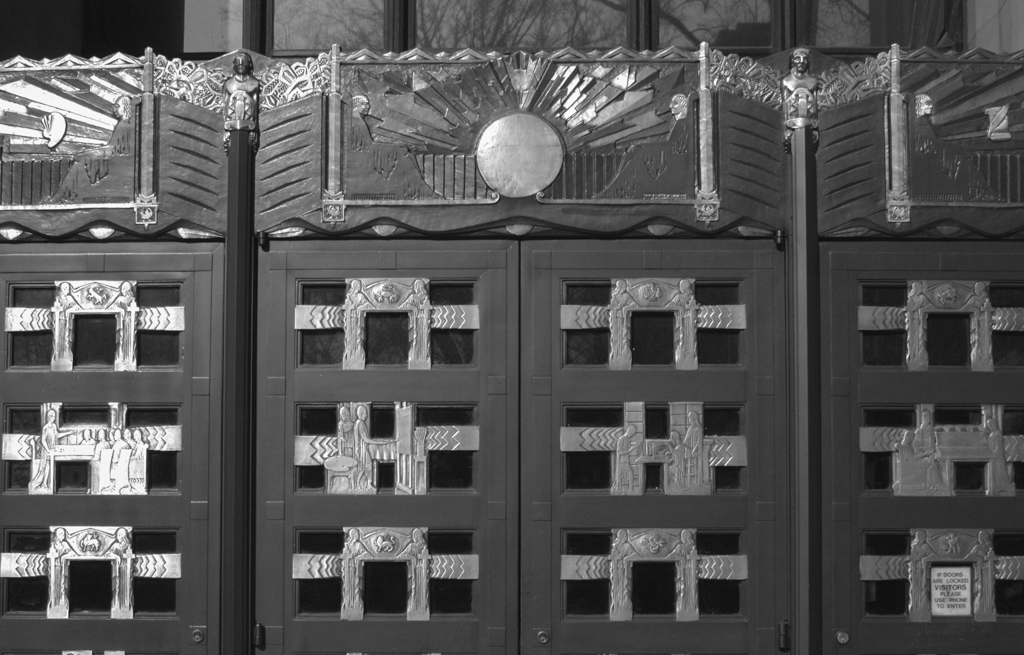
The tallest building in the old city before the crash of 1929 was the aerie of the nation's first great advertising business, N. W. Ayer and Sons. Founded in 1868, the company made important innovations in branding commercial products, beginning with “UNEEDA” Biscuits that linked the consumption economy with the customer through many of the great magazines published in the area. In 1927, the company determined to build an office tower that would reflect the “intensely progressive and modern spirit of advertising,” and hired Ralph B. Bencker, successor to Price and McLanahan and the architect of the local fast-food chain Horn and Hardart, to create a corporate symbol. The result was a subtly tapering, limestone-clad, steel-framed thirteen-story skyscraper crowned by three-story figures of “Truth in Advertising.” Bencker described the iconography in the Architectural Forum (1929): “The motifs used in the decoration of the interior and exterior of the structure were taken from fundamentals of the advertising business: they are the human figure, symbolizing the creative mind, and the figure of Truth: the open book as the vehicle of advertising; and the winged bird as the messenger, symbolizing the widespread power of advertising.” Bronze doors with Egyptoid figures and radio waves emanating from the globe denote both contemporary culture and the agency's move into radio advertising. Within, plaster ceilings are formed into crystalline planes with stylized flights of birds carved by Philadelphia modernist sculptor Raphael Sabatini. In 2005 the building was converted to condos designed by Wesley Wei and PZ Architects.

