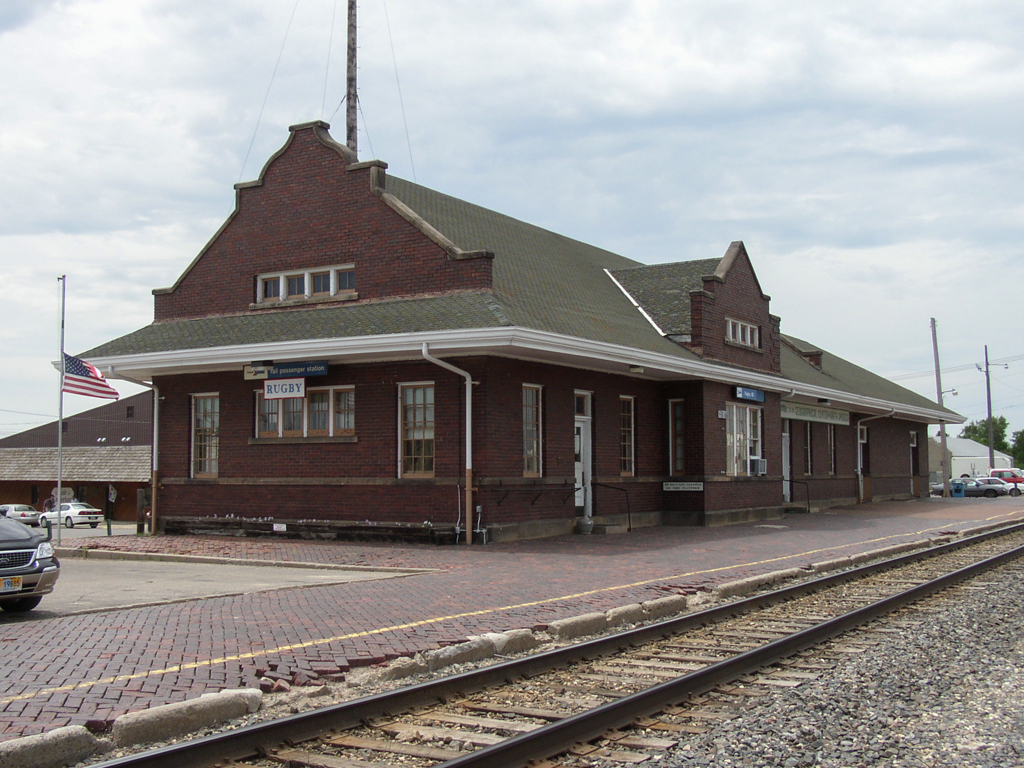
In 1886, one hundred and twenty-one miles of track were laid from Devils Lake to Minot, and the Great Northern (GN) Railway became the primary method of transportation for the newly established town of Rugby, named by railroad stockholders from Rugby, England. A depot building was one of the means through which railroad companies could proclaim regional dominance and prosperity. Perhaps the Rugby depot’s picturesque Tudor Revival expression was regarded by its architect as appropriate for a municipality bearing the name of an English town. Exterior walls are faced with stretcher bond brick, a limestone sill course encircles the building, and limestone is used for gable copings. The massing of the depot defines the building’s two functions. The one-and-a-half-story passenger terminal is framed by two identical stepped gables and the one-story baggage/freight extension is capped by a low-pitched hipped roof. Grouped sets of windows and clerestory windows in the gable ends light the interiors. The roof, which extends beyond the walls to shelter waiting passengers, is typical of GN depots.

