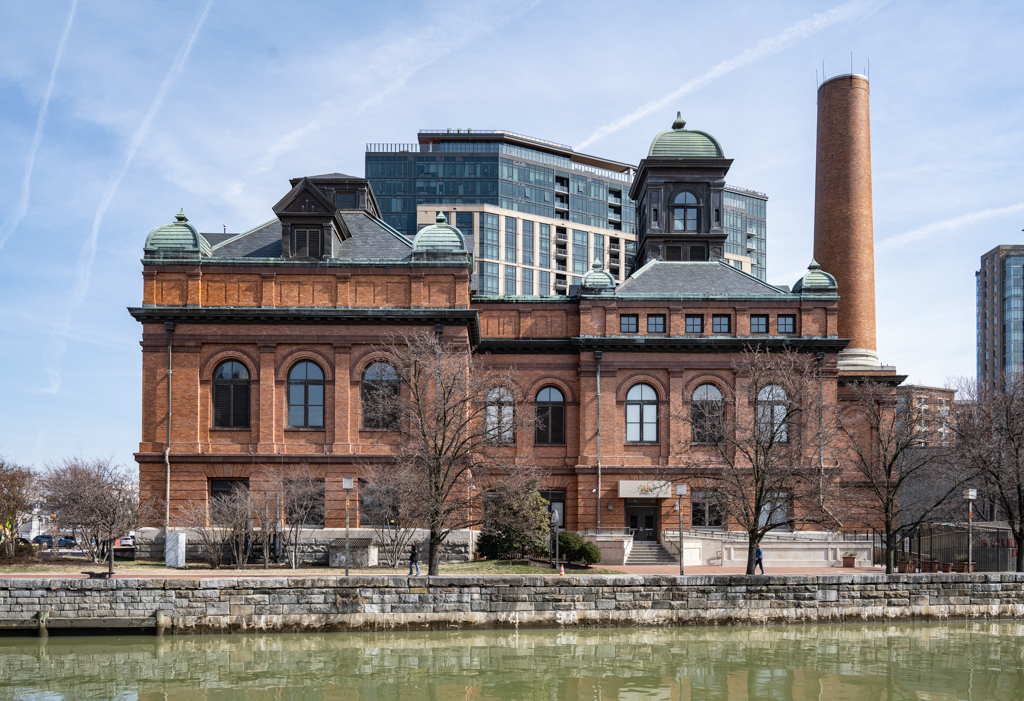
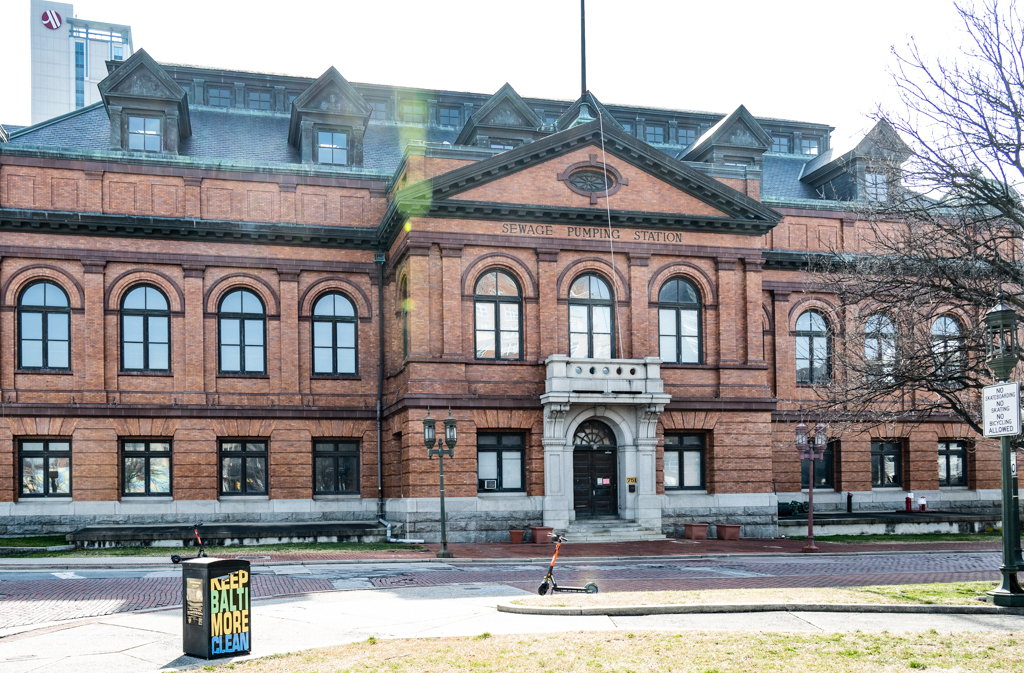
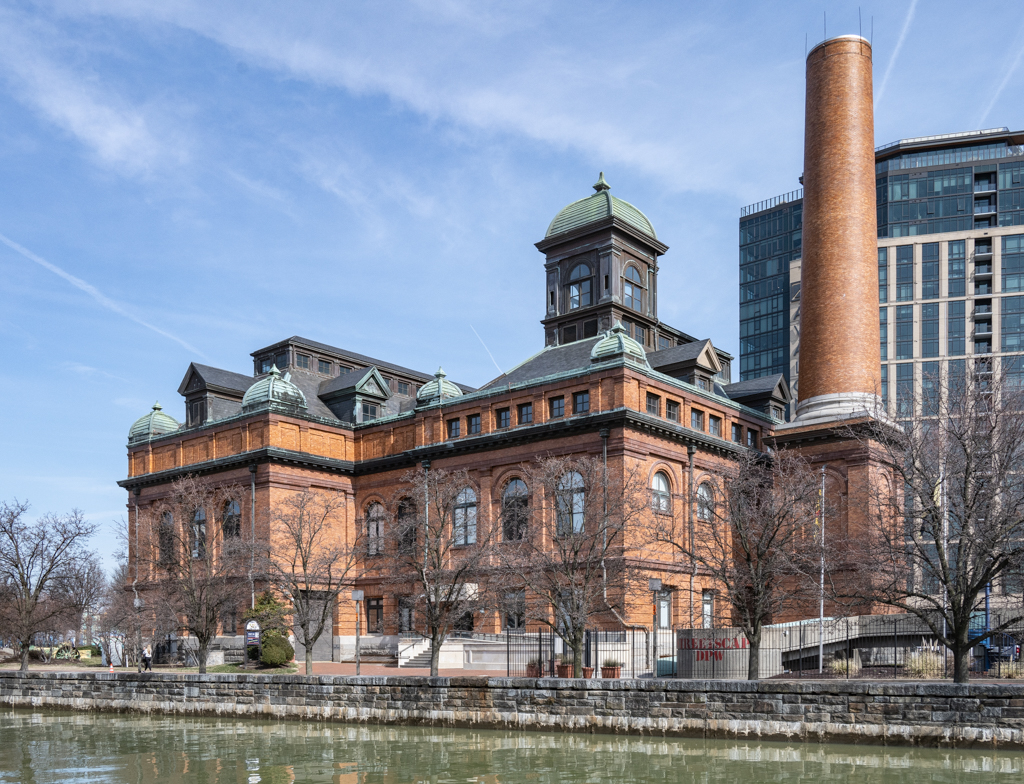
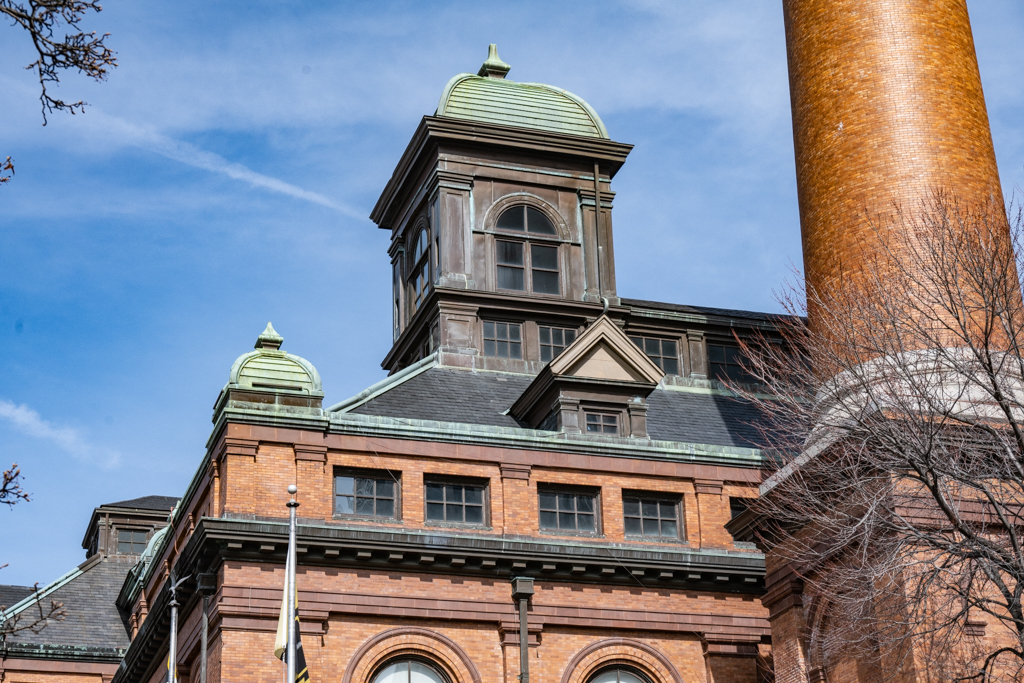
Opened in 1912 as a key piece of Baltimore’s new sewerage system, the pumping station’s location granted easy access by rail or barge for coal delivery to power its three large Corliss engines. The grand Classical Revival building with orange brick walls accented by granite and sandstone presented a fashionable public face masking its prosaic function. In 1960 the Corliss engines and exterior coal conveyors were removed for smaller electric turbines, and the smokestack was shortened. The pumping station continues to serve its original purpose while efforts have launched recently to revive the Public Works Museum that operated in a portion of the building from 1982 to 2010.

