

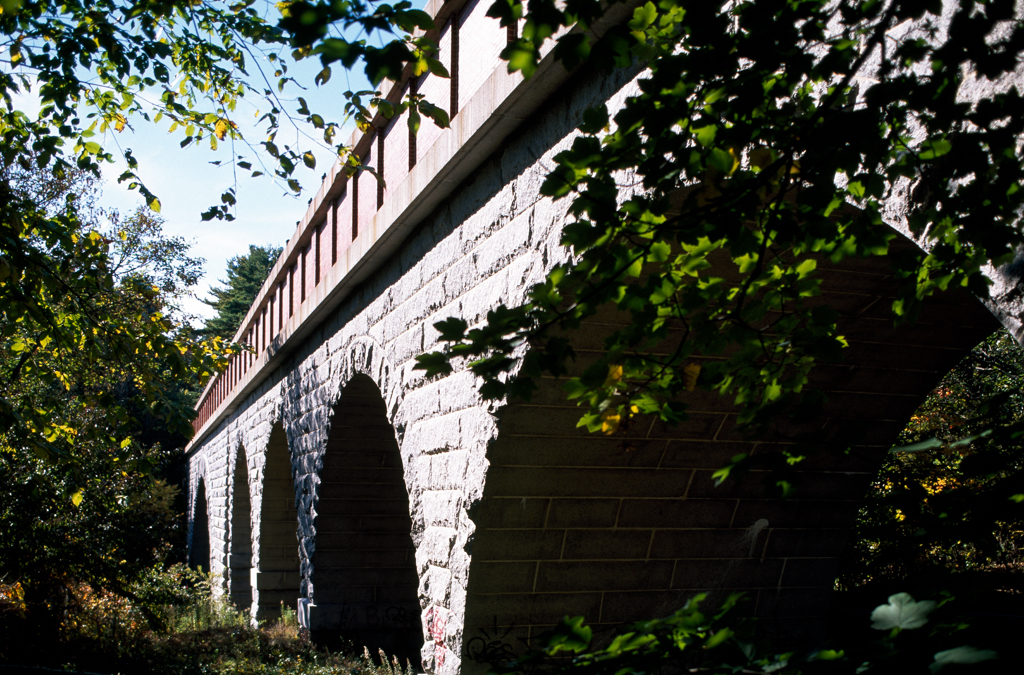
Rapid population growth strained the water supply capacity of Boston in the second half of the nineteenth century. In 1872, engineer Joseph P. Davis proposed a plan to draw water from the Sudbury River in Framingham. Boston appointed Davis city engineer to oversee construction of this 18.8–mile aqueduct. Alphonse Fteley assisted on this project and designed later city waterworks as assistant engineer. Supplying seventy million gallons of water per day, the new system provided six times the volume of earlier schemes. Davis and Fteley designed Echo Bridge, the largest structure in the aqueduct, to transport water across the Charles River. The 475-foot-long bridge carries the brick-lined aqueduct over seven powerful granite arches; it is the longest crossing of the Charles River and held the title of second longest masonry span in the country when completed. In 1895, the Echo Bridge became the centerpiece of Hemlock Gorge, the adjacent woodland section of the Charles River banks and one of the first reservations in the newly created Boston Metropolitan Park System.
Echo Bridge
 Peter Vanderwarker or Antonina Smith
Echo Bridge
1875–1877, Joseph P. Davis and Alphonse Fteley. Charles River between Needham and Newton Upper Falls.