

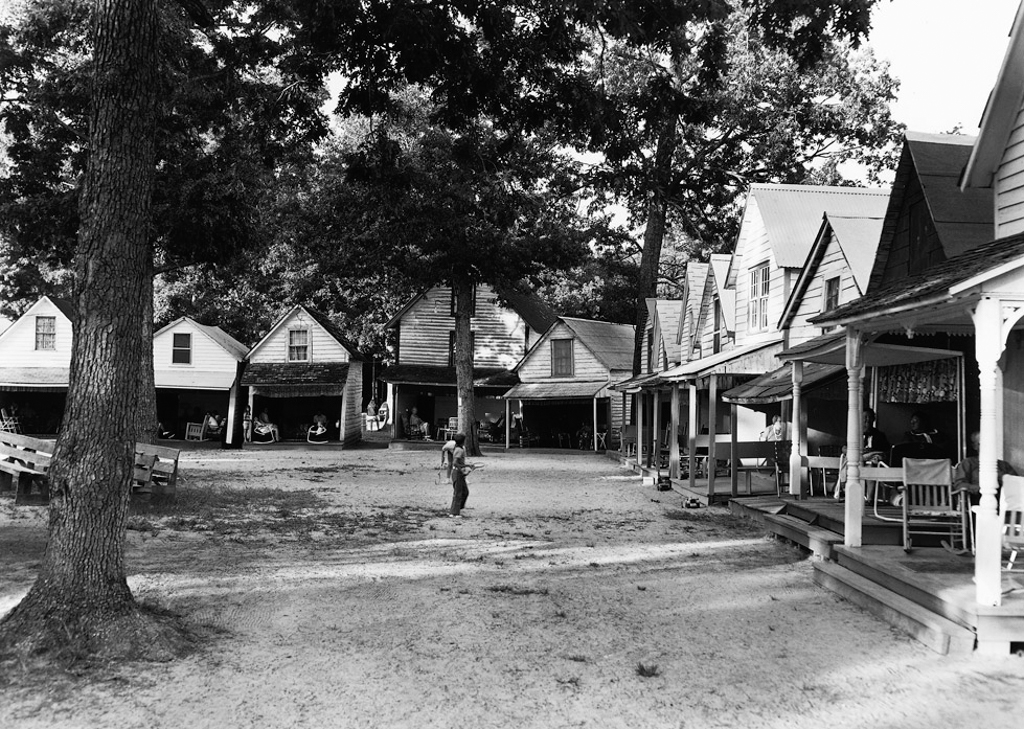
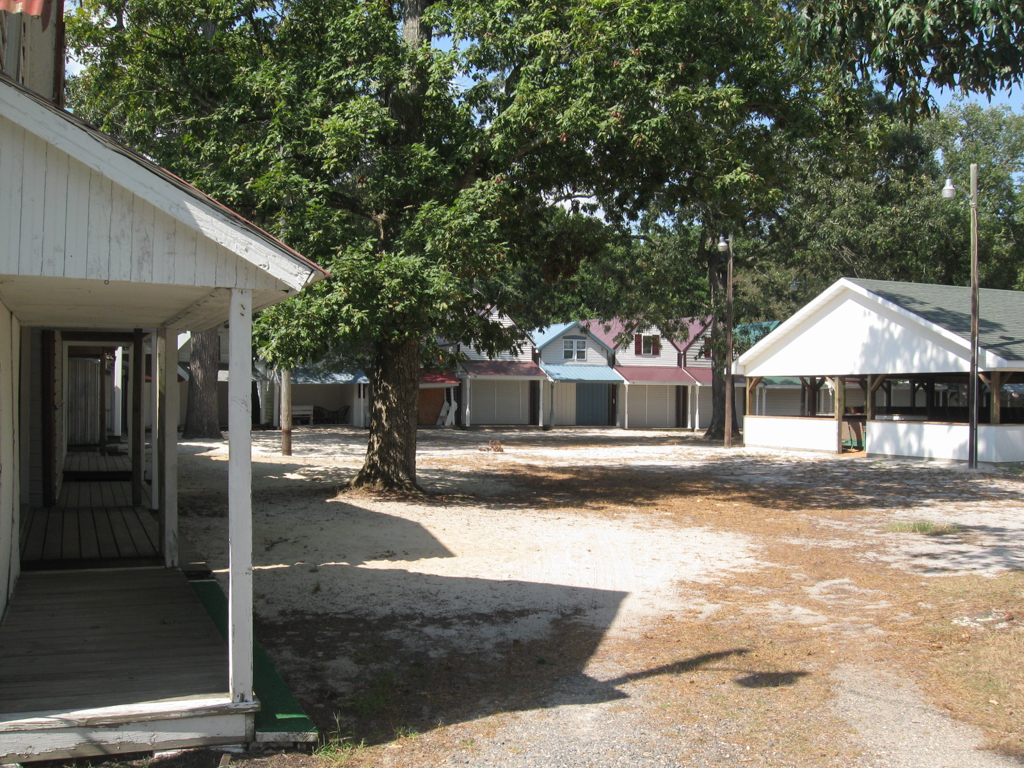
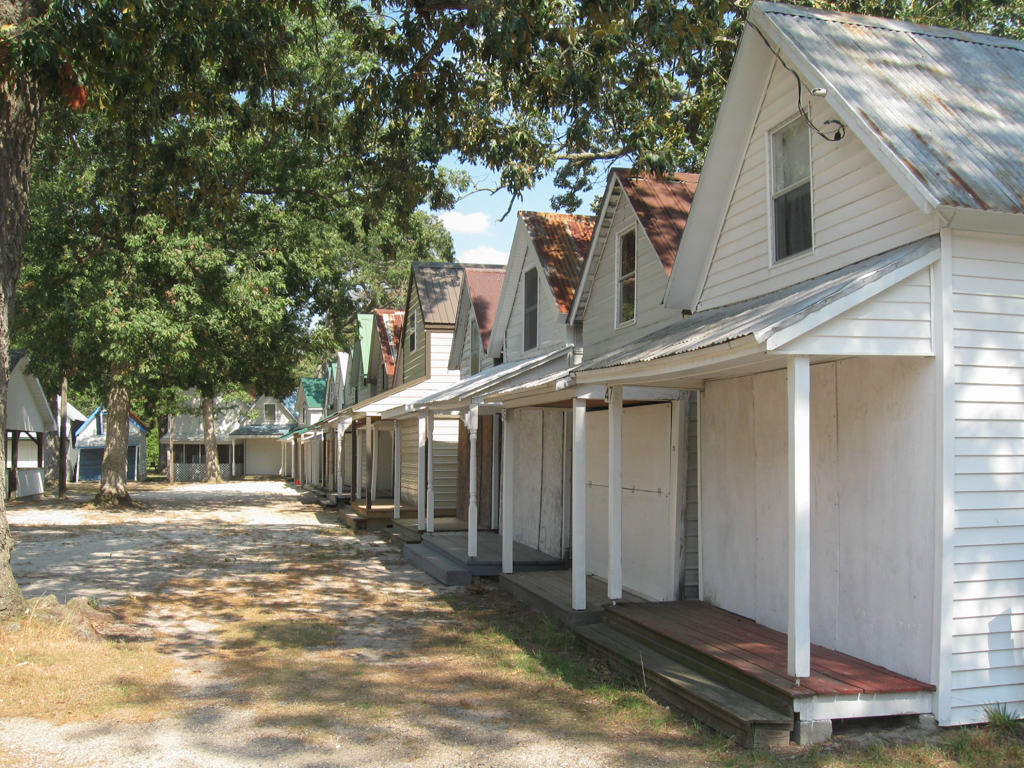
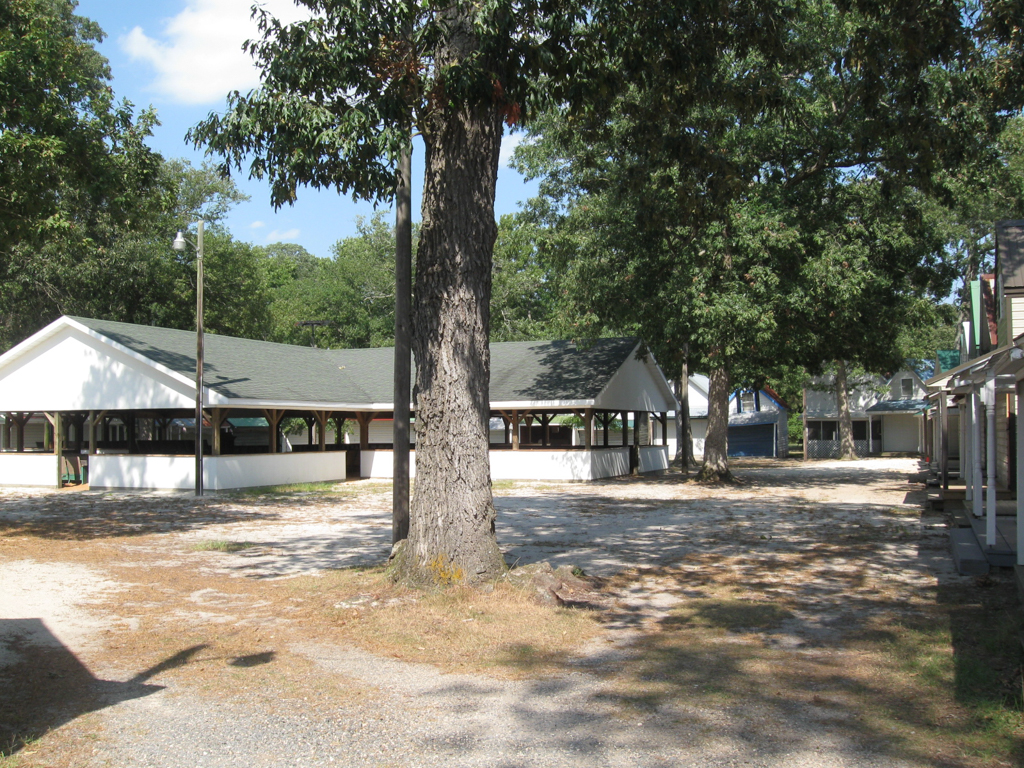
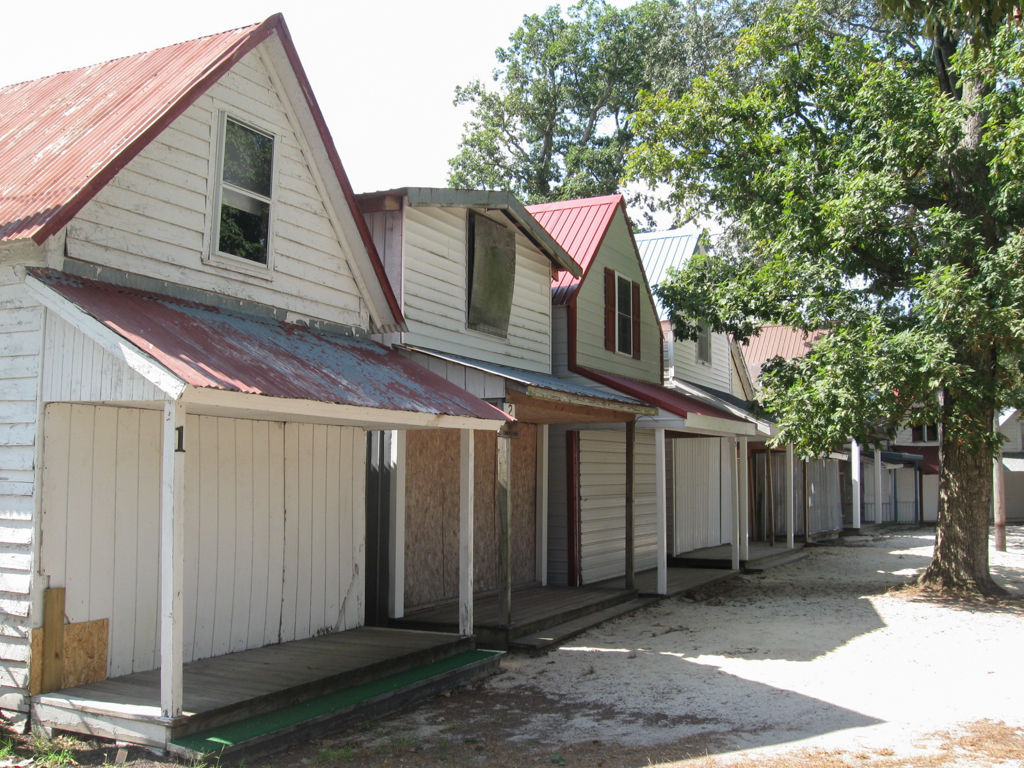
Methodist camp meetings traditionally met for two weeks in August. Carey's, a rare survivor, occupies a white oak grove in flat, sandy countryside. It probably lasted so long because it was noted for its evangelical fervor, with spontaneous prayers, shouting, and old hymns without musical accompaniment. Fire-stands of pine “lightwood knots” were used as late as 1937, not electric bulbs (though these were introduced the next year). The forty-seven cabins, called tents, are mostly boarded-up when not in use. Individually owned and periodically repaired or rebuilt, they show subtle differences within a standard format, making them an intriguing study in architectural serialization. Tin-roofed and front-gabled, they are painted white and are, increasingly, sided with aluminum or vinyl. They crowd as close to each other as possible, with a window upstairs and the downstairs entirely open, so that one looks into each little parlor with its rug and furnishings as into a doll house. In front stands a porch. Formerly, weatherboards were omitted in a panel across the back for ventilation. The tents form an oval around the tabernacle (recently rebuilt), a big, cross-shaped structure supported by posts. Under electric lights and ceiling fans, the participants occupy seats recycled from an old theater or auditorium, with yellow sawdust thickly strewn underfoot. The preacher stands at a pulpit on a wooden stage, with “Jesus Saves” on a signboard overhead. Fascinating to visit during its brief summertime season, Carey's Camp is a nationally significant example of nineteenth-century architecture and religious culture. It truly brings the past alive.
Carey's Camp
1888, established. Carey's Camp Rd., 1 mile west of Millsboro Hwy.